Kumasi Centre for Collaborative Research in Tropical Medicine, Kwame Nkrumah University of Science and Technology, Kumasi, Ghana.
Division of Microbiology and Animal Hygiene, Georg-August University, Goettingen, Germany.
PLoS Negl Trop Dis. 2019 Feb 1;13(2):e0007155. doi: 10.1371/journal.pntd.0007155. eCollection 2019 Feb.
Access to an accurate diagnostic test for Buruli ulcer (BU) is a research priority according to the World Health Organization. Nucleic acid amplification of insertion sequence IS2404 by polymerase chain reaction (PCR) is the most sensitive and specific method to detect Mycobacterium ulcerans (M. ulcerans), the causative agent of BU. However, PCR is not always available in endemic communities in Africa due to its cost and technological sophistication. Isothermal DNA amplification systems such as the recombinase polymerase amplification (RPA) have emerged as a molecular diagnostic tool with similar accuracy to PCR but having the advantage of amplifying a template DNA at a constant lower temperature in a shorter time. The aim of this study was to develop RPA for the detection of M. ulcerans and evaluate its use in Buruli ulcer disease.
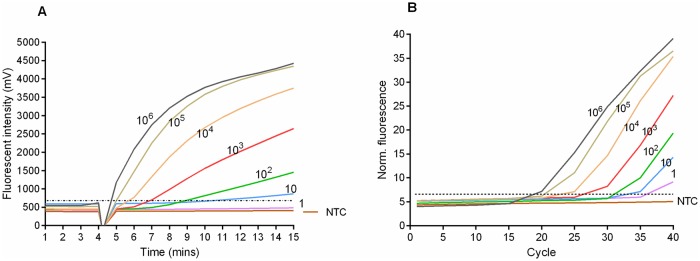
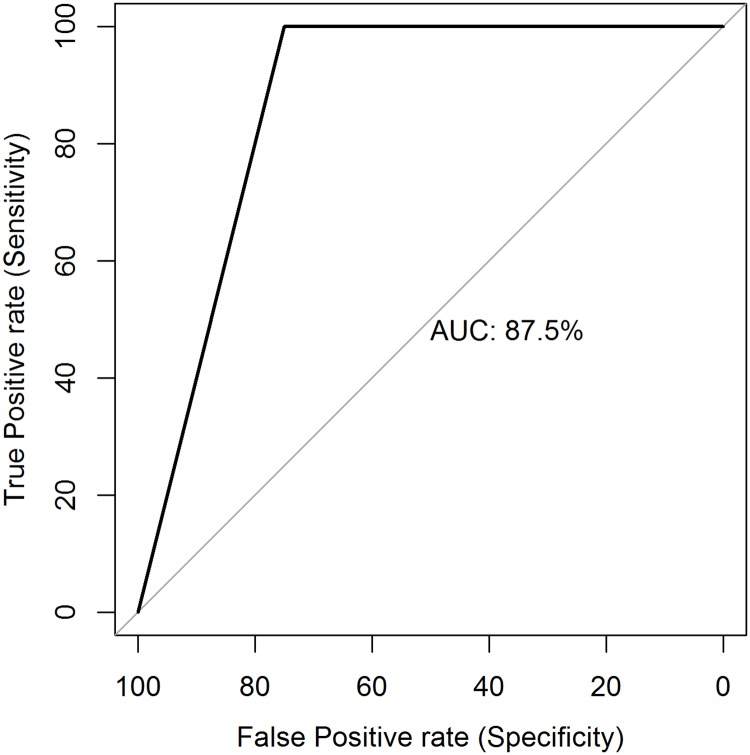
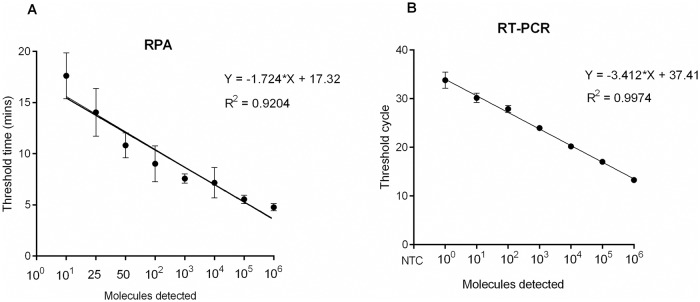
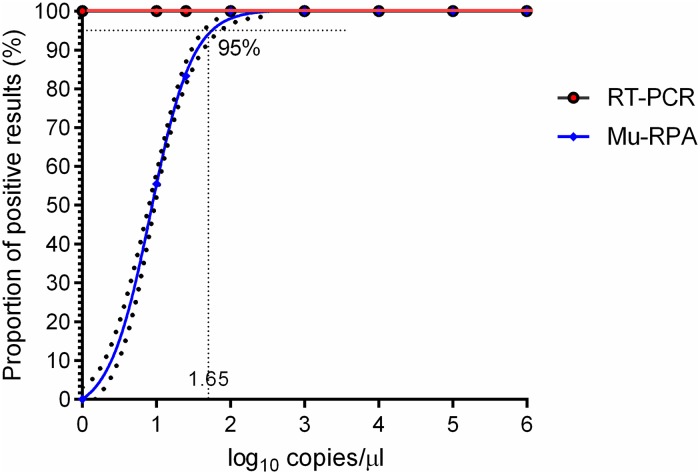
A specific fragment of IS2404 of M. ulcerans was amplified within 15 minutes at a constant 42°C using RPA method. The detection limit was 45 copies of IS2404 molecular DNA standard per reaction. The assay was highly specific as all 7 strains of M. ulcerans tested were detected, and no cross reactivity was observed to other mycobacteria or clinically relevant bacteria species. The clinical performance of the M. ulcerans (Mu-RPA) assay was evaluated using DNA extracted from fine needle aspirates or swabs taken from 67 patients in whom BU was suspected and 12 patients with clinically confirmed non-BU lesions. All results were compared to a highly sensitive real-time PCR. The clinical specificity of the Mu-RPA assay was 100% (95% CI, 84-100), whiles the sensitivity was 88% (95% CI, 77-95).
The Mu-RPA assay represents an alternative to PCR, especially in areas with limited infrastructure.
根据世界卫生组织的说法,获得准确的布鲁里溃疡(BU)诊断检测是一项研究重点。聚合酶链反应(PCR)中插入序列 IS2404 的核酸扩增是检测导致 BU 的病原体溃疡分枝杆菌(M. ulcerans)最敏感和最特异的方法。然而,由于其成本和技术复杂性,PCR 并不总是在非洲流行地区可用。等温 DNA 扩增系统,如重组酶聚合酶扩增(RPA)已成为一种具有与 PCR 相似准确性的分子诊断工具,但具有在较短时间内以恒定较低温度扩增模板 DNA 的优势。本研究旨在开发用于检测 M. ulcerans 的 RPA,并评估其在 BU 疾病中的应用。
使用 RPA 方法,在 42°C 的恒定温度下,在 15 分钟内扩增 M. ulcerans 的 IS2404 特定片段。检测限为每个反应 45 拷贝的 IS2404 分子 DNA 标准。该检测方法具有高度特异性,因为所有测试的 7 株 M. ulcerans 均被检测到,并且未观察到与其他分枝杆菌或临床相关细菌的交叉反应。使用从怀疑患有 BU 的 67 名患者和 12 名临床确诊的非 BU 病变患者中提取的 DNA 评估 M. ulcerans(Mu-RPA)检测的临床性能,并将所有结果与高度敏感的实时 PCR 进行比较。Mu-RPA 检测的临床特异性为 100%(95%CI,84-100),而敏感性为 88%(95%CI,77-95)。
Mu-RPA 检测法代表了 PCR 的替代方法,特别是在基础设施有限的地区。