Department of Medicine, Landspitali - University Hospital, Reykjavik, Iceland.
Rheumatology Division, Department of Medicine, University of Wisconsin School of Medicine and Public Health, Madison, USA.
BMC Med Inform Decis Mak. 2019 Feb 1;19(1):27. doi: 10.1186/s12911-019-0749-4.
Although osteoporosis is an easily diagnosed and treatable condition, many individuals remain untreated. Clinical decision support systems might increase appropriate treatment of osteoporosis. We designed the Osteoporosis Advisor (OPAD), a computerized tool to support physicians managing osteoporosis at the point-of-care. The present study compares the treatment recommendations provided by OPAD, an expert physician and the National Osteoporosis Guideline Group (NOGG).
We performed a retrospective analysis of 259 patients attending the outpatient osteoporosis clinic at the University Hospital in Iceland. We entered each patient's data into the OPAD and recorded the OPAD diagnostic comments, 10-year risk of major osteoporotic fracture and treatment options. We compared OPAD recommendations to those given by the osteoporosis specialist, and to those of the NOGG.
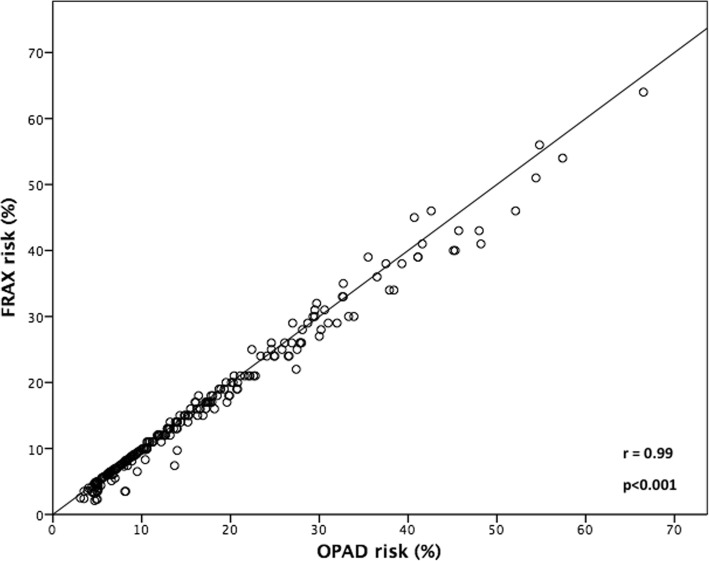
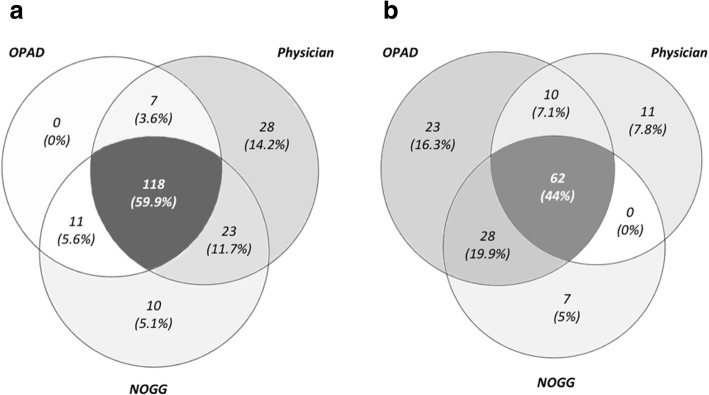
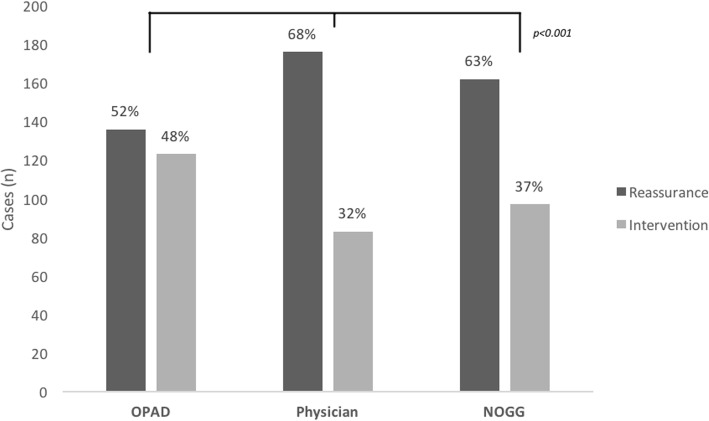
Risk estimates made by OPAD were highly correlated with those from FRAX (r = 0.99, 95% CI 0.99, 1.00 without femoral neck BMD; r = 0.98, 95% CI, 0.97, 0.99 with femoral neck BMD. Reassurance was recommended by the expert, NOGG and the OPAD in 68, 63 and 52% of cases, respectively. Likewise, intervention was recommended by the expert, NOGG, and the OPAD in 32, 37 and 48% of cases, respectively. The OPAD demonstrated moderate agreement with the physician (kappa 0.51, 95% CI 0.41, 0.61) and even higher agreement with NOGG (kappa 0.69, 95% CI 0.60, 0.77).
Primary care physicians can use the OPAD to assess and treat patients' skeletal health. Recommendations given by OPAD are consistent with expert opinion and existing guidelines.
尽管骨质疏松症是一种易于诊断和治疗的疾病,但仍有许多患者未得到治疗。临床决策支持系统可能会增加骨质疏松症的合理治疗。我们设计了 Osteoporosis Advisor(OPAD),这是一种用于在临床环境下支持医生管理骨质疏松症的计算机工具。本研究比较了 OPAD、一位专家医生和国家骨质疏松症指南小组(NOGG)提供的治疗建议。
我们对在冰岛大学医院就诊的 259 名门诊骨质疏松症患者进行了回顾性分析。我们将每位患者的数据输入 OPAD,并记录 OPAD 的诊断意见、10 年内发生主要骨质疏松性骨折的风险和治疗选择。我们将 OPAD 的建议与骨质疏松症专家的建议和 NOGG 的建议进行了比较。
OPAD 做出的风险估计与 FRAX 高度相关(无股骨颈 BMD 时 r=0.99,95%CI 0.99,1.00;有股骨颈 BMD 时 r=0.98,95%CI 0.97,0.99)。专家、NOGG 和 OPAD 分别建议 68%、63%和 52%的患者感到安心。同样,专家、NOGG 和 OPAD 分别建议 32%、37%和 48%的患者进行干预。OPAD 与医生之间的一致性中等(kappa 值为 0.51,95%CI 0.41,0.61),与 NOGG 的一致性更高(kappa 值为 0.69,95%CI 0.60,0.77)。
初级保健医生可以使用 OPAD 来评估和治疗患者的骨骼健康。OPAD 给出的建议与专家意见和现有指南一致。