Ontario Veterinary College, University of Guelph, 50 Stone Road E, Guelph, ON, N1G 2W1, Canada.
World Health Organization, Geneva, Switzerland.
BMC Infect Dis. 2019 Feb 4;19(1):113. doi: 10.1186/s12879-019-3729-5.
Middle East respiratory syndrome coronavirus (MERS-CoV) is endemic in dromedary camels in the Arabian Peninsula, and zoonotic transmission to people is a sporadic event. In the absence of epidemiological data on the reservoir species, patterns of zoonotic transmission have largely been approximated from primary human cases. This study aimed to identify meteorological factors that may increase the risk of primary MERS infections in humans.
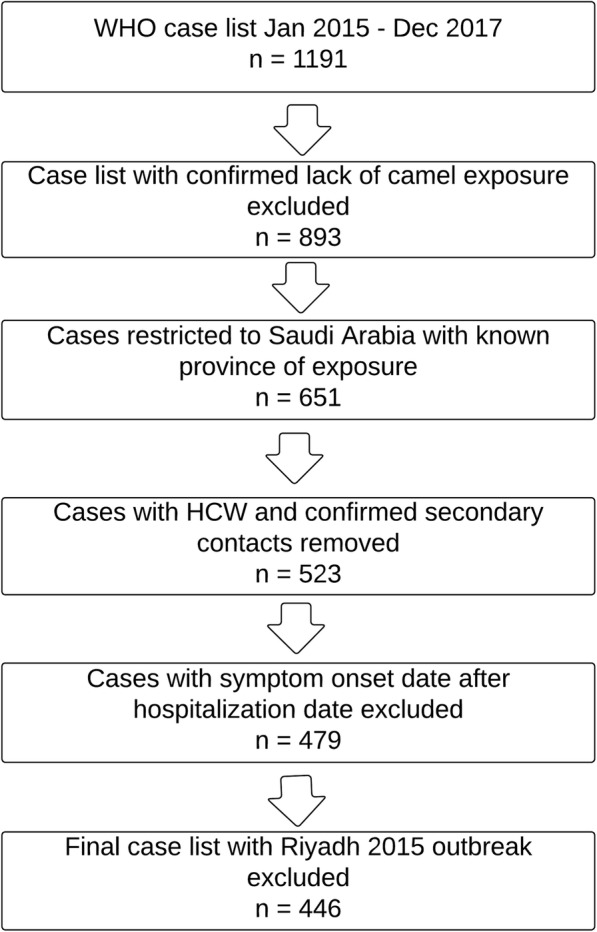
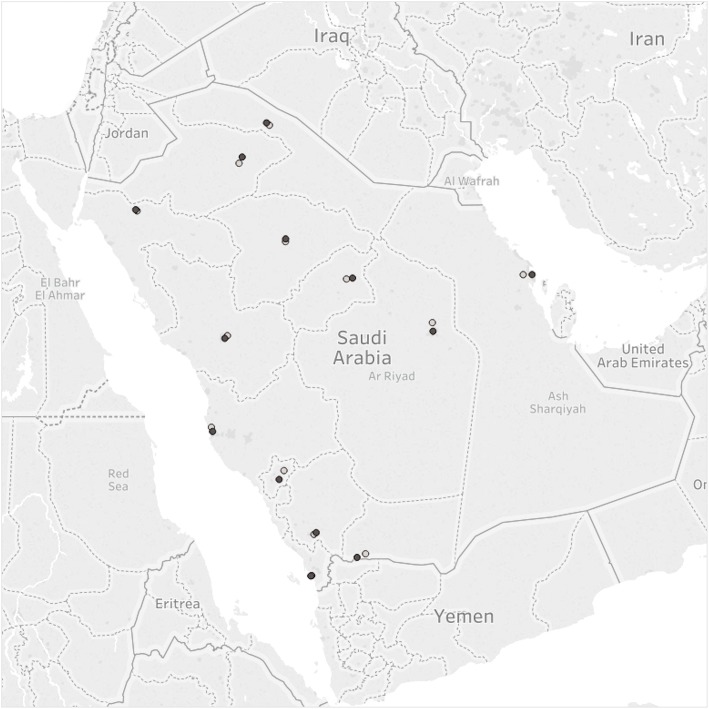
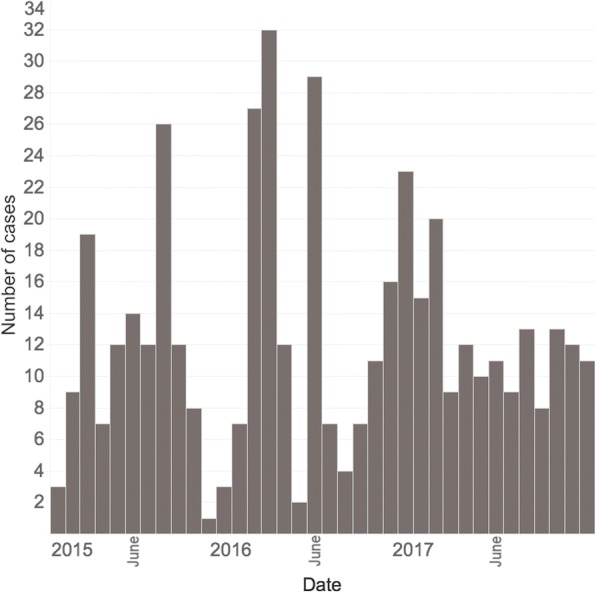
A case-crossover design was used to identify associations between primary MERS cases and preceding weather conditions within the 2-week incubation period in Saudi Arabia using univariable conditional logistic regression. Cases with symptom onset between January 2015 - December 2017 were obtained from a publicly available line list of human MERS cases maintained by the World Health Organization. The complete case dataset (N = 1191) was reduced to approximate the cases most likely to represent spillover transmission from camels (N = 446). Data from meteorological stations closest to the largest city in each province were used to calculate the daily mean, minimum, and maximum temperature (C), relative humidity (%), wind speed (m/s), and visibility (m). Weather variables were categorized according to strata; temperature and humidity into tertiles, and visibility and wind speed into halves.
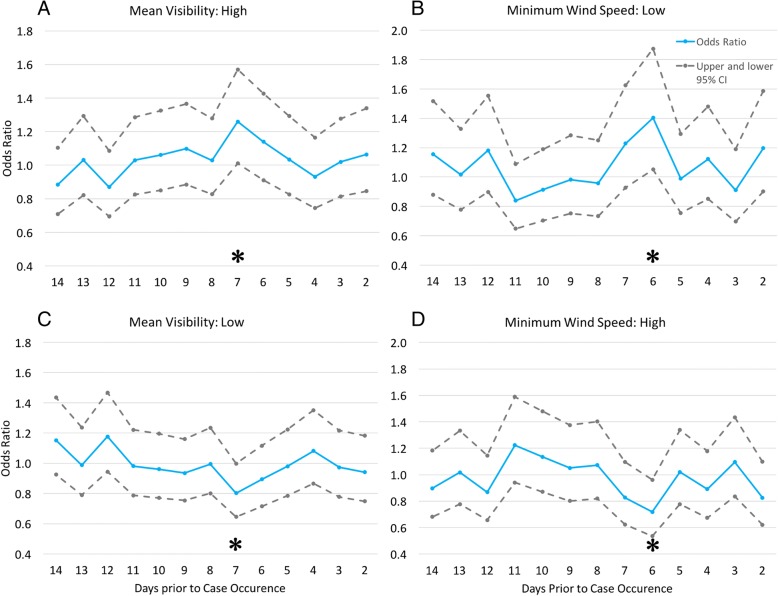
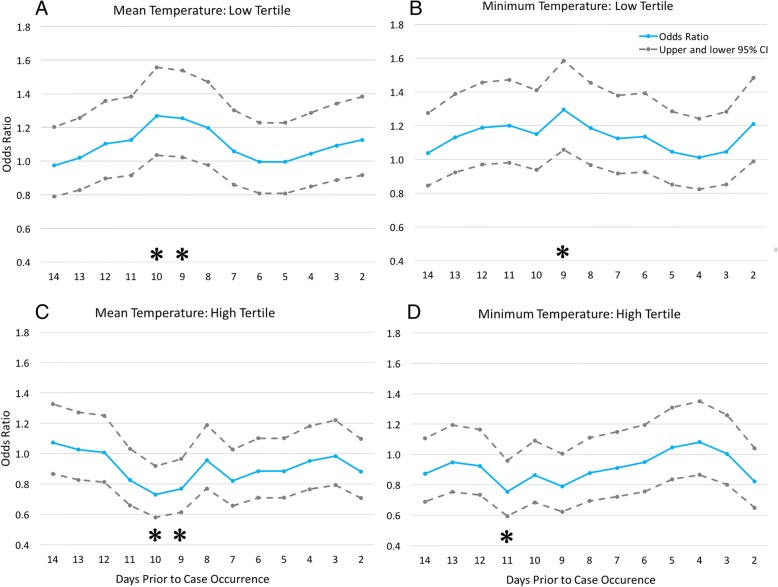
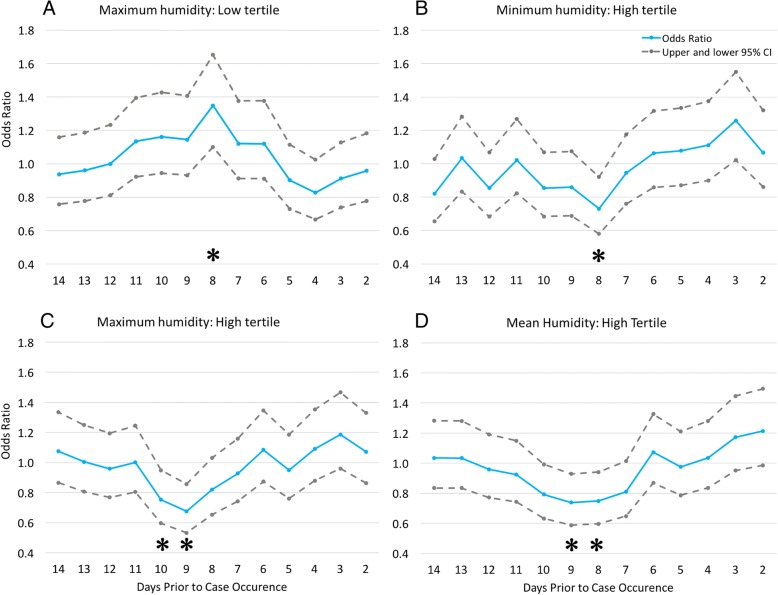
Lowest temperature (Odds Ratio = 1.27; 95% Confidence Interval = 1.04-1.56) and humidity (OR = 1.35; 95% CI = 1.10-1.65) were associated with increased cases 8-10 days later. High visibility was associated with an increased number of cases 7 days later (OR = 1.26; 95% CI = 1.01-1.57), while wind speed also showed statistically significant associations with cases 5-6 days later.
Results suggest that primary MERS human cases in Saudi Arabia are more likely to occur when conditions are relatively cold and dry. This is similar to seasonal patterns that have been described for other respiratory diseases in temperate climates. It was hypothesized that low visibility would be positively associated with primary cases of MERS, however the opposite relationship was seen. This may reflect behavioural changes in different weather conditions. This analysis provides key initial evidence of an environmental component contributing to the development of primary MERS-CoV infections.
中东呼吸综合征冠状病毒(MERS-CoV)在阿拉伯半岛的单峰骆驼中流行,对人类的人畜共患病传播是偶发事件。由于缺乏关于储存物种的流行病学数据,人畜共患病传播模式主要是根据原发性人类病例进行推测的。本研究旨在确定可能增加人类原发性 MERS 感染风险的气象因素。
使用单变量条件逻辑回归,在沙特阿拉伯的 2 周潜伏期内,使用病例交叉设计识别原发性 MERS 病例与先前天气条件之间的关联。从世界卫生组织维护的公开的人类 MERS 病例列表中获取 2015 年 1 月至 2017 年 12 月期间出现症状的病例。从完整的病例数据集(n=1191)中减少了最有可能代表骆驼溢出传播的病例(n=446)。使用最接近每个省最大城市的气象站的数据来计算每日平均、最低和最高温度(C)、相对湿度(%)、风速(m/s)和能见度(m)。根据分层将天气变量分类;温度和湿度分为三分位,能见度和风速分为两半。
最低温度(优势比=1.27;95%置信区间=1.04-1.56)和湿度(OR=1.35;95%CI=1.10-1.65)与 8-10 天后增加的病例相关。高能见度与 7 天后病例数量增加相关(OR=1.26;95%CI=1.01-1.57),而风速也与 5-6 天后的病例具有统计学显著关联。
结果表明,当条件相对寒冷和干燥时,沙特阿拉伯的原发性 MERS 人类病例更有可能发生。这与温带气候下其他呼吸道疾病的季节性模式相似。有人假设低能见度与原发性 MERS 病例呈正相关,但实际情况相反。这可能反映了不同天气条件下行为的变化。本分析提供了环境因素对原发性 MERS-CoV 感染发展的贡献的关键初步证据。