Pacienza Natalia, Lee Ryang Hwa, Bae Eun-Hye, Kim Dong-Ki, Liu Qisong, Prockop Darwin J, Yannarelli Gustavo
Institute for Regenerative Medicine, Department of Molecular and Cellular Medicine, College of Medicine, Texas A&M University, College Station, TX 77845, USA.
Laboratorio de Regulación Génica y Células Madre, Instituto de Medicina Traslacional, Trasplante y Bioingeniería (IMeTTyB), Universidad Favaloro/CONICET, Buenos Aires, Argentina.
Mol Ther Methods Clin Dev. 2018 Dec 15;13:67-76. doi: 10.1016/j.omtm.2018.12.003. eCollection 2019 Jun 14.
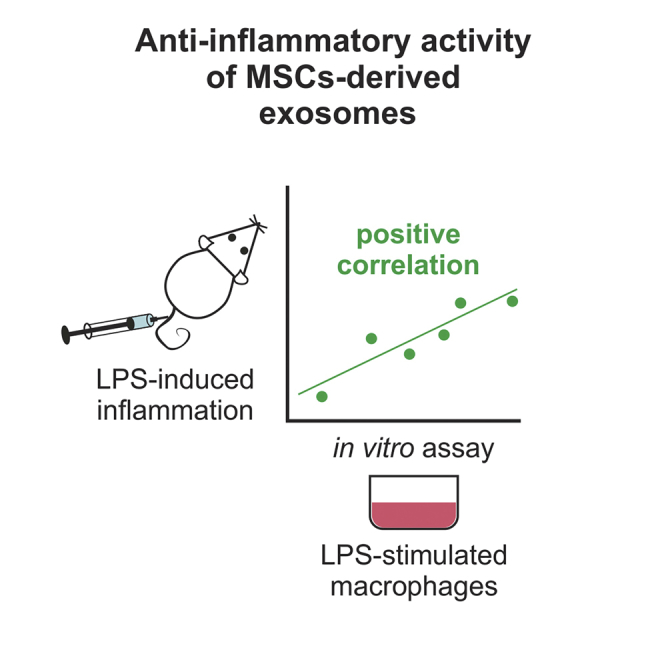
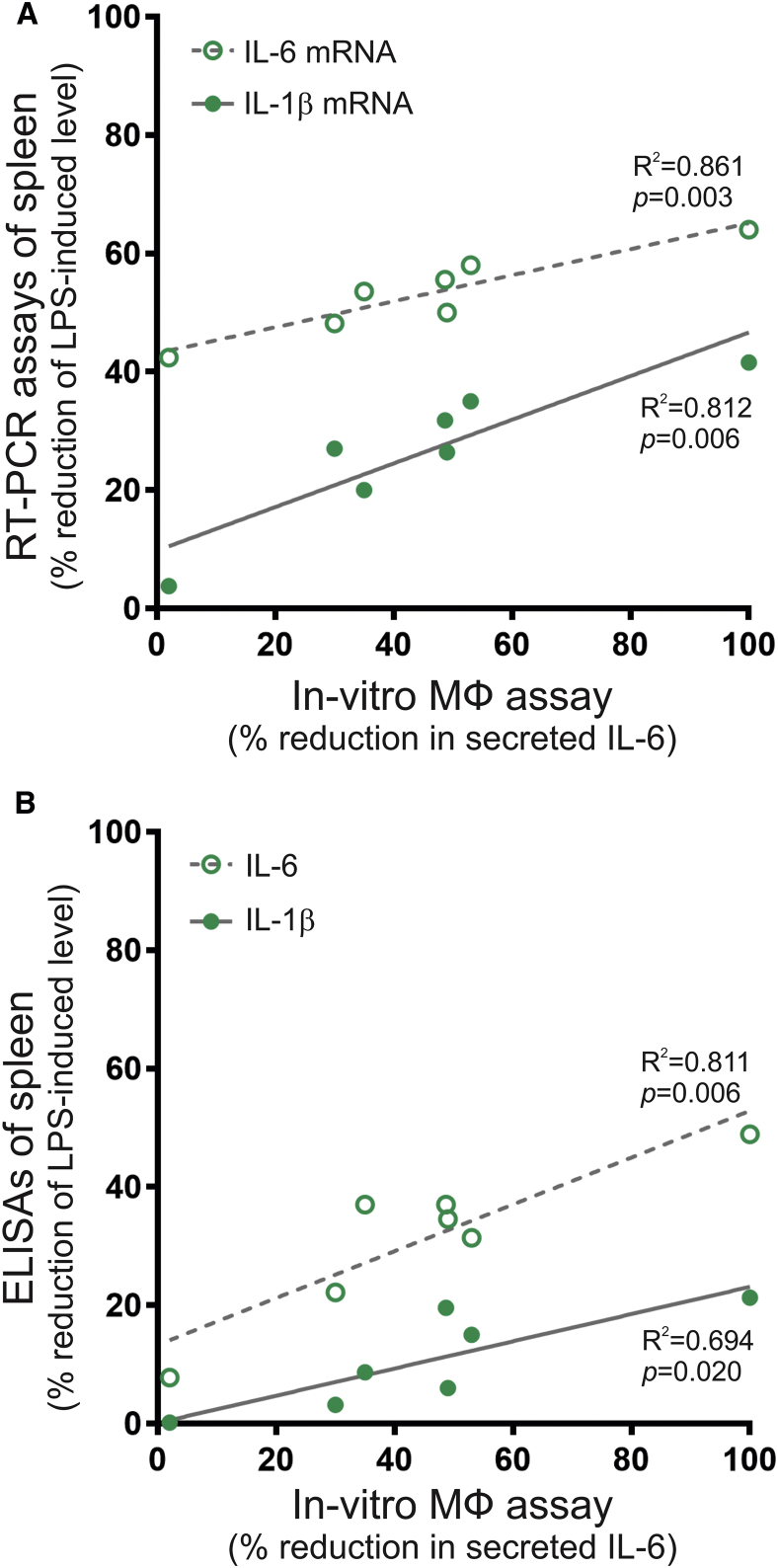
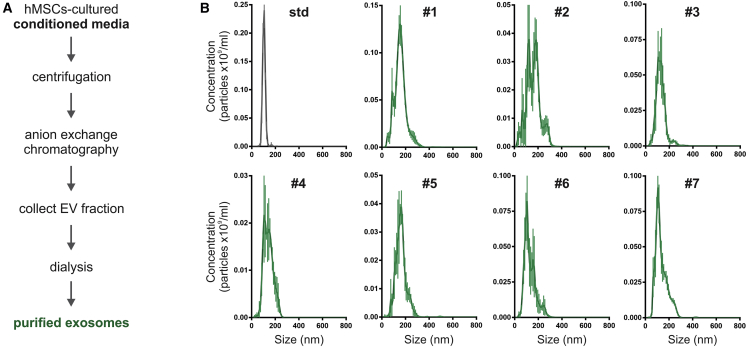
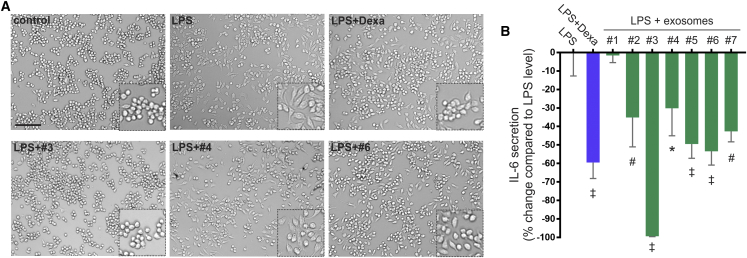
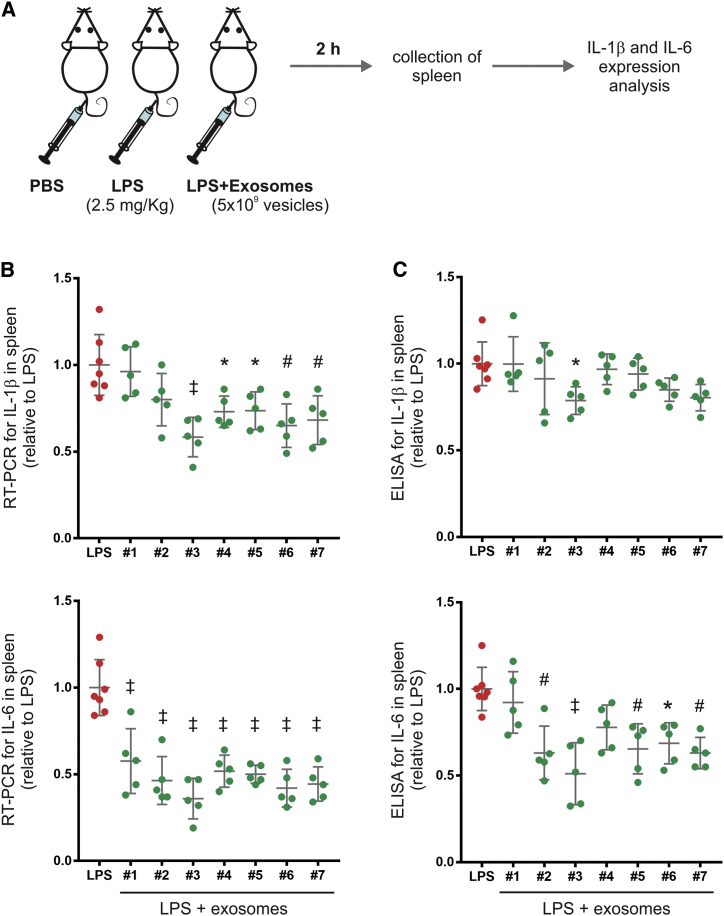
Extracellular vesicles (EVs) play key roles in cell biology and may provide new clinical diagnostics and therapies. However, it has proven difficult to develop protocols for their purification and characterization. One of the major barriers in the field has been a lack of convenient assays for their bioactivity. Developing assays has not been a trivial matter, because of the heterogeneity of EVs, the multiple activities they demonstrate, and the uncertainty about their modes of action. Therefore, it is likely that multiple assays for their activities are needed. One important assay will be for the anti-inflammatory activity observed in mice after administration of the small EVs commonly referred to as exosomes. We developed an assay for the anti-inflammatory activity of exosomes with a line of mouse macrophages. The assay makes it possible to rank different preparations of exosomes by their anti-inflammatory activity, and their ranking predicts their efficacy in suppressing LPS-stimulated inflammation in mice. The assay is convenient for comparing multiple samples and, therefore, should be useful in developing protocols for the purification and characterization of anti-inflammatory exosomes.
细胞外囊泡(EVs)在细胞生物学中发挥着关键作用,可能为临床诊断和治疗提供新途径。然而,事实证明,制定其纯化和表征方案具有一定难度。该领域的主要障碍之一是缺乏用于评估其生物活性的便捷检测方法。由于EVs的异质性、它们所表现出的多种活性以及其作用方式的不确定性,开发检测方法并非易事。因此,可能需要多种检测其活性的方法。一种重要的检测方法将针对在小鼠体内注射通常被称为外泌体的小EVs后所观察到的抗炎活性。我们利用小鼠巨噬细胞系开发了一种检测外泌体抗炎活性的方法。该检测方法能够根据外泌体的抗炎活性对不同的外泌体制剂进行排名,而它们的排名可预测其在抑制小鼠体内脂多糖刺激的炎症方面的功效。该检测方法便于比较多个样本,因此,在制定抗炎外泌体的纯化和表征方案方面应会有所帮助。