Ribeiro Isabella Carvalho, Roza Noemí Angelica Vieira, Duarte Diego Andreazzi, Guadagnini Dioze, Elias Rosilene Motta, Oliveira Rodrigo Bueno de
Universidade Estadual de Campinas, Serviço de Nefrologia do Hospital de Clínicas, Campinas, SP, Brasil.
Universidade Estadual de Campinas, Faculdade de Ciências Médicas, Departamento de Medicina Interna, Campinas, SP, Brasil.
J Bras Nefrol. 2019 Jul-Sep;41(3):384-392. doi: 10.1590/2175-8239-JBN-2018-0151. Epub 2019 Jan 24.
Chronic kidney disease (CKD) has a high prevalence and is a worldwide public health problem. Reuse of dialyzers is a cost reduction strategy used in many countries. There is controversy over its effects on clinical parameters and microbiological safety.
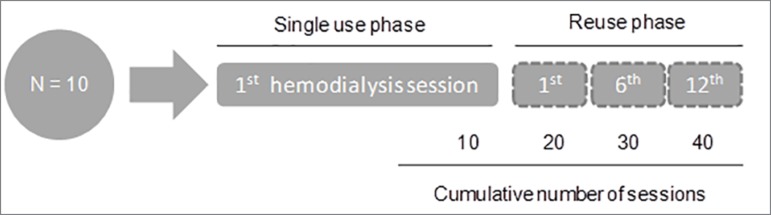
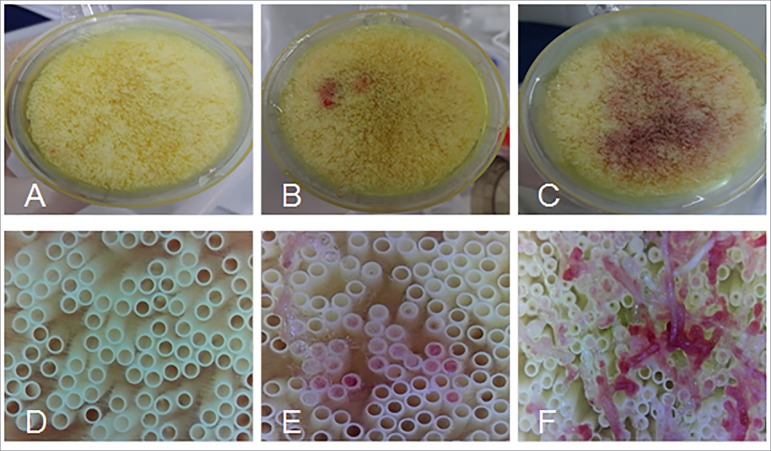
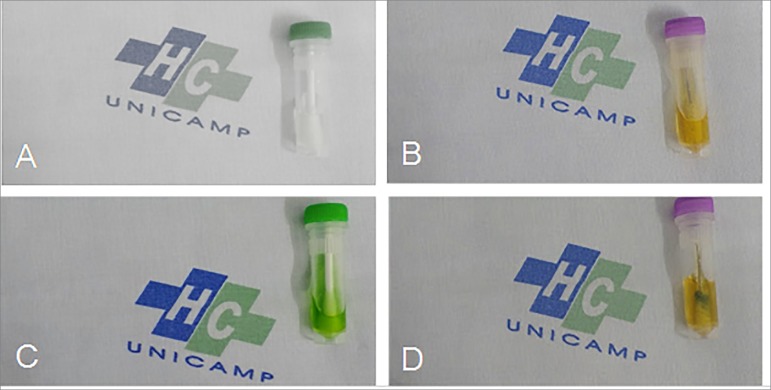
In this clinical crossover study, 10 patients performed consecutive hemodialysis (HD) sessions divided in two phases: "single use" sessions (N = 10 HD sessions) followed by "dialyzer reuse" sessions (N = 30 HD sessions). Clinical, laboratory, and microbiological parameters were collected in the following time points: "single use", 1st, 6th, and 12th sessions with reuse of dialyzers, including bacterial cultures, endotoxins quantification in serum and dialyzer blood chamber, and detection of hemoglobin and protein residues in dialyzers.
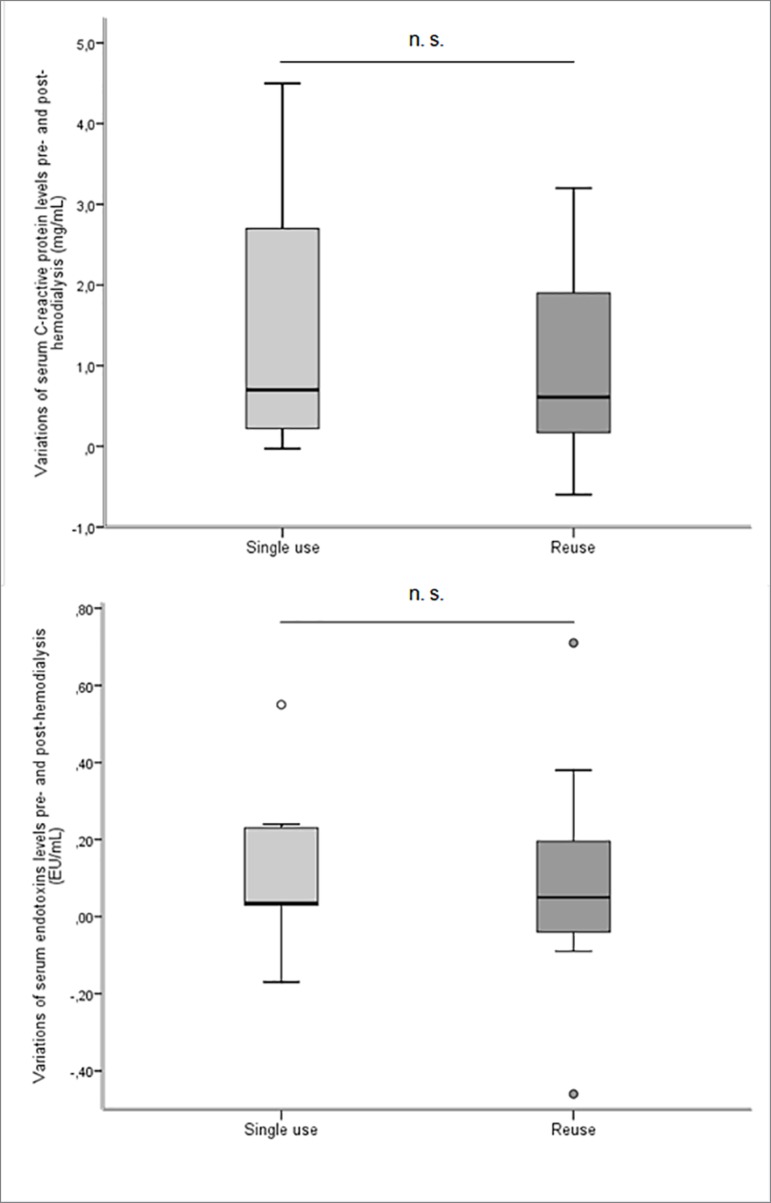
Mean age of the sample was 37 ± 16 years, 6 (60%) were men, and 5 (50%) were white. CKD and HD vintage were 169 ± 108 and 47 (23-111) months, respectively. Serum C-reactive protein (CRP) [4.9 (2.1) mg/mL], ferritin (454 ± 223 ng/mL), and endotoxin levels [0.76 (0.61-0.91) EU/mL] were high at baseline. Comparison of pre- and post-HD variations of serum levels of CRP and endotoxins in the "single use" versus "reuse" phases did not result in differences (p = 0.8 and 0.4, respectively). Samples of liquid in the dialyzer inner chamber were negative for the growth of bacteria or endotoxins. There was no significant clinical manifestation within and between the phases.
Dialyzers reuse was safe from a clinical, microbiological, and inflammatory point of view. The dialyzer performance remained adequate until the 12th reuse.
慢性肾脏病(CKD)患病率高,是一个全球性的公共卫生问题。透析器复用是许多国家采用的一种降低成本的策略。其对临床参数和微生物安全性的影响存在争议。
在这项临床交叉研究中,10例患者进行连续的血液透析(HD)治疗,分为两个阶段:“一次性使用”阶段(N = 10次HD治疗),随后是“透析器复用”阶段(N = 30次HD治疗)。在以下时间点收集临床、实验室和微生物学参数:“一次性使用”、复用透析器的第1次、第6次和第12次治疗,包括细菌培养、血清和透析器血室中内毒素定量,以及透析器中血红蛋白和蛋白质残留检测。
样本的平均年龄为37±16岁,6例(60%)为男性,5例(50%)为白人。CKD病程和HD治疗时间分别为169±108个月和47(23 - 111)个月。基线时血清C反应蛋白(CRP)[4.9(2.1)mg/mL]、铁蛋白(454±223 ng/mL)和内毒素水平[0.76(0.61 - 0.91)EU/mL]较高。“一次性使用”与“复用”阶段HD前后血清CRP和内毒素水平变化的比较无差异(p分别为0.8和0.4)。透析器内腔液体样本细菌或内毒素生长检测为阴性。各阶段内及各阶段间均无明显临床表现。
从临床、微生物学和炎症角度来看,透析器复用是安全的。直至第12次复用,透析器性能仍保持良好。