Yunnan Key Laboratory of Opto-Electronic Information Technology, Yunnan Normal University, Kunming 650000, China.
Department of Thoracic Surgery, Yunnan First People's Hospital, Kunming 650000, China.
J Healthc Eng. 2019 Jan 6;2019:6813719. doi: 10.1155/2019/6813719. eCollection 2019.
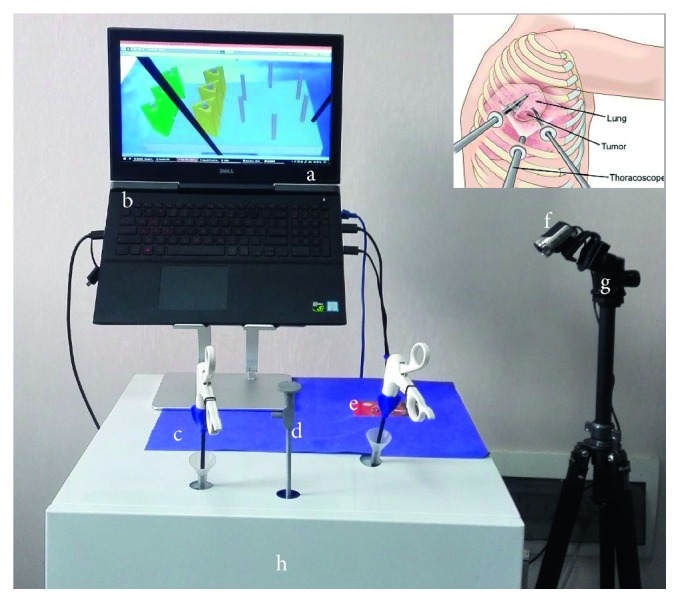
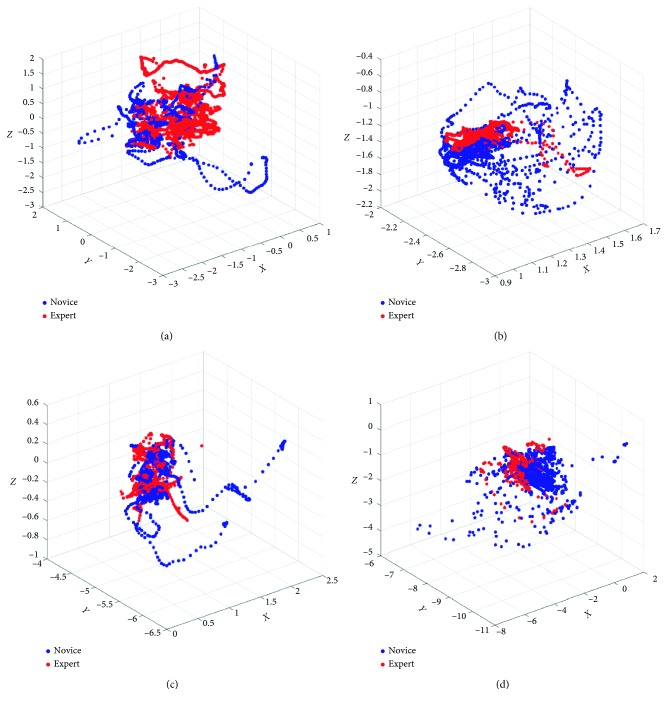
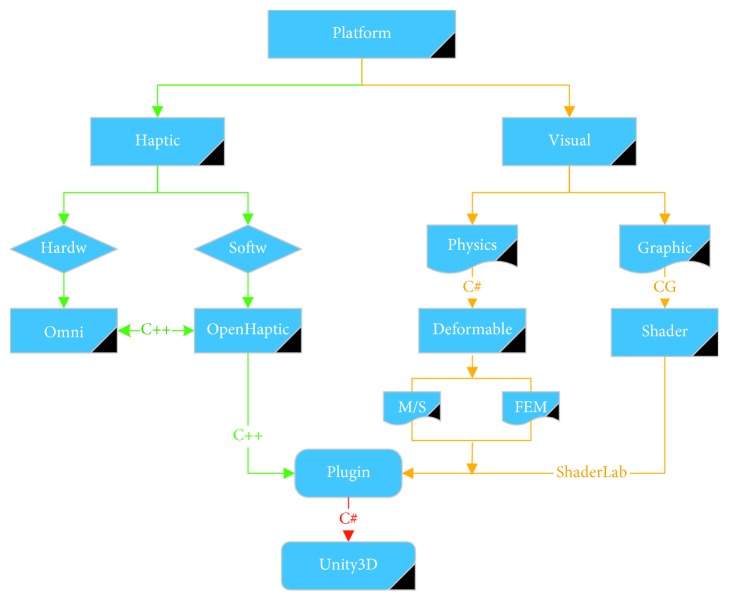
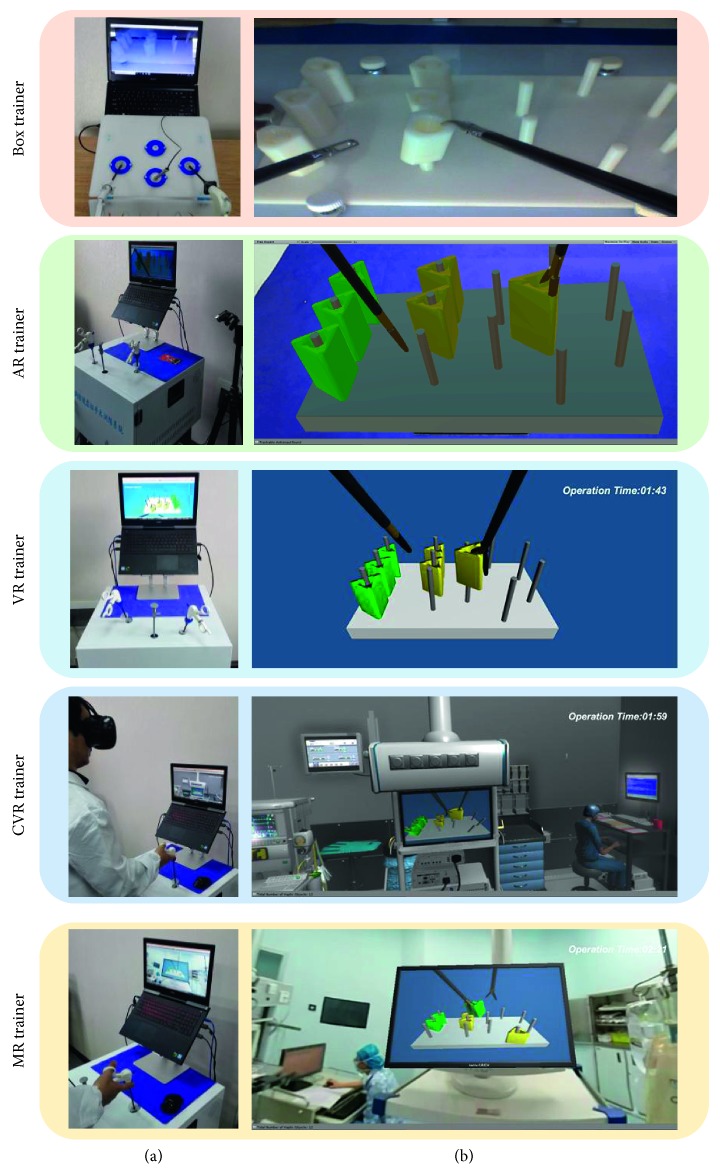
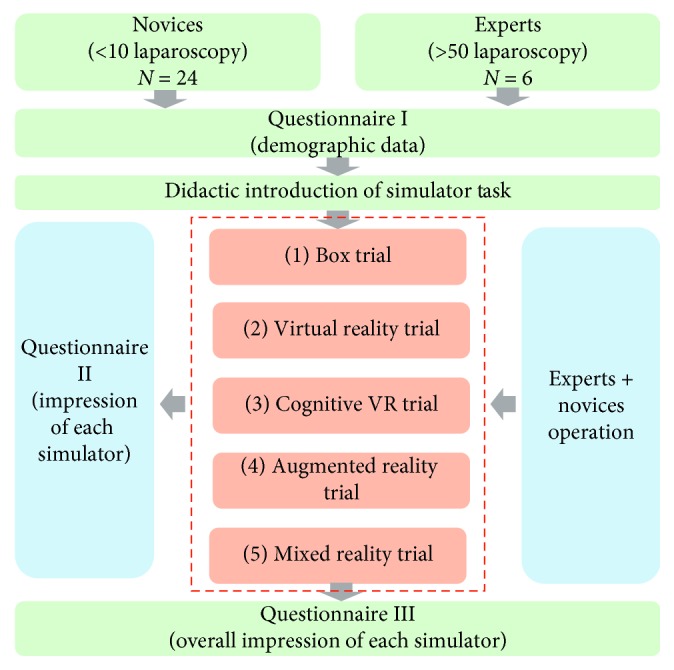
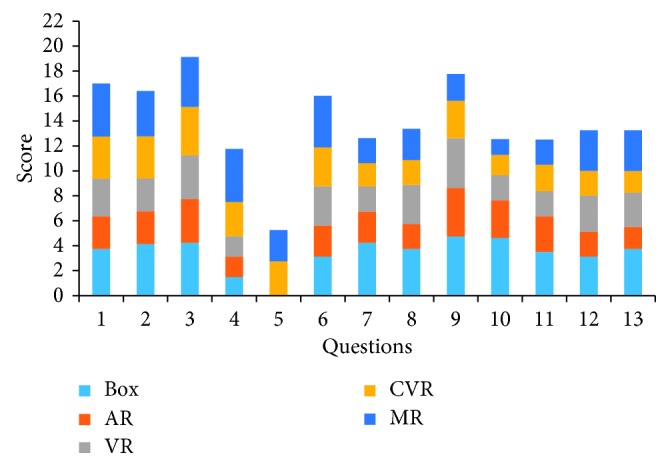
The aim of this study is to develop and assess the peg transfer training module face, content and construct validation use of the box, virtual reality (VR), cognitive virtual reality (CVR), augmented reality (AR), and mixed reality (MR) trainer, thereby to compare advantages and disadvantages of these simulators. Training system (VatsSim-XR) design includes customized haptic-enabled thoracoscopic instruments, virtual reality helmet set, endoscope kit with navigation, and the patient-specific corresponding training environment. A cohort of 32 trainees comprising 24 novices and 8 experts underwent the real and virtual simulators that were conducted in the department of thoracic surgery of Yunnan First People's Hospital. Both subjective and objective evaluations have been developed to explore the visual and haptic potential promotions in peg transfer education. Experiments and evaluation results conducted by both professional and novice thoracic surgeons show that the surgery skills from experts are better than novices overall, AR trainer is able to provide a more balanced training environments on visuohaptic fidelity and accuracy, box trainer and MR trainer demonstrated the best realism 3D perception and surgical immersive performance, respectively, and CVR trainer shows a better clinic effect that the traditional VR trainer. Combining these in a systematic approach, tuned with specific fidelity requirements, medical simulation systems would be able to provide a more immersive and effective training environment.
本研究旨在开发和评估 Peg 转移培训模块的表面、内容和结构验证,使用盒子、虚拟现实 (VR)、认知虚拟现实 (CVR)、增强现实 (AR) 和混合现实 (MR) 训练器,从而比较这些模拟器的优缺点。培训系统 (VatsSim-XR) 的设计包括定制的触觉式胸腔镜仪器、虚拟现实头盔套件、带导航的内窥镜套件以及特定于患者的相应培训环境。一组 32 名受训者包括 24 名新手和 8 名专家在云南省第一人民医院胸外科接受了真实和虚拟模拟器的培训。已经开发了主观和客观评估来探索 Peg 转移教育中的视觉和触觉潜力提升。由专业和新手胸外科医生进行的实验和评估结果表明,专家的手术技能总体上优于新手,AR 训练器能够在视觉触觉保真度和准确性方面提供更平衡的训练环境,盒子训练器和 MR 训练器分别表现出最佳的真实 3D 感知和手术沉浸性能,而 CVR 训练器显示出比传统 VR 训练器更好的临床效果。将这些系统地结合起来,并根据特定的保真度要求进行调整,医疗模拟系统将能够提供更具沉浸感和更有效的培训环境。