Gonçalves Carlos-Alberto, Rodrigues Letícia, Bobermin Larissa D, Zanotto Caroline, Vizuete Adriana, Quincozes-Santos André, Souza Diogo O, Leite Marina C
Department of Biochemistry, Federal University of Rio Grande do Sul (UFRGS), Porto Alegre, Brazil.
Front Neurosci. 2019 Jan 23;12:1035. doi: 10.3389/fnins.2018.01035. eCollection 2018.
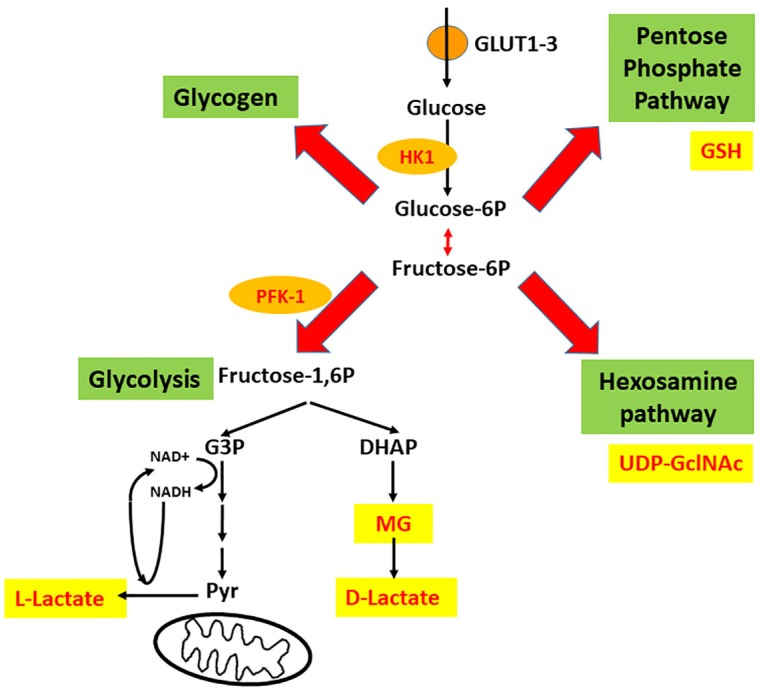
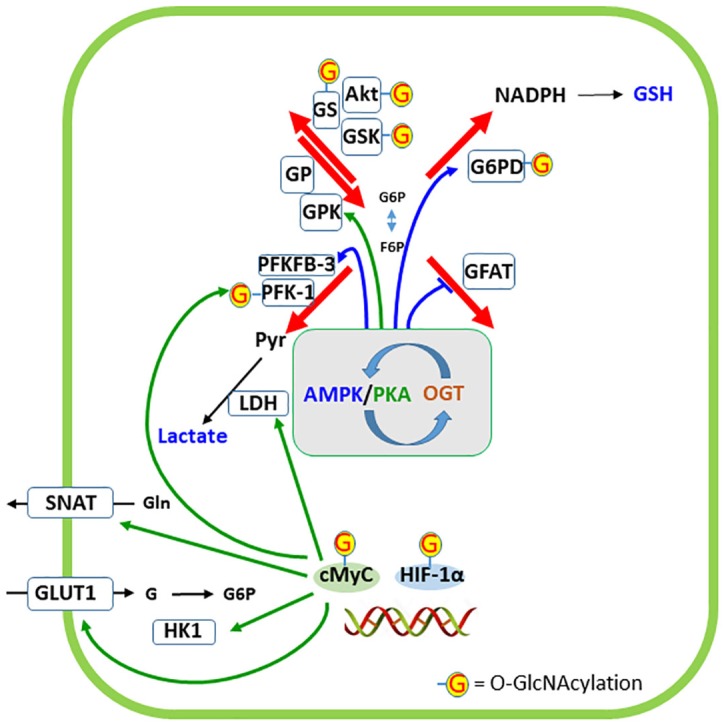
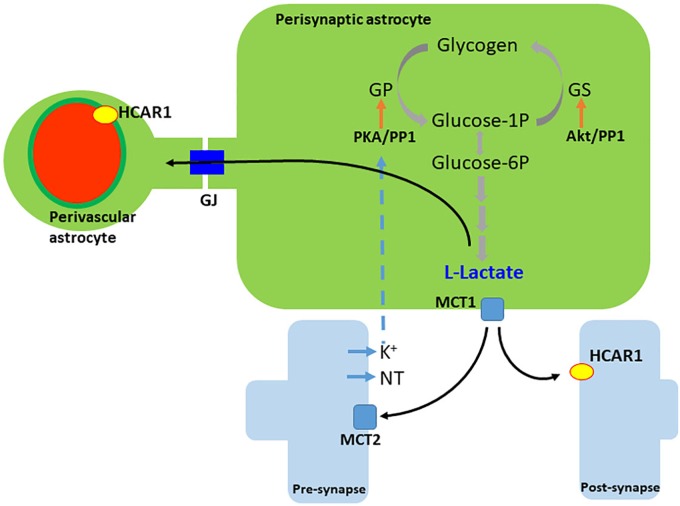
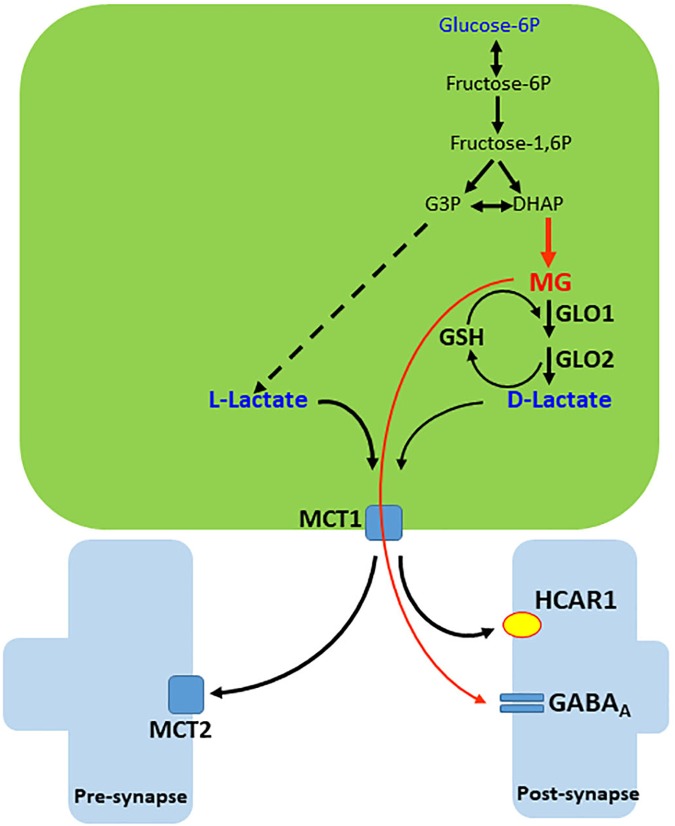
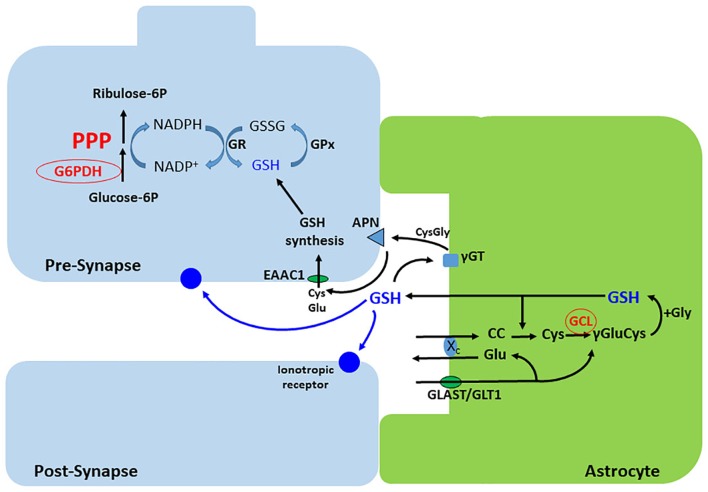
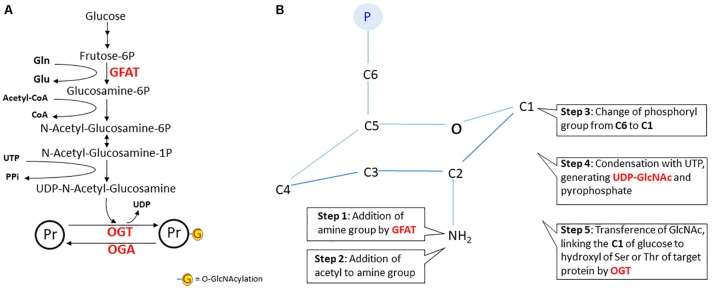
Based on the concept of the tripartite synapse, we have reviewed the role of glucose-derived compounds in glycolytic pathways in astroglial cells. Glucose provides energy and substrate replenishment for brain activity, such as glutamate and lipid synthesis. In addition, glucose metabolism in the astroglial cytoplasm results in products such as lactate, methylglyoxal, and glutathione, which modulate receptors and channels in neurons. Glucose has four potential destinations in neural cells, and it is possible to propose a crossroads in "X" that can be used to describe these four destinations. Glucose-6P can be used either for glycogen synthesis or the pentose phosphate pathway on the left and right arms of the X, respectively. Fructose-6P continues through the glycolysis pathway until pyruvate is formed but can also act as the initial compound in the hexosamine pathway, representing the left and right legs of the X, respectively. We describe each glucose destination and its regulation, indicating the products of these pathways and how they can affect synaptic communication. Extracellular L-lactate, either generated from glucose or from glycogen, binds to HCAR1, a specific receptor that is abundantly localized in perivascular and post-synaptic membranes and regulates synaptic plasticity. Methylglyoxal, a product of a deviation of glycolysis, and its derivative D-lactate are also released by astrocytes and bind to GABA receptors and HCAR1, respectively. Glutathione, in addition to its antioxidant role, also binds to ionotropic glutamate receptors in the synaptic cleft. Finally, we examined the hexosamine pathway and evaluated the effect of GlcNAc-modification on key proteins that regulate the other glucose destinations.
基于三方突触的概念,我们回顾了葡萄糖衍生化合物在星形胶质细胞糖酵解途径中的作用。葡萄糖为大脑活动提供能量和底物补充,例如谷氨酸和脂质合成。此外,星形胶质细胞质中的葡萄糖代谢产生乳酸、甲基乙二醛和谷胱甘肽等产物,这些产物可调节神经元中的受体和通道。葡萄糖在神经细胞中有四个潜在去向,可以提出一个“X”形的交叉点来描述这四个去向。葡萄糖-6磷酸可以分别用于“X”形交叉点左右臂上的糖原合成或磷酸戊糖途径。果糖-6磷酸继续通过糖酵解途径直至形成丙酮酸,但也可以作为己糖胺途径的起始化合物,分别代表“X”形交叉点的左腿和右腿。我们描述了每个葡萄糖去向及其调节,指出这些途径的产物以及它们如何影响突触通讯。细胞外L-乳酸,无论是由葡萄糖还是糖原产生,都与HCAR1结合,HCAR1是一种特异性受体,大量定位于血管周围和突触后膜,并调节突触可塑性。甲基乙二醛是糖酵解偏差的产物,其衍生物D-乳酸也由星形胶质细胞释放,分别与GABA受体和HCAR1结合。谷胱甘肽除了具有抗氧化作用外,还与突触间隙中的离子型谷氨酸受体结合。最后,我们研究了己糖胺途径,并评估了N-乙酰葡糖胺修饰对调节其他葡萄糖去向的关键蛋白的影响。