Lu Haifeng, Ren Zhigang, Li Ang, Li Jinyou, Xu Shaoyan, Zhang Hua, Jiang Jianwen, Yang Jiezuan, Luo Qixia, Zhou Kai, Zheng Shusen, Li Lanjuan
State Key Laboratory for Diagnosis and Treatment of Infectious Diseases, Collaborative Innovation Center for Diagnosis and Treatment of Infectious Diseases, The First Affiliated Hospital, School of Medicine, Zhejiang University, Hangzhou, Zhejiang, P.R. China.
Key Laboratory of Combined Multi-Organ Transplantation, Ministry of Public Health, Department of Hepatobiliary and Pancreatic Surgery, The First Affiliated Hospital, School of Medicine, Zhejiang University, Hangzhou, Zhejiang, P.R. China.
J Oral Microbiol. 2019 Jan 28;11(1):1563409. doi: 10.1080/20002297.2018.1563409. eCollection 2019.
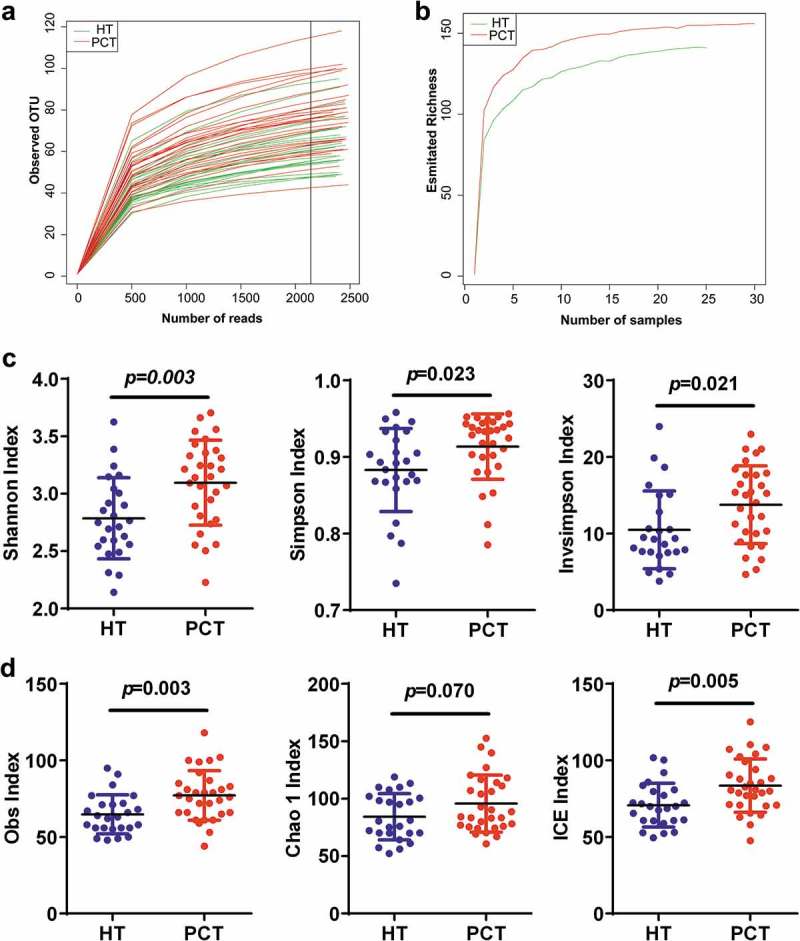
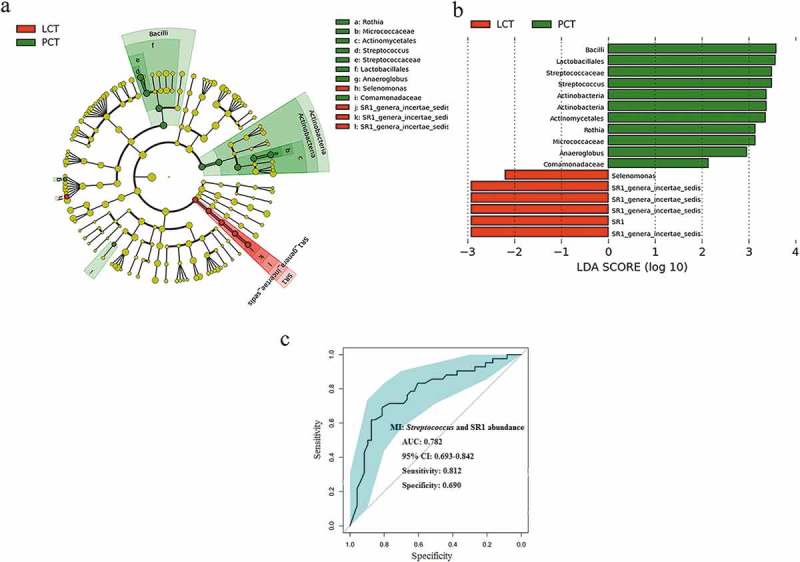
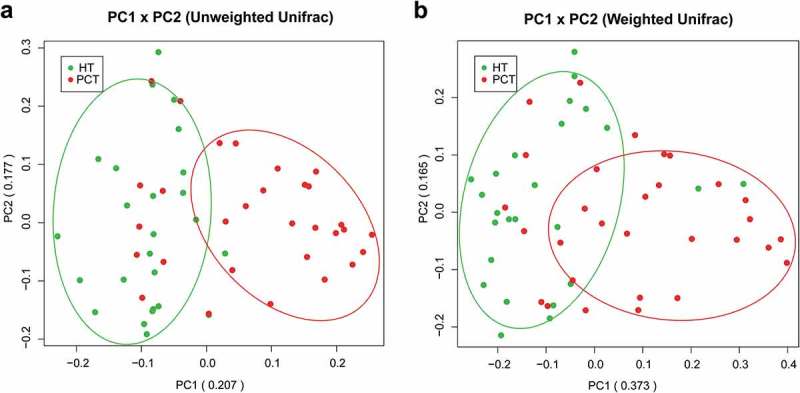
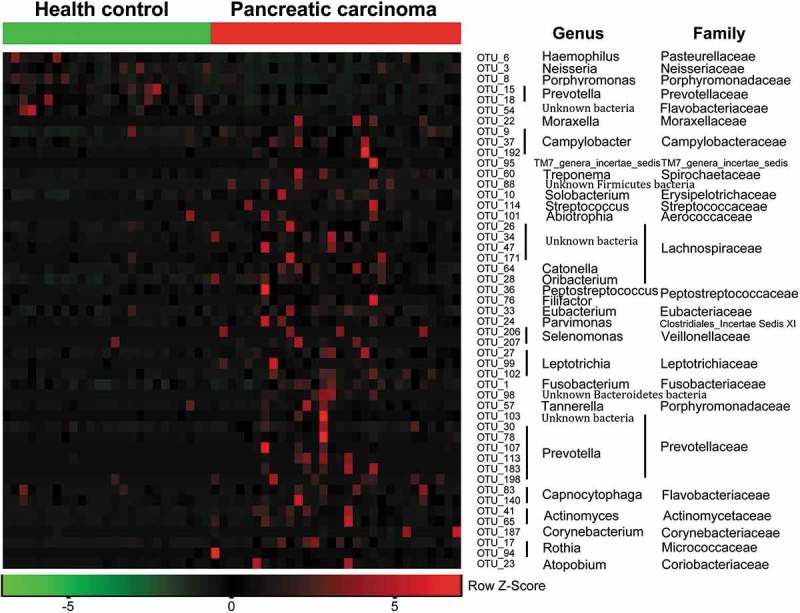
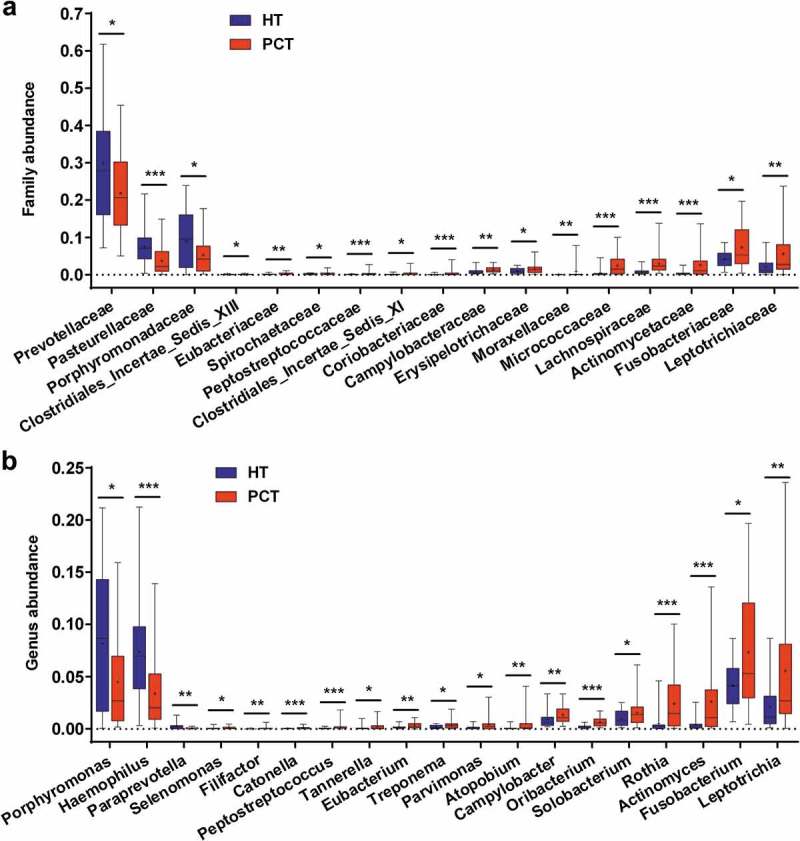
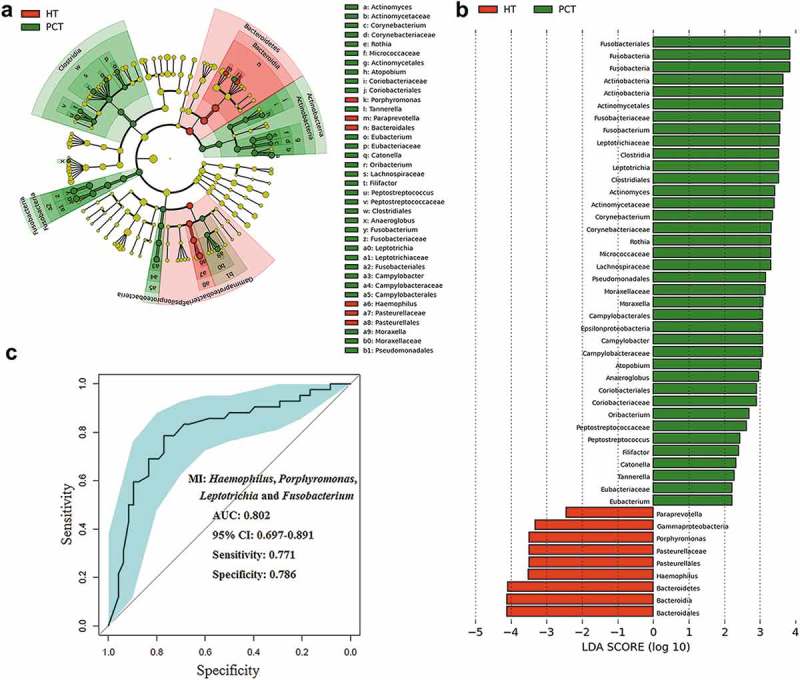
The microbiota plays a critical role in the process of human carcinogenesis. Pancreatic head carcinoma (PHC)-associated tongue coating microbiome dysbiosis has not yet been clearly defined. Our aim is to reveal the bacterial composition shifts in the microbiota of the tongue coat of PHC patients. The tongue coating microbiota was analyzed in 30 PHC patients and 25 healthy controls using 16S rRNA gene sequencing technology. The microbiome diversity of the tongue coat in PHC patients was significantly increased, as shown by the Shannon, Simpson, inverse Simpson, Obs and incidence-based coverage estimators. Principal component analysis revealed that PHC patients were colonized by remarkably different tongue coating microbiota than healthy controls and liver cancer patients. Linear discriminant analysis effect size revealed that , ,, , , , , , , , , and were overrepresented in the tongue coating of PHC patients, and , and were enriched in the tongue coating microbiota of healthy controls. Strikingly, , , and could distinguish PHC patients from healthy subjects, and and SR1 could distinguish PHC patients from liver cancer patients. These findings identified the microbiota dysbiosis of the tongue coat in PHC patients, and provide insight into the association between the human microbiome and pancreatic cancer.
微生物群在人类致癌过程中起着关键作用。胰头癌(PHC)相关的舌苔微生物群失调尚未明确界定。我们的目的是揭示PHC患者舌苔微生物群中的细菌组成变化。使用16S rRNA基因测序技术对30例PHC患者和25例健康对照者的舌苔微生物群进行了分析。香农、辛普森、逆辛普森、观测值和基于发生率的覆盖率估计值显示,PHC患者舌苔的微生物群多样性显著增加。主成分分析显示,与健康对照者和肝癌患者相比,PHC患者的舌苔微生物群明显不同。线性判别分析效应大小显示, 、 、 、 、 、 、 、 、 、 、 和 在PHC患者的舌苔中占比过高,而 、 和 在健康对照者的舌苔微生物群中富集。引人注目的是, 、 、 和 可以区分PHC患者和健康受试者,而 和SR1可以区分PHC患者和肝癌患者。这些发现确定了PHC患者舌苔的微生物群失调,并为人类微生物群与胰腺癌之间的关联提供了见解。