National Institute of Environmental Health, Chinese Center for Disease Control and Prevention, Beijing, China.
Department of Epidemiology and Preventive Medicine, School of Public Health and Preventive Medicine, Monash University, Melbourne, Australia.
Environ Int. 2019 Apr;125:245-251. doi: 10.1016/j.envint.2019.01.073. Epub 2019 Feb 4.
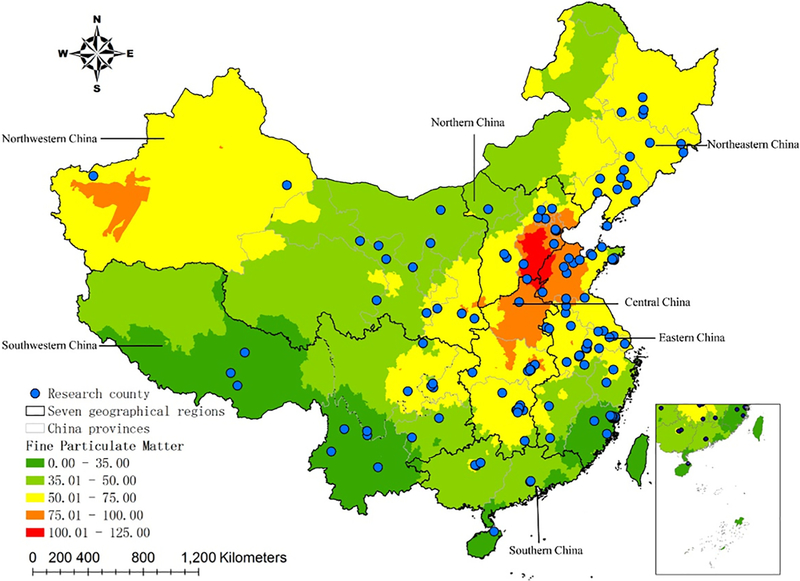
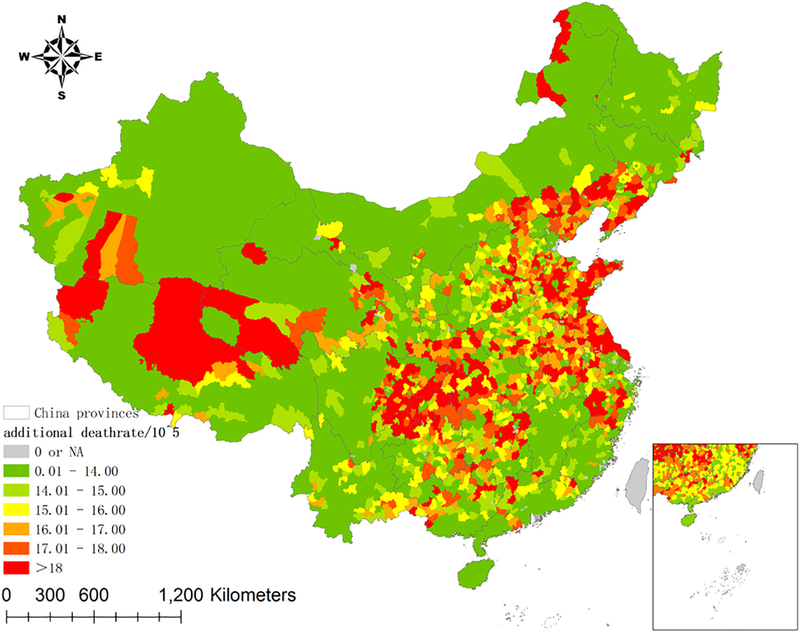
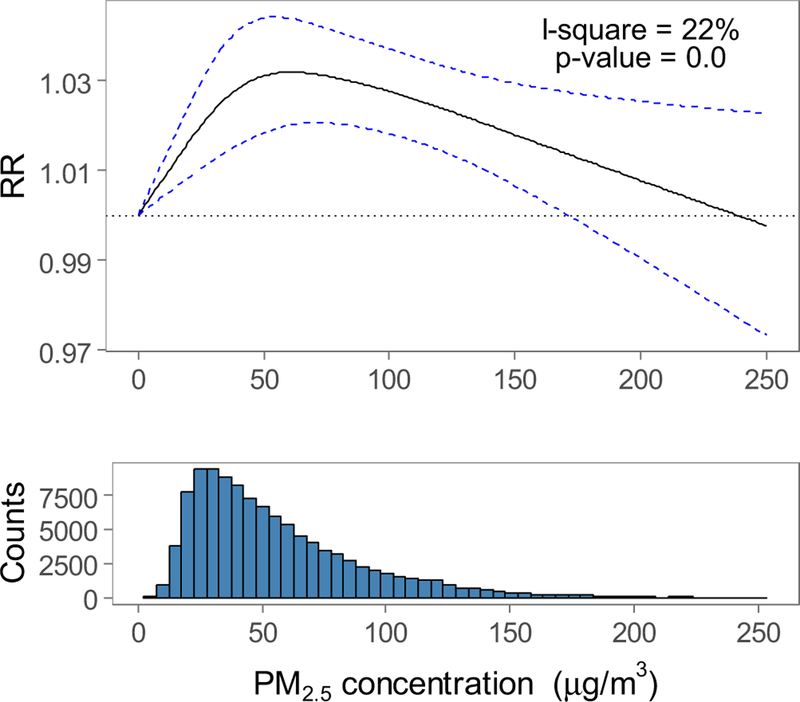
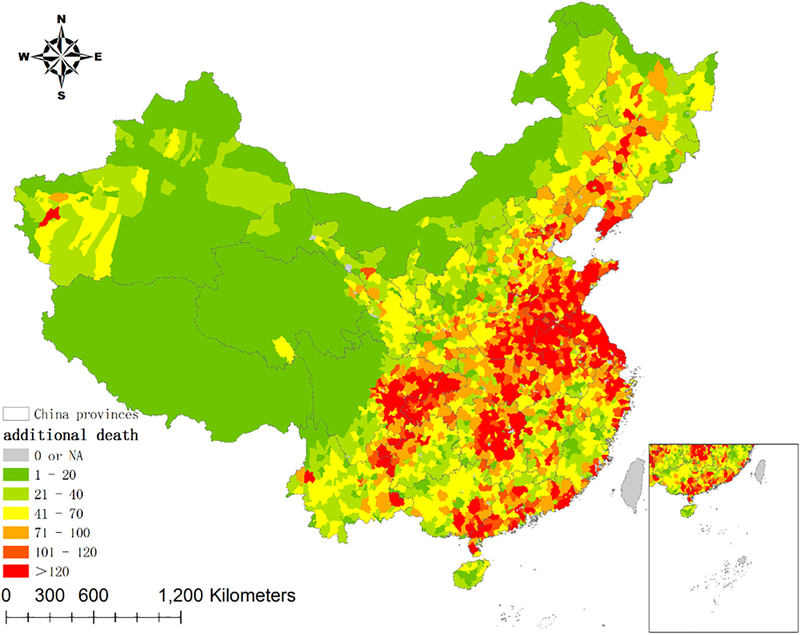
Studies worldwide have estimated the number of deaths attributable to long-term exposure to fine airborne particles (PM), but limited information is available on short-term exposure, particularly in China. In addition, most existing studies have assumed that short-term PM-mortality associations were linear. For this reason, the use of linear exposure-response functions for calculating disease burden of short-term exposure to PM in China may not be appropriate. There is an urgent need for a comprehensive, evidence-based assessment of the disease burden related to short-term PM exposure in China. Here, we explored the non-linear association between short-term PM exposure and all-cause mortality in 104 counties in China; estimated county-specific mortality burdens attributable to short-term PM exposure for all counties in the country and analyzed spatial characteristics of the mortality burden due to short-term PM exposure in China. The pooled PM-mortality association was non-linear, with a reversed J-shape. We found an approximately linear increased risk of mortality from 0 to 62 μg/m and decreased risk from 62 to 250 μg/m. We estimated a total of 169,862 additional deaths from short-term PM exposure throughout China in 2015. Models using linear exposure-response functions for the PM-mortality association estimated 32,186 deaths attributable to PM exposure, which is 5.3 times lower than estimates from the non-linear effect model. Short-term PM exposure contributed greatly to the death burden in China, approximately one seventh of the estimates from the chronic effect. It is essential and crucial to incorporate short-term PM-related mortality estimations when considering the disease burden attributable to PM in developing countries such as China. Traditional linear effect models likely underestimated the mortality burden due to short-term exposure to PM.
全球范围内的研究已经估算出长期暴露于细颗粒物(PM)导致的死亡人数,但关于短期暴露的信息有限,特别是在中国。此外,大多数现有研究假设短期 PM 死亡率与暴露量之间呈线性关系。因此,在中国,使用线性暴露反应函数来计算短期 PM 暴露造成的疾病负担可能并不合适。迫切需要对中国短期 PM 暴露相关疾病负担进行全面的、基于证据的评估。在这里,我们探讨了短期 PM 暴露与中国 104 个县全因死亡率之间的非线性关系;估计了全国所有县因短期 PM 暴露而导致的特定县死亡率负担,并分析了中国短期 PM 暴露导致的死亡率负担的空间特征。PM 死亡率的相关性呈非线性,呈倒 J 形。我们发现,从 0 到 62μg/m 之间,死亡率呈线性增加,而从 62 到 250μg/m 之间,死亡率呈下降趋势。我们估计,2015 年中国因短期 PM 暴露导致的死亡人数增加了 169862 人。使用 PM 死亡率线性关系模型估计,有 32186 人因 PM 暴露而死亡,这一数字比非线性效应模型的估计值低 5.3 倍。短期 PM 暴露在中国的死亡负担中占很大比例,约为慢性效应估计值的七分之一。在考虑像中国这样的发展中国家因 PM 造成的疾病负担时,纳入与短期 PM 相关的死亡率估计至关重要。传统的线性效应模型可能低估了因短期暴露于 PM 而导致的死亡率负担。