Department of Chemical Engineering and David H. Koch Institute for Integrative Cancer Research, Massachusetts Institute of Technology, Cambridge, MA 02139, USA.
Institute for Medical Engineering and Science, Massachusetts Institute of Technology, Cambridge, MA 02139, USA.
Science. 2019 Feb 8;363(6427):611-615. doi: 10.1126/science.aau2277.
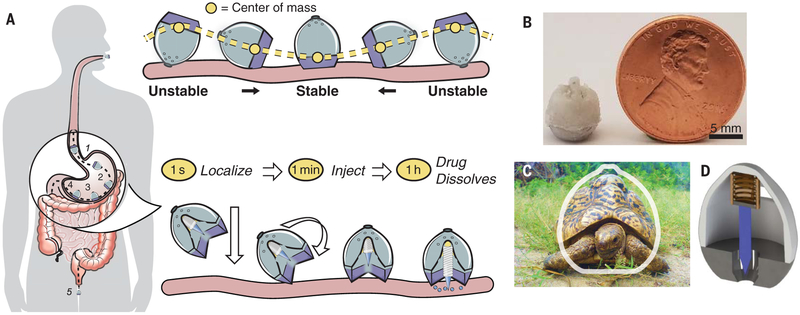
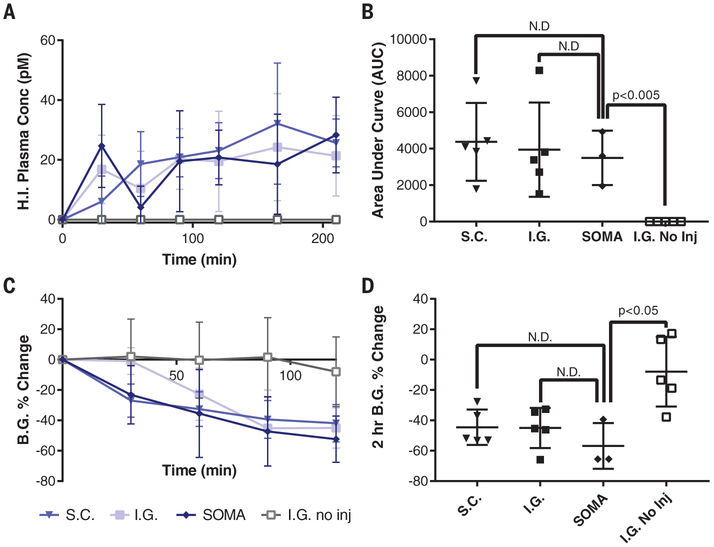
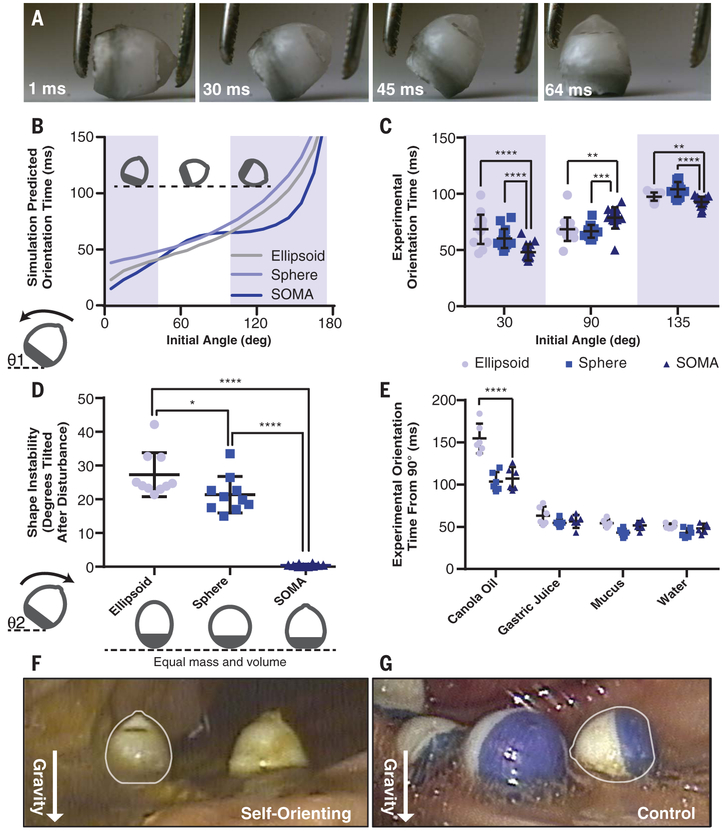
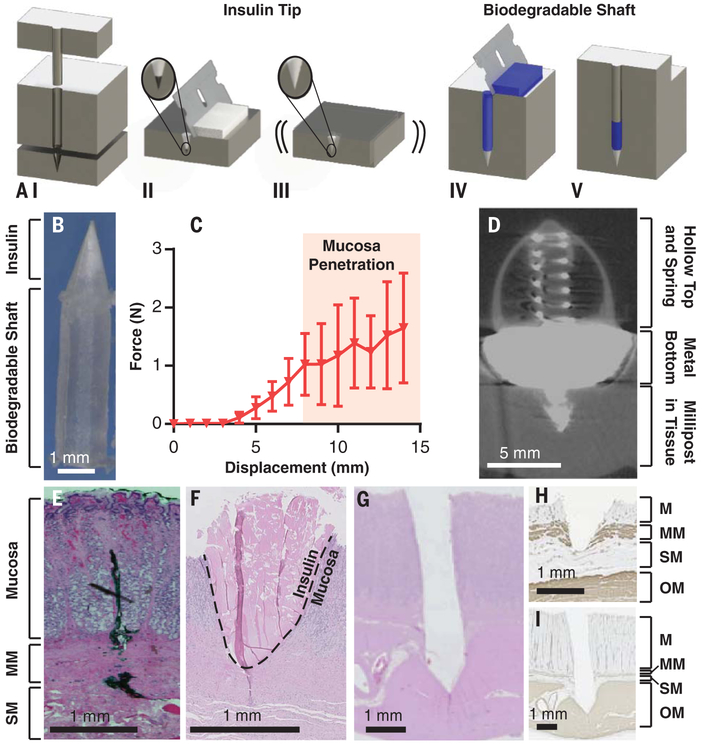
Biomacromolecules have transformed our capacity to effectively treat diseases; however, their rapid degradation and poor absorption in the gastrointestinal (GI) tract generally limit their administration to parenteral routes. An oral biologic delivery system must aid in both localization and permeation to achieve systemic drug uptake. Inspired by the leopard tortoise's ability to passively reorient, we developed an ingestible self-orienting millimeter-scale applicator (SOMA) that autonomously positions itself to engage with GI tissue. It then deploys milliposts fabricated from active pharmaceutical ingredients directly through the gastric mucosa while avoiding perforation. We conducted in vivo studies in rats and swine that support the applicator's safety and, using insulin as a model drug, demonstrated that the SOMA delivers active pharmaceutical ingredient plasma levels comparable to those achieved with subcutaneous millipost administration.
生物大分子极大地提高了我们有效治疗疾病的能力;然而,它们在胃肠道(GI)中的快速降解和吸收不良通常限制了它们只能通过注射途径给药。口服生物给药系统必须有助于定位和渗透,以实现全身药物吸收。受豹龟被动重新定向能力的启发,我们开发了一种可口服的自定向毫米级给药装置(SOMA),它可以自动定位并与 GI 组织接触。然后,它会部署由活性药物成分制成的毫针,直接穿过胃黏膜,同时避免穿孔。我们在大鼠和猪中进行了体内研究,支持了给药装置的安全性,并使用胰岛素作为模型药物,证明 SOMA 能够实现与皮下毫针给药相当的活性药物成分血浆水平。