Beijing Advanced Innovation Center for Food Nutrition and Human Health, College of Food Science & Nutritional Engineering, China Agricultural University, Beijing 100083, China.
National Institutes for Food and Drug Control, Beijing 100050, China.
Int J Mol Sci. 2019 Feb 6;20(3):697. doi: 10.3390/ijms20030697.
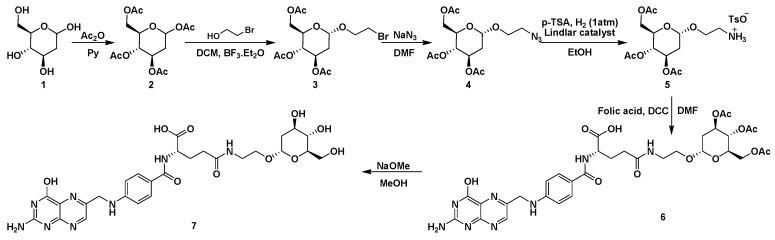
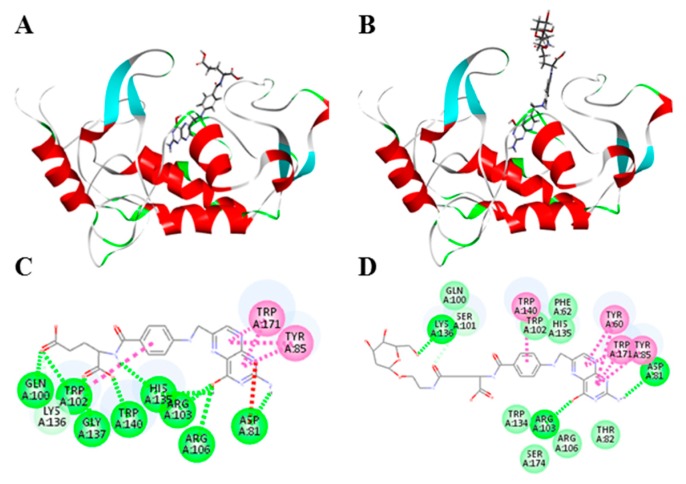
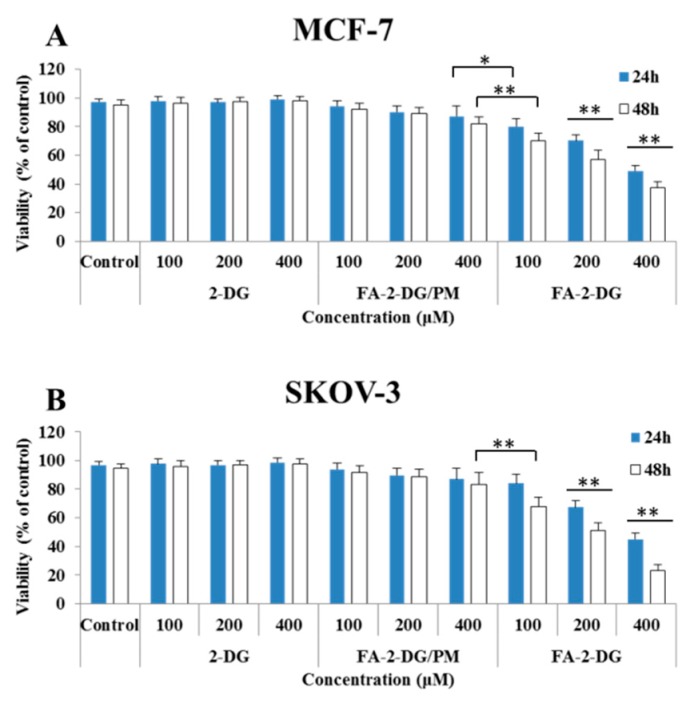
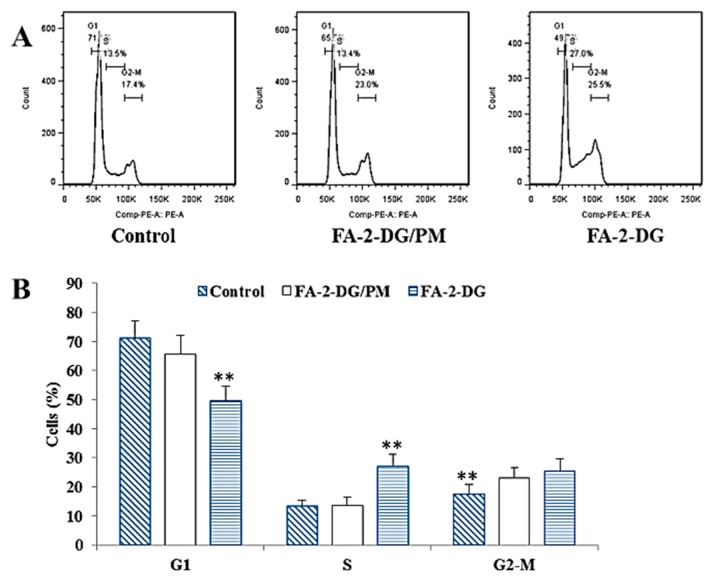
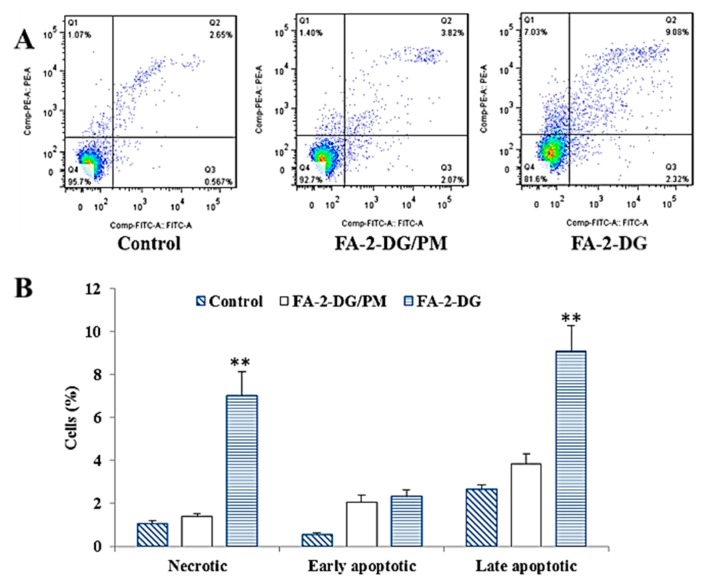
The glucose analog, 2-deoxyglucose (2-DG), specifically inhibits glycolysis of cancer cells and interferes with the growth of cancer cells. However, the excellent water solubility of 2-DG makes it difficult to be concentrated in tumor cells. In this study, a targeted nano-pharmacosome was developed with folic acid-modified 2-DG (FA-2-DG) by using amino ethanol as a cleavable linker. FA-2-DG was able to self-assemble, forming nano-particles with diameters of 10⁻30 nm. The biological effects were evaluated with cell viability assays and flow cytometry analysis. Compared with a physical mixture of folic acid and 2-DG, FA-2-DG clearly reduced cell viability and resulted in cell cycle arrest. A computational study involving docking simulation suggested that FA-2-DG can dock into the same receptor as folic acid, thus confirming that the structural modification did not affect the targeting performance. The results indicated that the nano-pharmacosome consisting of FA-2-DG can be used for targeting in a nano-drug delivery system.
葡萄糖类似物 2-脱氧葡萄糖(2-DG)特异性抑制癌细胞的糖酵解,并干扰癌细胞的生长。然而,2-DG 极好的水溶性使其难以在肿瘤细胞中浓缩。在这项研究中,通过使用氨基乙醇作为可裂解的连接子,用叶酸修饰的 2-DG(FA-2-DG)制备了靶向纳米药囊。FA-2-DG 能够自组装,形成直径为 10-30nm 的纳米颗粒。通过细胞活力测定和流式细胞术分析评估了生物效应。与叶酸和 2-DG 的物理混合物相比,FA-2-DG 明显降低了细胞活力并导致细胞周期停滞。涉及对接模拟的计算研究表明,FA-2-DG 可以与叶酸结合到相同的受体上,从而证实结构修饰不会影响靶向性能。结果表明,由 FA-2-DG 组成的纳米药囊可用于纳米药物递送系统的靶向。