Biotechnology Research Institute, Chinese Academy of Agricultural Sciences, Beijing, 100081, China.
Protein J. 2019 Apr;38(2):190-198. doi: 10.1007/s10930-019-09818-7.
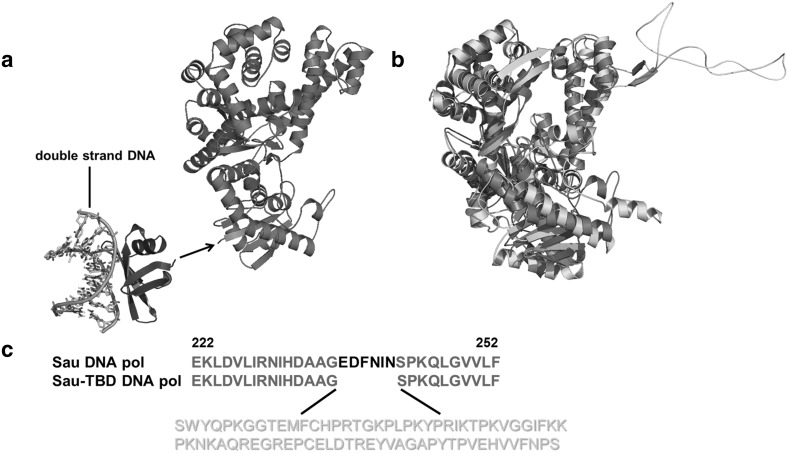
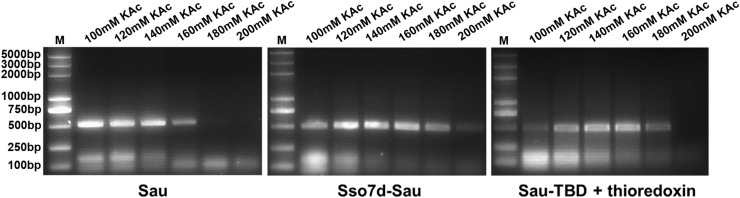
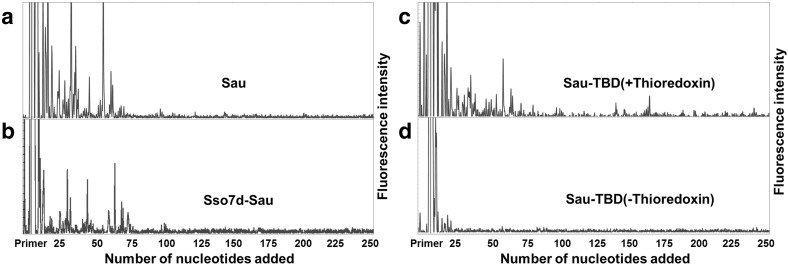
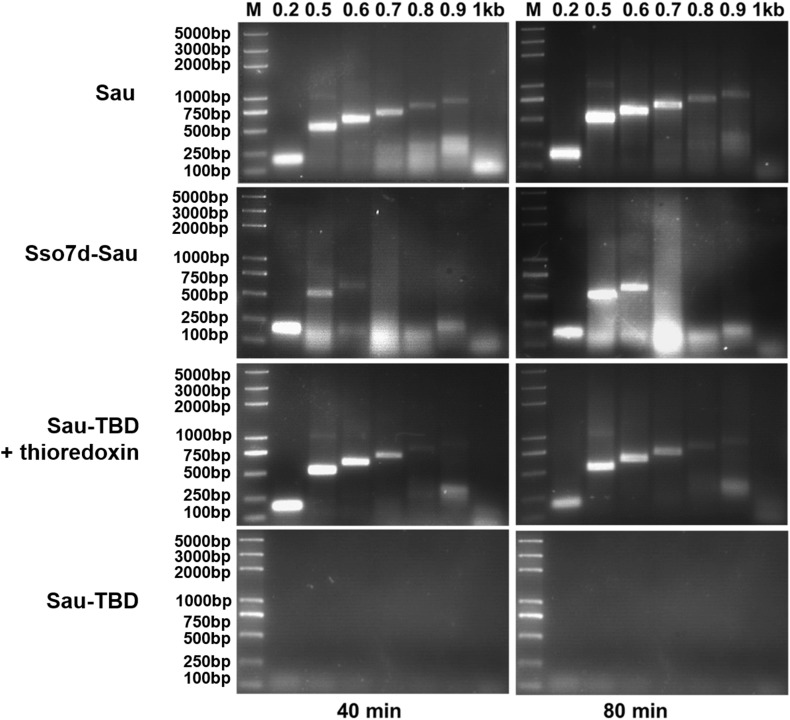
In this article, two engineering-strategies were carried out to enhance the processivity of the DNA polymerase used in recombinase polymerase amplification (RPA). We demonstrate that covalent linkage of a non-specific, double-stranded DNA binding protein, Sso7d, to the large fragment of Staphylococcus aureus Pol I (Sau) caused a moderate enhancement of processivity and a significant improvement in the salt tolerance of Sau. Meanwhile, we provide evidence suggesting that insertion of the thioredoxin-binding domain from bacteriophage T7 DNA polymerase into the analogous position of the large fragment of Sau dramatically enhanced the processivity and mildly increased the salt tolerance of Sau when a host DNA binding protein, thioredoxin, was annexed. Both of these two strategies did not improve the amplifying performance of Sau in RPA, indicating that optimum processivity is crucial for amplifying efficiency.
在本文中,我们采用了两种工程策略来提高重组酶聚合酶扩增(RPA)中使用的 DNA 聚合酶的连续性。我们证明,将非特异性双链 DNA 结合蛋白 Sso7d 共价连接到金黄色葡萄球菌 Pol I(Sau)的大片段上,可适度提高其连续性,并显著提高其耐盐性。同时,我们提供的证据表明,将噬菌体 T7 DNA 聚合酶的硫氧还蛋白结合域插入 Sau 大片段的类似位置,当结合硫氧还蛋白等宿主 DNA 结合蛋白时,可显著提高 Sau 的连续性,并适度提高其耐盐性。这两种策略都没有提高 Sau 在 RPA 中的扩增性能,表明最佳连续性对于扩增效率至关重要。