Department of Biology Education Kyungpook National University, Daegu, Republic of Korea.
Department of Nanoscience & Nanotechnology, Kyungpook National University, Daegu, Republic of Korea.
PLoS One. 2019 Feb 14;14(2):e0211826. doi: 10.1371/journal.pone.0211826. eCollection 2019.
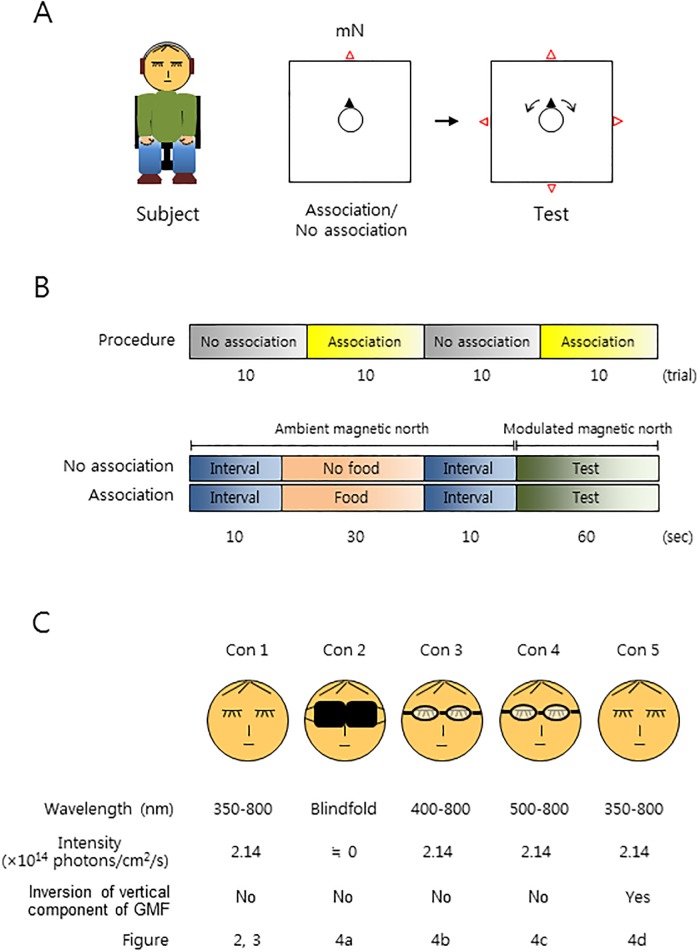
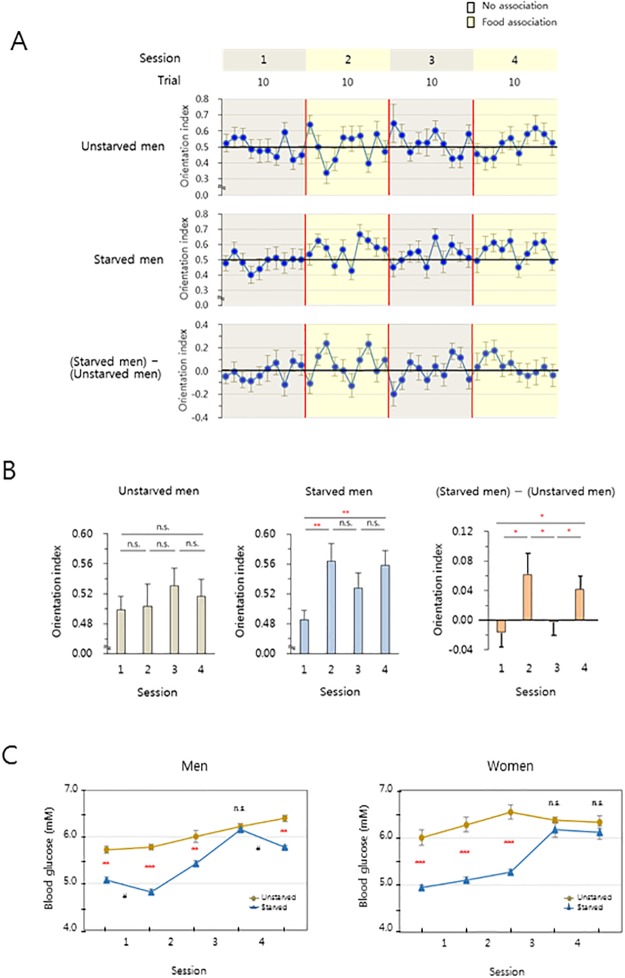
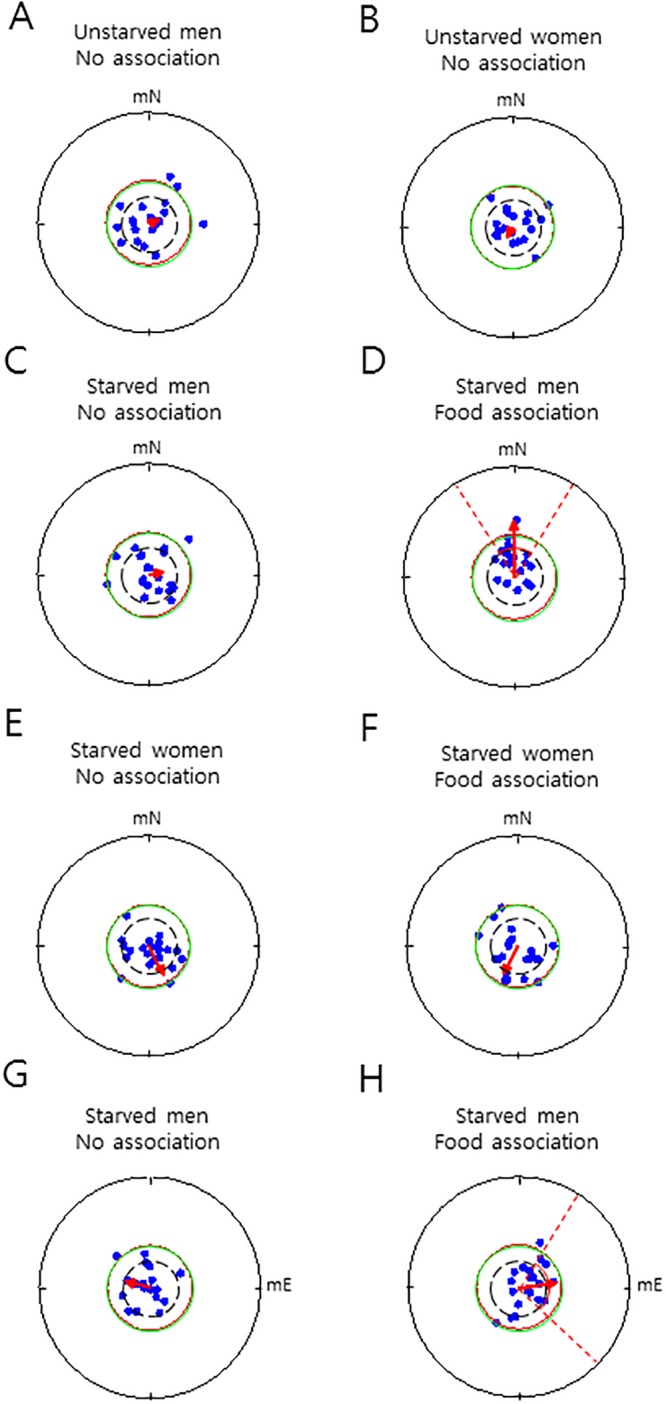
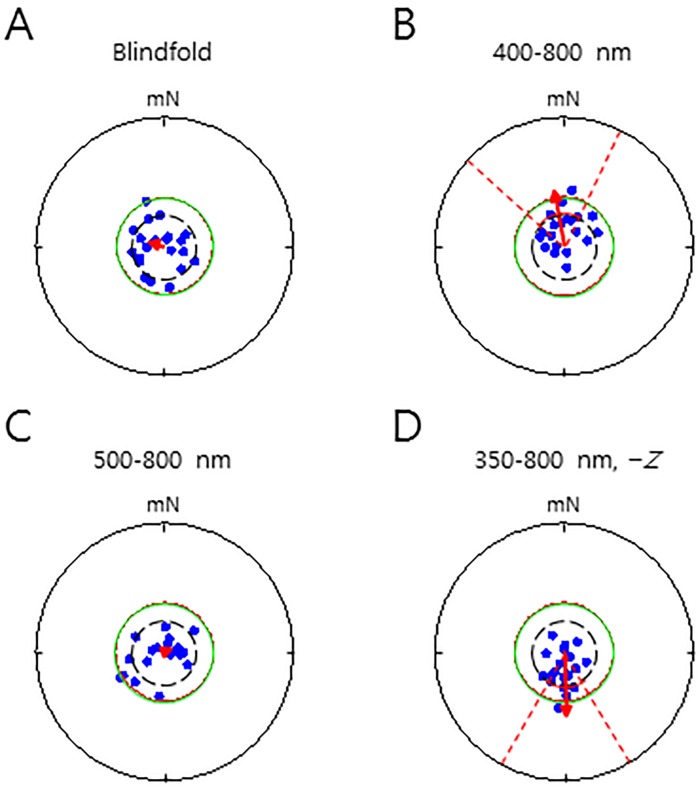
The Earth's geomagnetic field (GMF) is known to influence magnetoreceptive creatures, from bacteria to mammals as a sensory cue or a physiological modulator, despite it is largely thought that humans cannot sense the GMF. Here, we show that humans sense the GMF to orient their direction toward food in a self-rotatory chair experiment. Starved men, but not women, significantly oriented toward the ambient/modulated magnetic north or east, directions which had been previously food-associated, without any other helpful cues, including sight and sound. The orientation was reproduced under blue light but was abolished under a blindfold or a longer wavelength light (> 500 nm), indicating that blue light is necessary for magnetic orientation. Importantly, inversion of the vertical component of the GMF resulted in orientation toward the magnetic south and blood glucose levels resulting from food appeared to act as a motivator for sensing a magnetic field direction. The results demonstrate that male humans sense GMF in a blue light-dependent manner and suggest that the geomagnetic orientations are mediated by an inclination compass.
地球的地磁场(GMF)被认为是一种感官提示或生理调节剂,会影响从细菌到哺乳动物等磁受体生物,尽管人们普遍认为人类无法感知地磁场。在这里,我们通过自旋转椅实验表明,人类能够感知地磁场,从而朝着食物的方向定位。在饥饿的男性中,但不是女性中,他们会明显地朝着环境/调制的磁北或磁东方向定位,这些方向之前与食物有关,没有任何其他有用的线索,包括视觉和听觉。在蓝光下,这种定位可以重现,但在眼罩或更长波长的光(>500nm)下,这种定位会被消除,这表明蓝光是磁定向所必需的。重要的是,地磁场垂直分量的反转导致了对磁南的定位,并且食物引起的血糖水平似乎是感知磁场方向的动力。研究结果表明,男性人类以依赖蓝光的方式感知地磁场,并表明地磁场的定向是由倾斜罗盘介导的。