Centre of Biomedical Research, SGPGIMS Campus, Raebarelly Road, Lucknow, 226014, India.
Faculty of Engineering and Technology, Dr. A. P. J. Abdul Kalam Technical University, Lucknow, 226021, India.
Sci Rep. 2019 Feb 14;9(1):2108. doi: 10.1038/s41598-019-39017-4.
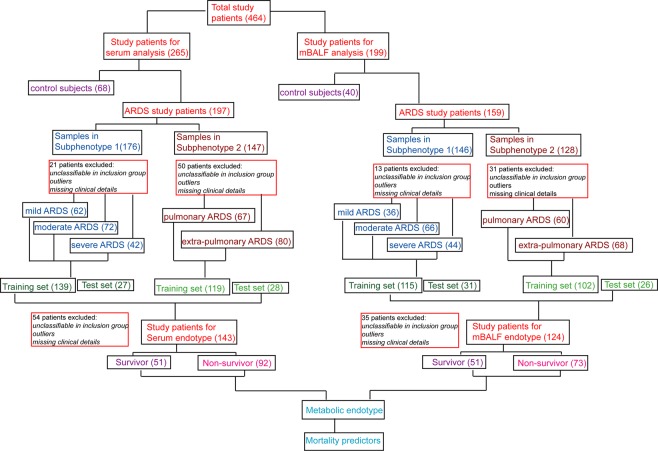
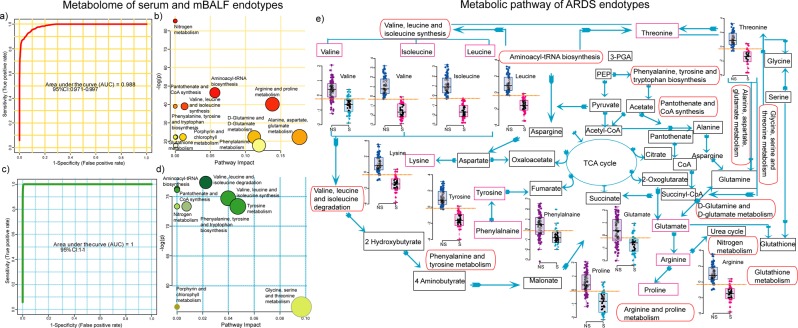
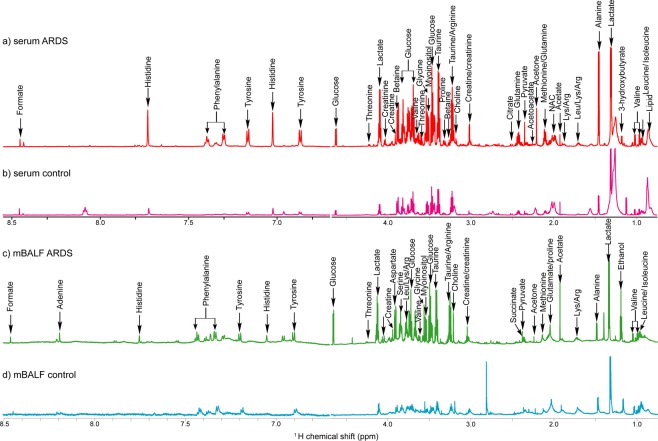
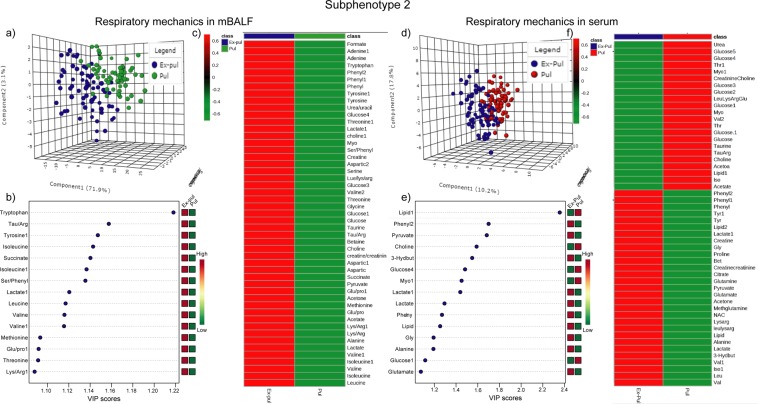
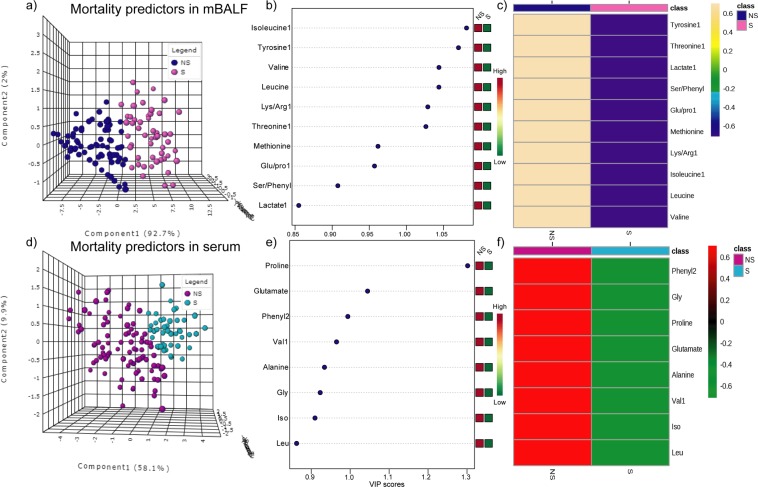
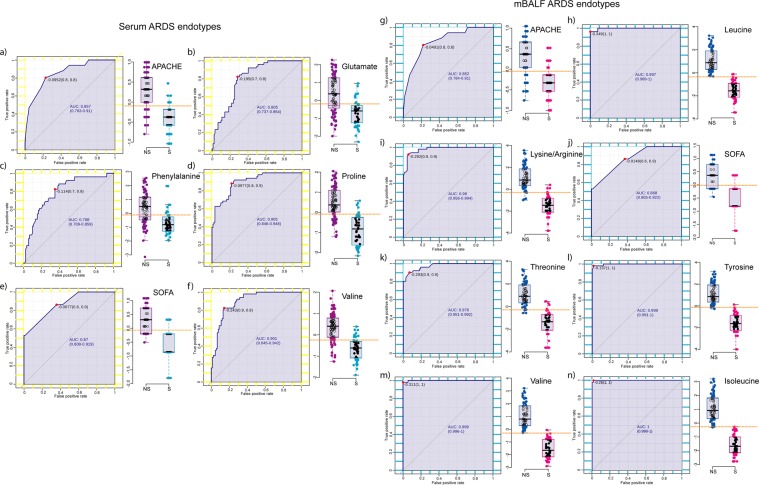
Predisposing aetiologies in Acute Respiratory Distress Syndrome (ARDS), perpetuates to heterogeneous clinical course hampering therapeutic response. Therefore, physiological variables need to be identified by stratifying ARDS subphenotypes and endotype, to target ARDS heterogeneity. The present study is stimulated by the fact that the ARDS heterogeneity arises from diverse pathophysiological changes leading to distinct ARDS endotypes characterized by perturbed biological mechanism which can be exploited in terms of metabolic profile by metabolomics. Biological endotypes using (n = 464 patients and controls), mBALF and serum samples were identified by high - resolution NMR spectroscopy from two clinically diagnosed ARDS subtypes grouped under mild, moderate and severe ARDS as subphenotype1and pulmonary and extra - pulmonary ARDS as subphenotype2. The identified mBALF endotypes (isoleucine, leucine, valine, lysine/arginine, tyrosine, threonine) and serum endotypes (proline, glutamate, phenylalanine, valine) in both subphenotypes by statistical analysis were tested for their reproducibility and robustness. By combining metabolic endotypes with clinical based mortality score (APACHE and SOFA) added to their predictive performance as ARDS mortality predictors. Thus, a comprehensive set of mBALF endotypes representing compartmentalized lung milieu and serological endotypes representing systemic markers of ARDS subtypes were validated. The interlinked biological pathway of these disease specific endotype further elucidated their role as candidate biomarker in governing ARDS heterogeneous biology.
急性呼吸窘迫综合征 (ARDS) 的诱发因素,导致其临床病程呈异质性,从而影响治疗反应。因此,需要通过对 ARDS 亚表型和内表型进行分层,来识别生理变量,以靶向 ARDS 的异质性。本研究的灵感来自于这样一个事实,即 ARDS 的异质性源于不同的病理生理变化,导致不同的 ARDS 内表型,其特征是受干扰的生物学机制,这些机制可以通过代谢组学在代谢特征方面得到利用。使用(n=464 名患者和对照),通过高分辨率 NMR 光谱从两种临床上诊断为 ARDS 的亚型中识别出 mBALF 和血清样本,这些亚型分为轻度、中度和重度 ARDS 作为亚表型 1 和肺内和肺外 ARDS 作为亚表型 2。通过统计分析,在两个亚表型中确定的 mBALF 内表型(异亮氨酸、亮氨酸、缬氨酸、赖氨酸/精氨酸、酪氨酸、苏氨酸)和血清内表型(脯氨酸、谷氨酸、苯丙氨酸、缬氨酸)被测试其重现性和稳健性。通过将代谢内表型与基于临床的死亡率评分(APACHE 和 SOFA)相结合,并将其添加到其作为 ARDS 死亡率预测因子的预测性能中。因此,验证了一组代表肺隔室的综合 mBALF 内表型和代表 ARDS 亚型系统标志物的血清内表型。这些疾病特异性内表型的相互关联的生物学途径进一步阐明了它们作为控制 ARDS 异质生物学的候选生物标志物的作用。