Ghenem Lubna, Elhadi Nasreldin, Alzahrani Faisal, Nishibuchi Mitsuaki
Department of Clinical Laboratory Science, College of Applied Medical Sciences, University of Dammam, 31441 Dammam, Kingdom of Saudi Arabia.
Center for Southeast Asian Studies, Kyoto University, 46 Shomoadachi-cho, Yoshida, Sakyo-ku, Kyoto 606-8501, Japan.
Saudi J Med Med Sci. 2017 May-Aug;5(2):93-103. doi: 10.4103/sjmms.sjmms_30_17. Epub 2017 Apr 20.
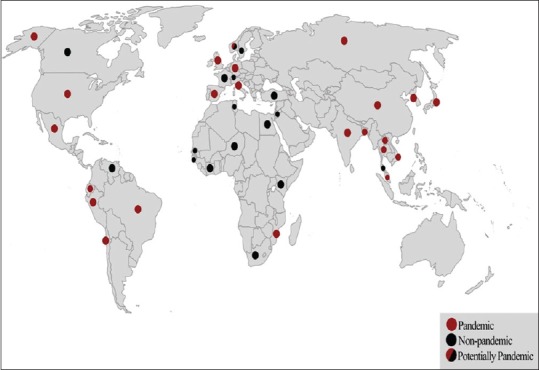
is a Gram-negative, halophilic bacterium isolated from marine environments globally. After the consumption of contaminated seafood, causes acute gastroenteritis. To initiate infection, a wide range of virulence factors are required. A complex group of genes is known to participate in the pathogenicity of ; however, to understand the full mechanism of infection, extensive research is yet required. has become the leading cause of seafood-related gastroenteritis in Japan, the United States and several other parts of the world. In addition, outbreaks caused by the pandemic clone of this organism are escalating and spreading universally. To minimize the risk of infection and warrant the safety of seafood, collaboration between governments and scientists is required. We herein provide an updated review of the pathogenicity determinants and distribution of to deliver a better understanding of the significance of and its host-pathogen interactions.
是一种革兰氏阴性嗜盐菌,全球范围内均可从海洋环境中分离得到。食用受污染的海鲜后,会引发急性肠胃炎。为引发感染,需要多种毒力因子。已知一组复杂的基因参与了的致病性;然而,要全面了解感染机制,仍需进行广泛研究。在日本、美国和世界其他一些地区,已成为与海鲜相关的肠胃炎的主要病因。此外,由该生物体的大流行克隆株引起的疫情正在升级并普遍传播。为尽量降低感染风险并确保海鲜安全,政府和科学家之间需要开展合作。我们在此提供了关于致病性决定因素和分布的最新综述,以更好地理解及其宿主-病原体相互作用的重要性。