Instituto de Medicina Molecular, Faculdade de Medicina, Universidade de Lisboa, Lisbon, Portugal.
Front Cell Infect Microbiol. 2019 Feb 6;9:8. doi: 10.3389/fcimb.2019.00008. eCollection 2019.
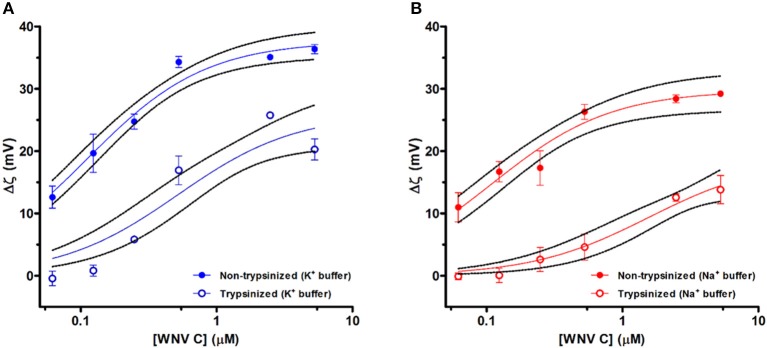
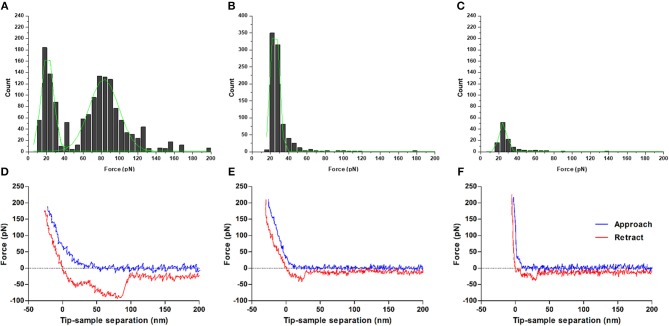
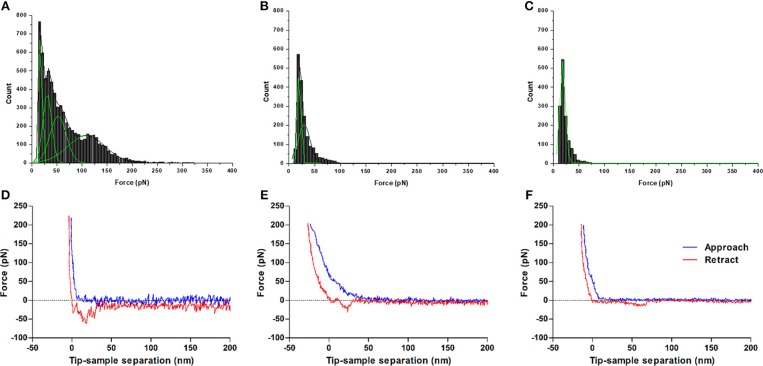
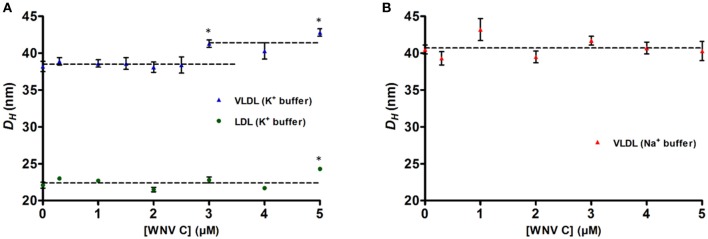
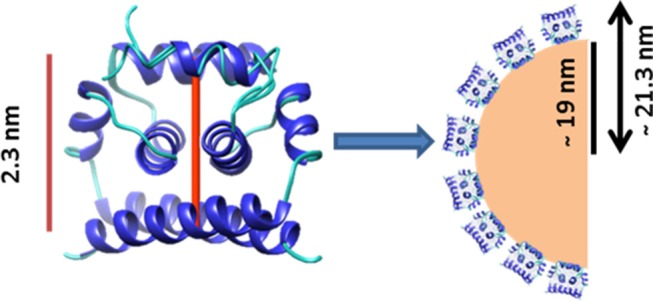
West Nile and dengue viruses are closely related flaviviruses, originating mosquito-borne viral infections for which there are no effective and specific treatments. Their capsid proteins sequence and structure are particularly similar, forming highly superimposable α-helical homodimers. Measuring protein-ligand interactions at the single-molecule level yields detailed information of biological and biomedical relevance. In this work, such an approach was successfully applied on the characterization of the West Nile virus capsid protein interaction with host lipid systems, namely intracellular lipid droplets (an essential step for dengue virus replication) and blood plasma lipoproteins. Dynamic light scattering measurements show that West Nile virus capsid protein binds very low-density lipoproteins, but not low-density lipoproteins, and this interaction is dependent of potassium ions. Zeta potential experiments show that the interaction with lipid droplets is also dependent of potassium ions as well as surface proteins. The forces involved on the binding of the capsid protein with lipid droplets and lipoproteins were determined using atomic force microscopy-based force spectroscopy, proving that these interactions are K-dependent rather than a general dependence of ionic strength. The capsid protein interaction with host lipid systems may be targeted in future therapeutic strategies against different flaviviruses. The biophysical and nanotechnology approaches employed in this study may be applied to characterize the interactions of other important proteins from different viruses, in order to understand their life cycles, as well as to find new strategies to inhibit them.
西尼罗河病毒和登革热病毒是密切相关的黄病毒,起源于蚊媒病毒感染,目前尚无有效和特异的治疗方法。它们的衣壳蛋白序列和结构非常相似,形成高度重叠的α-螺旋同源二聚体。在单分子水平上测量蛋白质-配体相互作用,可以提供具有生物学和生物医学相关性的详细信息。在这项工作中,这种方法成功地应用于表征西尼罗河病毒衣壳蛋白与宿主脂质系统(即细胞内脂质滴(登革热病毒复制的一个重要步骤)和血血浆脂蛋白)的相互作用。动态光散射测量表明,西尼罗河病毒衣壳蛋白结合极低密度脂蛋白,但不结合低密度脂蛋白,这种相互作用依赖于钾离子。Zeta 电位实验表明,与脂质滴的相互作用也依赖于钾离子和表面蛋白。使用原子力显微镜基于力谱法确定了衣壳蛋白与脂质滴和脂蛋白结合的力,证明这些相互作用是 K 依赖性的,而不是离子强度的一般依赖性。衣壳蛋白与宿主脂质系统的相互作用可能成为针对不同黄病毒的未来治疗策略的靶点。本研究中采用的生物物理和纳米技术方法可用于表征来自不同病毒的其他重要蛋白质的相互作用,以便了解它们的生命周期,并找到抑制它们的新策略。