Institute of Bone and Joint Research, The Kolling Institute, Sydney Medical School, University of Sydney, Sydney, NSW, Australia.
Musculoskeletal Health Research Group, Faculty of Health Sciences, University of Sydney, Sydney, NSW, Australia.
PLoS One. 2019 Feb 21;14(2):e0212030. doi: 10.1371/journal.pone.0212030. eCollection 2019.
Approximately half of the population will experience either low back pain or neck pain, at some point in their lives. Previous studies suggest that people with diabetes are more likely to present with chronic somatic pain, including shoulder, knee and spinal pain. This study aimed to systematically review and appraise the literature to explore the magnitude as well as the nature of the association between diabetes and back, neck, or spinal (back and neck) pain.
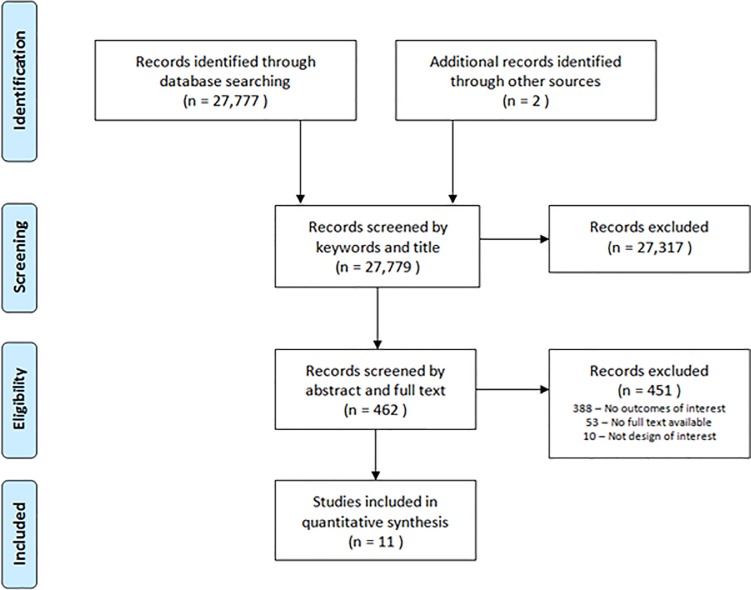
A systematic search was performed using the Medline, CINAHL, EMBASE, and Web of Science electronic databases. Studies which assessed the association between diabetes and back or neck pain outcomes, in participants older than 18 years of age were included. Two independent reviewers extracted data on the incidence of pain and reported associations.
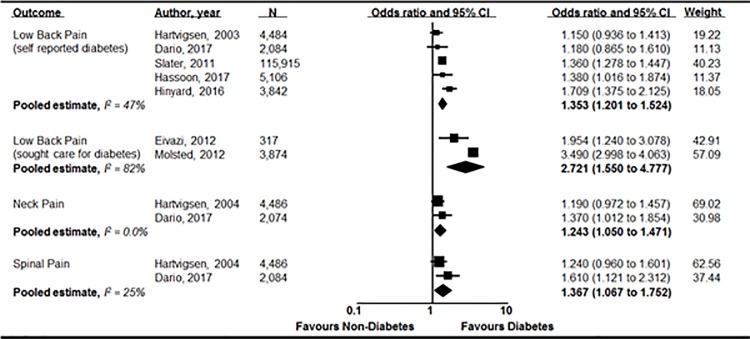
Eight studies were included in the meta-analyses. Meta-analyses showed that people with diabetes are more likely to report low back pain [5 studies; n: 131,431; odds ratio (OR): 1.35; 95% Confidence Interval (CI): 1.20 to 1.52; p<0.001] and neck pain (2 studies; n: 6,560; OR: 1.24; 95% CI: 1.05 to 1.47; p = 0.01) compared to those without diabetes. Results from one longitudinal cohort study suggested that diabetes is not associated with the risk of developing future neck, low back or spinal pain.
Diabetes is associated with low back and neck individually, and spinal pain. The longitudinal analysis showed no association between the conditions. Our results suggest that diabetes co-exists with back pain; however, a direct causal link between diabetes and back pain was not established.
PROSPERO registration CRD42016050738.
大约有一半的人在其一生中,会经历腰痛或颈痛。先前的研究表明,糖尿病患者更容易出现慢性躯体疼痛,包括肩部、膝部和脊柱疼痛。本研究旨在系统地回顾和评估文献,以探讨糖尿病与背部、颈部或脊柱(背部和颈部)疼痛之间关联的程度和性质。
使用 Medline、CINAHL、EMBASE 和 Web of Science 电子数据库进行了系统搜索。纳入的研究评估了年龄大于 18 岁的参与者中糖尿病与背部或颈部疼痛结果之间的关联。两名独立的审查员提取了疼痛发生率的数据并报告了关联。
八项研究被纳入荟萃分析。荟萃分析显示,与没有糖尿病的人相比,糖尿病患者更有可能报告腰痛[5 项研究;n:131431;比值比(OR):1.35;95%置信区间(CI):1.20 至 1.52;p<0.001]和颈痛(2 项研究;n:6560;OR:1.24;95%CI:1.05 至 1.47;p=0.01)。一项纵向队列研究的结果表明,糖尿病与未来发生颈部、腰部或脊柱疼痛的风险无关。
糖尿病与腰痛和颈痛以及脊柱疼痛单独相关。纵向分析表明,这些疾病之间没有关联。我们的结果表明,糖尿病与腰痛并存;然而,糖尿病与腰痛之间没有建立直接的因果关系。
PROSPERO 注册 CRD42016050738。