de Jonge Christa P, Kolken Helena M A, Zadpoor Amir A
Faculty of Mechanical, Maritime and Materials Engineering, Delft University of Technology (TU Delft), Mekelweg 2, 2628 CD Delft, The Netherlands.
Materials (Basel). 2019 Feb 20;12(4):635. doi: 10.3390/ma12040635.
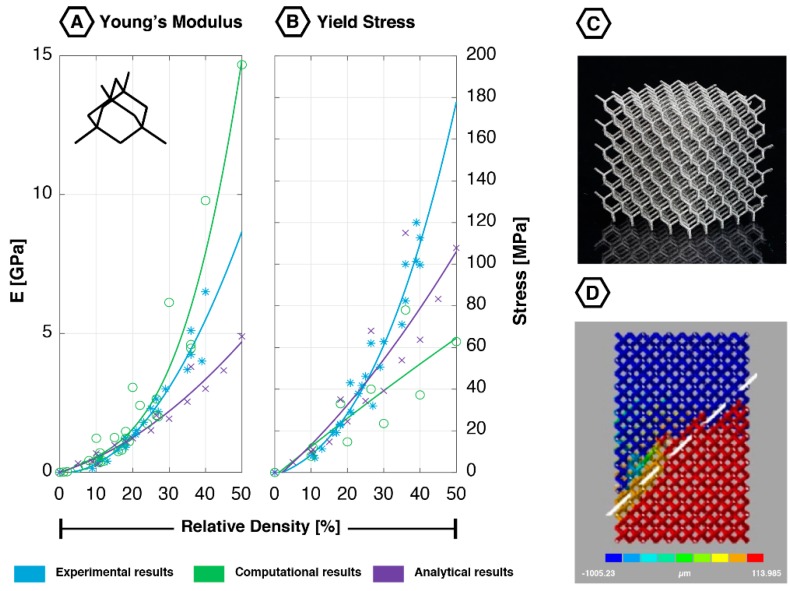
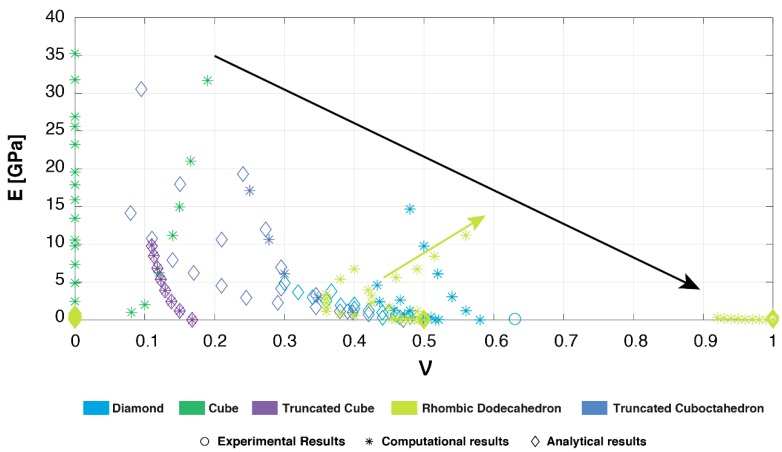
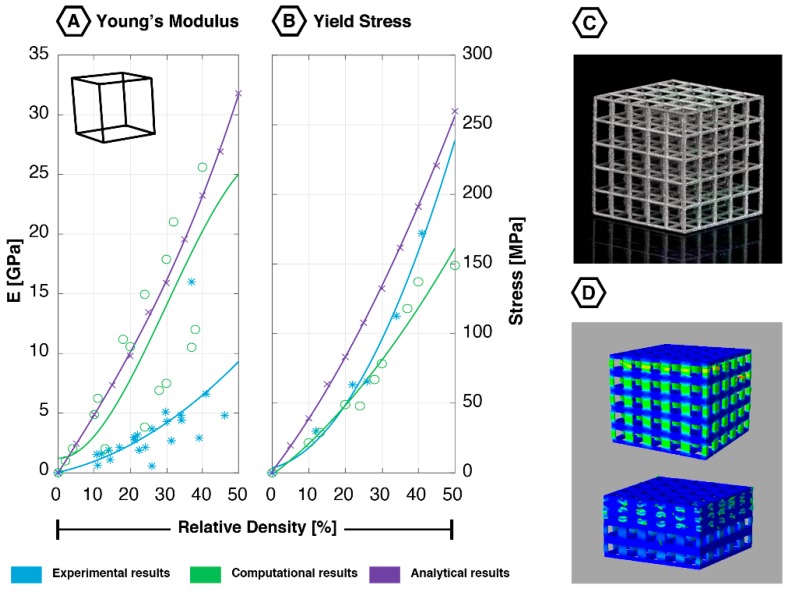
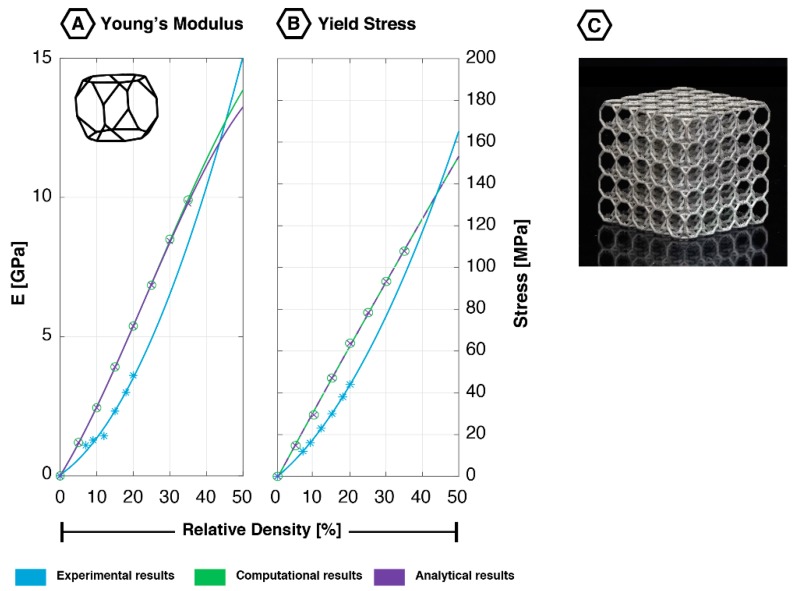
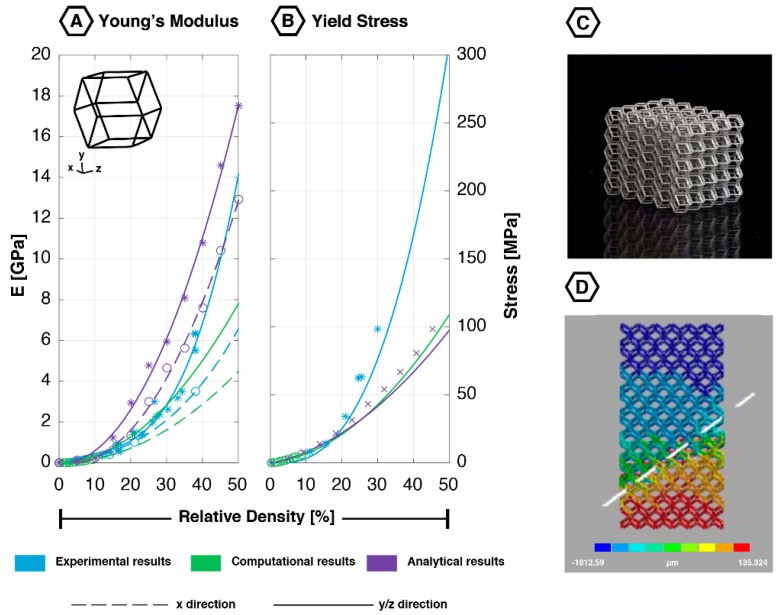
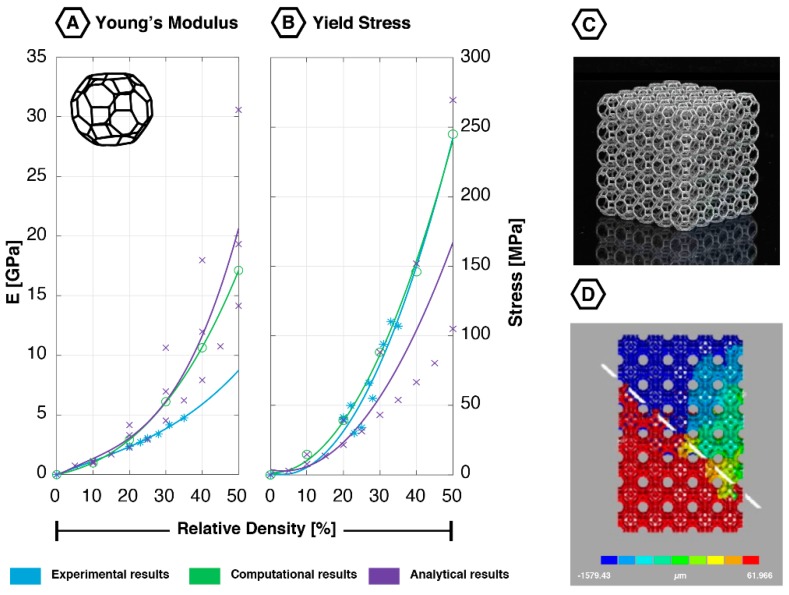
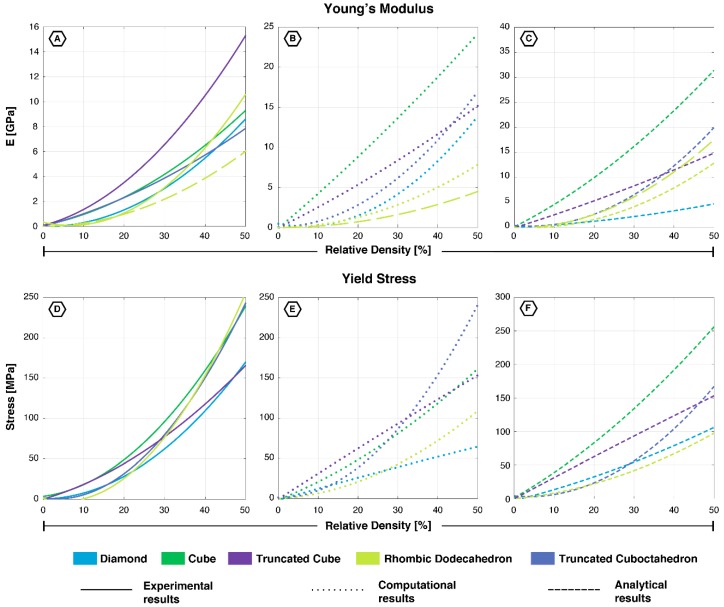
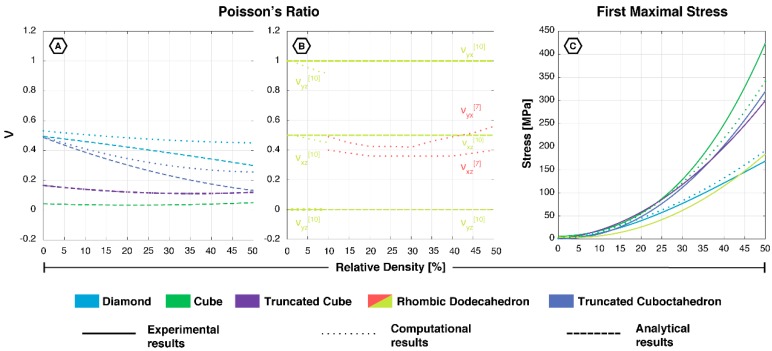
The concept of "mechanical metamaterials" has become increasingly popular, since their macro-scale characteristics can be designed to exhibit unusual combinations of mechanical properties on the micro-scale. The advances in additive manufacturing (AM, three-dimensional printing) techniques have boosted the fabrication of these mechanical metamaterials by facilitating a precise control over their micro-architecture. Although mechanical metamaterials with negative Poisson's ratios (i.e., auxetic metamaterials) have received much attention before and have been reviewed multiple times, no comparable review exists for architected materials with positive Poisson's ratios. Therefore, this review will focus on the topology-property relationships of non-auxetic mechanical metamaterials in general and five topological designs in particular. These include the designs based on the diamond, cube, truncated cube, rhombic dodecahedron, and the truncated cuboctahedron unit cells. We reviewed the mechanical properties and fatigue behavior of these architected materials, while considering the effects of other factors such as those of the AM process. In addition, we systematically analyzed the experimental, computational, and analytical data and solutions available in the literature for the titanium alloy Ti-6Al-4V. Compression dominated lattices, such as the (truncated) cube, showed the highest mechanical properties. All of the proposed unit cells showed a normalized fatigue strength below that of solid titanium (i.e., 40% of the yield stress), in the range of 12⁻36% of their yield stress. The unit cells discussed in this review could potentially be applied in bone-mimicking porous structures.
“机械超材料”的概念越来越受欢迎,因为其宏观尺度的特性可以被设计成在微观尺度上展现出不同寻常的机械性能组合。增材制造(AM,三维打印)技术的进步通过促进对其微观结构的精确控制,推动了这些机械超材料的制造。尽管具有负泊松比的机械超材料(即拉胀超材料)此前已受到广泛关注并被多次综述,但对于具有正泊松比的结构化材料却没有类似的综述。因此,本综述将总体聚焦于非拉胀机械超材料的拓扑结构与性能关系,尤其关注五种拓扑设计。这些设计包括基于菱形、立方体、截角立方体、菱形十二面体和截角二十六面体晶胞的设计。我们综述了这些结构化材料的力学性能和疲劳行为,同时考虑了增材制造工艺等其他因素的影响。此外,我们系统地分析了文献中关于钛合金Ti-6Al-4V的实验、计算和分析数据及解决方案。以压缩为主的晶格,如(截角)立方体,展现出最高的力学性能。所有提出的晶胞的归一化疲劳强度均低于实心钛的归一化疲劳强度(即屈服应力的40%),在其屈服应力的12%至36%范围内。本综述中讨论的晶胞可能潜在地应用于模仿骨骼的多孔结构。