Scocchia Alicia, Wigby Kristen M, Masser-Frye Diane, Del Campo Miguel, Galarreta Carolina I, Thorpe Erin, McEachern Julia, Robinson Keisha, Gross Andrew, Ajay Subramanian S, Rajan Vani, Perry Denise L, Belmont John W, Bentley David R, Jones Marilyn C, Taft Ryan J
1Illumina, Inc, San Diego, CA 92122 USA.
2Rady's Children's Hospital, San Diego, CA 92123 USA.
NPJ Genom Med. 2019 Feb 14;4:5. doi: 10.1038/s41525-018-0076-1. eCollection 2019.
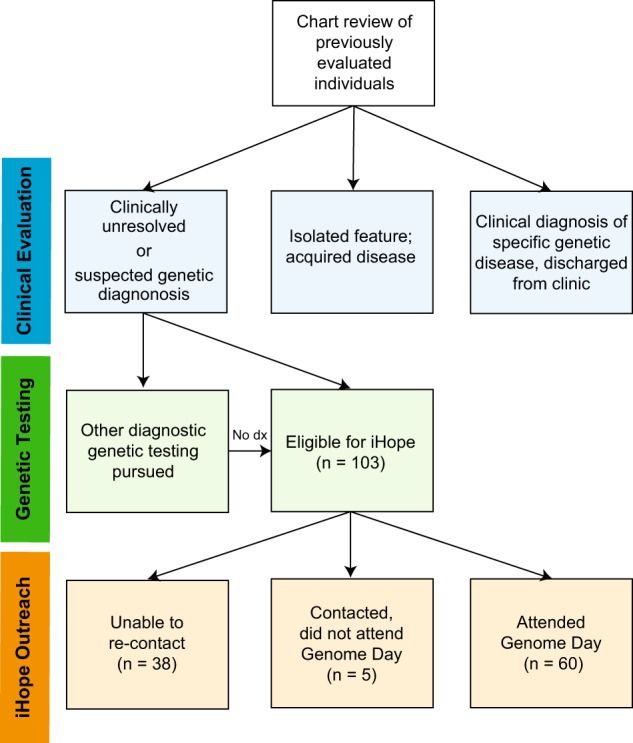
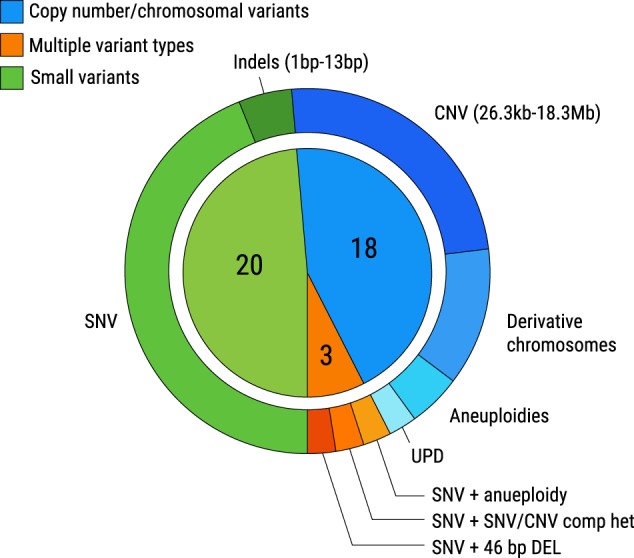
Patients with rare, undiagnosed, or genetic disease (RUGD) often undergo years of serial testing, commonly referred to as the "diagnostic odyssey". Patients in resource-limited areas face even greater challenges-a definitive diagnosis may never be reached due to difficulties in gaining access to clinicians, appropriate specialists, and diagnostic testing. Here, we report on a collaboration of the Illumina iHope Program with the Foundation for the Children of the Californias and Hospital Infantil de Las Californias, to enable deployment of clinical whole genome sequencing (cWGS) as first-tier test in a resource-limited dysmorphology clinic in northern Mexico. A total of 60 probands who were followed for a suspected genetic diagnosis and clinically unresolved after expert examination were tested with cWGS, and the ordering clinicians completed a semi-structured survey to investigate change in clinical management resulting from cWGS findings. Clinically significant genomic findings were identified in 68.3% ( = 41) of probands. No recurrent molecular diagnoses were observed. Copy number variants or gross chromosomal abnormalities accounted for 48.8% ( = 20) of the diagnosed cases, including a mosaic trisomy and suspected derivative chromosomes. A qualitative assessment of clinical management revealed 48.8% ( = 20) of those diagnosed had a change in clinical course based on their cWGS results, despite resource limitations. These data suggest that a cWGS first-tier testing approach can benefit patients with suspected genetic disorders.
患有罕见、未确诊或遗传性疾病(RUGD)的患者通常要经历数年的系列检测,通常被称为“诊断之旅”。资源有限地区的患者面临着更大的挑战——由于难以接触到临床医生、合适的专家以及诊断检测,可能永远无法得到明确的诊断。在此,我们报告了Illumina iHope项目与加利福尼亚儿童基金会及加利福尼亚儿童医院的合作,以便在墨西哥北部一个资源有限的畸形学诊所将临床全基因组测序(cWGS)作为一线检测方法进行应用。共有60名因疑似遗传诊断而接受随访且经专家检查后临床仍未确诊的先证者接受了cWGS检测,开具检测单的临床医生完成了一项半结构化调查,以研究cWGS结果导致的临床管理变化。在68.3%(n = 41)的先证者中发现了具有临床意义的基因组结果。未观察到复发性分子诊断。拷贝数变异或染色体大片段异常占已确诊病例的48.8%(n = 20),包括嵌合三体和疑似衍生染色体。对临床管理的定性评估显示,尽管存在资源限制,但48.8%(n = 20)的确诊患者根据其cWGS结果改变了临床病程。这些数据表明,cWGS一线检测方法可使疑似遗传疾病患者受益。