AgNovos Healthcare, 7301 Calhoun Place Suite 100, Rockville, Maryland 20855.
Copley Hospital, 528 Washington Hwy, Morrisville, Vermont 05661.
J Orthop Res. 2019 Apr;37(4):908-915. doi: 10.1002/jor.24239. Epub 2019 Mar 20.
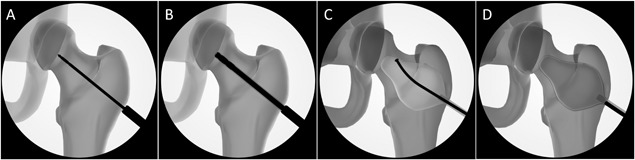
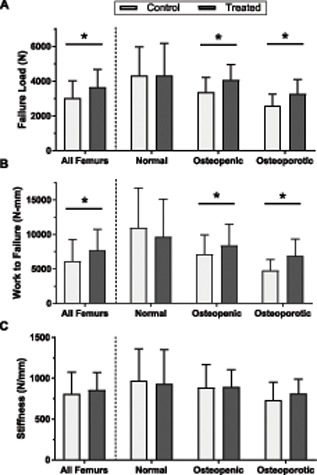
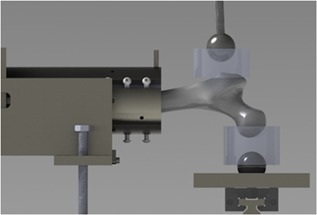
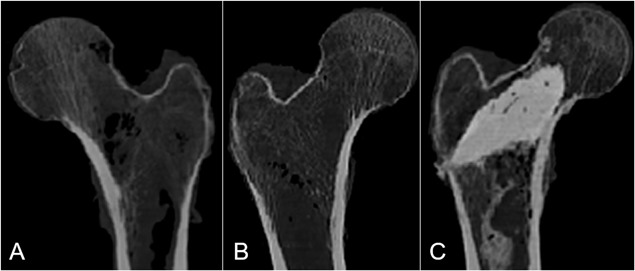
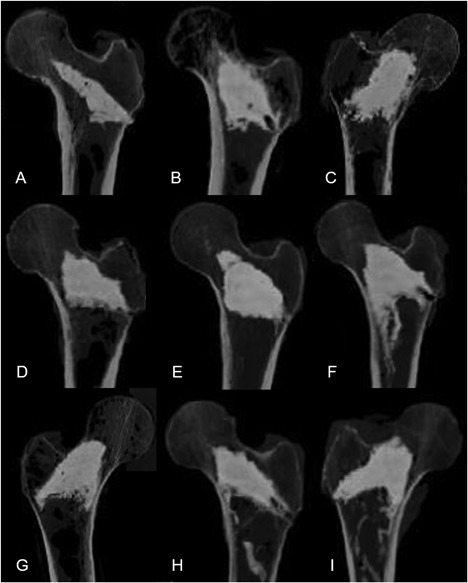
Current pharmaceutical therapies can reduce hip fractures by up to 50%, but compliance to treatment is low and therapies take up to 18 months to reduce risk. Thus, alternative or complementary approaches to reduce the risk of hip fracture are needed. The AGN1 local osteo-enhancement procedure (LOEP) is one such alternative approach, as it is designed to locally replace bone lost due to osteoporosis and provide immediate biomechanical benefit. This in vitro study evaluated the initial biomechanical impact of this treatment on human cadaveric femurs. We obtained 45 pairs of cadaveric femurs from women aged 77.8 ± 8.8 years. One femur of each pair was treated, while the contralateral femur served as an untreated control. Treatment included debridement, irrigation/suction, and injection of a triphasic calcium-based implant (AGN1). Mechanical testing of the femora was performed in a sideways fall configuration 24 h after treatment. Of the 45 pairs, 4 had normal, 16 osteopenic, and 25 osteoporotic BMD T-scores. Altogether, treatment increased failure load on average by 20.5% (p < 0.0001). In the subset of osteoporotic femurs, treatment increased failure load by 26% and work to failure by 45% (p < 0.01 for both). Treatment did not significantly affect stiffness in any group. These findings provide evidence that local delivery of the triphasic calcium-based implant in the proximal femur is technically feasible and provides immediate biomechanical benefit. Our results provide strong rationale for additional studies investigating the utility of this approach for reducing the risk of hip fracture. © 2019 The Authors. Journal of Orthopaedic Research® Published by Wiley Periodicals, Inc. on behalf of Orthopaedic Research Society.
当前的药物疗法可以将髋部骨折的风险降低多达 50%,但治疗的依从性较低,治疗需要长达 18 个月才能降低风险。因此,需要寻找替代或补充方法来降低髋部骨折的风险。AGN1 局部骨增强术(LOEP)就是这样一种替代方法,因为它旨在局部替代因骨质疏松症而丢失的骨骼,并提供即时的生物力学益处。本体外研究评估了这种治疗方法对人体尸体股骨的初始生物力学影响。我们从年龄为 77.8 ± 8.8 岁的女性中获得了 45 对尸体股骨。每对股骨中的一条进行了治疗,而对侧股骨作为未经处理的对照。治疗包括清创、冲洗/抽吸和注射三相钙基植入物(AGN1)。在治疗后 24 小时,采用侧方跌倒配置对股骨进行机械测试。在 45 对股骨中,有 4 对股骨的 BMD T 评分正常,16 对股骨的 BMD T 评分为骨质疏松前期,25 对股骨的 BMD T 评分为骨质疏松。总的来说,治疗平均使失效载荷增加了 20.5%(p < 0.0001)。在骨质疏松股骨亚组中,治疗使失效载荷增加了 26%,使失效功增加了 45%(两者均 p < 0.01)。在任何组中,治疗都没有显著影响刚度。这些发现为在股骨近端局部递送三相钙基植入物具有技术可行性并提供即时生物力学益处提供了证据。我们的结果为进一步研究该方法降低髋部骨折风险的实用性提供了强有力的依据。©2019 作者。《骨科研究杂志》由 Wiley 期刊出版公司代表骨科研究协会出版。