Depatment of Parasitology, Faculty of Medicine, University of Malaya, Kuala Lumpur, Malaysia.
Department of Medicine, Faculty of Medicine, University of Malaya, Kuala Lumpur, Malaysia.
PLoS One. 2019 Feb 22;14(2):e0212542. doi: 10.1371/journal.pone.0212542. eCollection 2019.
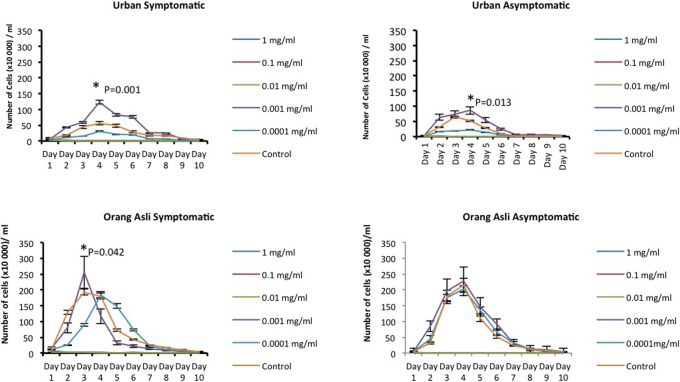
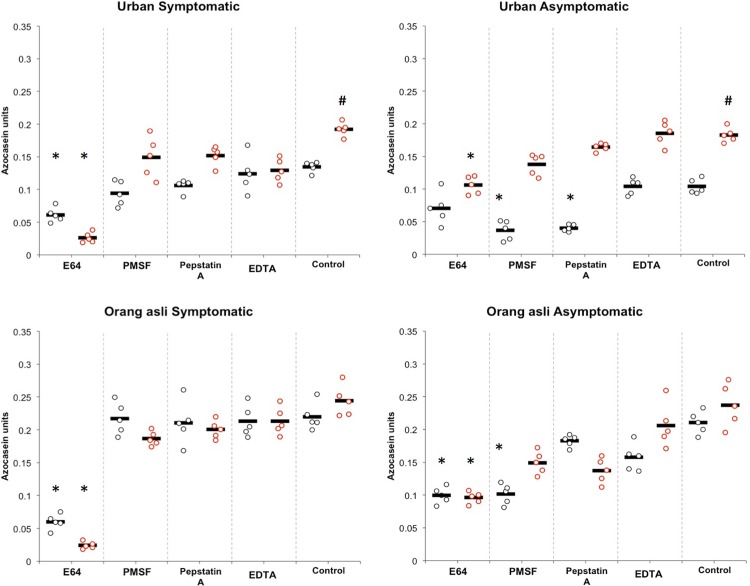
Blastocsytis sp. is a protozoan parasite that has been linked to common gastrointestinal illnesses. Metronidazole, the first line therapy, was reported to show frequent inefficacy. Previously, Blastocystis sp. isolated from different population showed varying metronidazole resistance. However, the effect of metronidazole treatment on pathogenic potentials of Blastocystis sp. isolated from different populations, which is known to have different gut environment, is unclear. This study investigates the in vitro effect of metronidazole on the pathogenic potentials of Blastocystis sp. isolated from urban and orang asli individuals. Blastocystis sp. ST 3 isolated from symptomatic and asymptomatic individuals were treated with a range of metronidazole concentration. The parasites' growth characteristics, apoptotic rate, specific protease activity and the ability to proliferate cancer cells were analyzed upon treatment with 0.001 mg/l metronidazole. The study demonstrates that Blastocystis sp. isolates showed increase in the parasite numbers especially the amoebic forms (only in urban isolates) after treating with metronidazole at the concentration of 0.001 mg/ml. High number of cells in post-treated isolates coincided with increase of apoptosis. There was a significant increase in cysteine protease of Blastocystis sp. isolates upon treatment despite the initial predominance of serine protease in asymptomatic isolates. Metronidazole resistant Blastocystis sp. also showed significant increase in cancer cell proliferation. Resistance to metronidazole did not show significant different influence on the pathogenicity between Blastocystis sp. isolated from urban and orang asli individual. However, an increase in parasite numbers, higher amoebic forms, cysteine protease and ability to proliferate cancer cells implicates a pathogenic role. The study provides evidence for the first time, the effect of metronidazole towards enhancing pathogenic potentials in Blastocystis sp. when isolated from different gut environment. This necessitates the need for reassessment of metronidazole treatment modalities.
Blastocsytis sp. 是一种原生动物寄生虫,与常见的胃肠道疾病有关。甲硝唑是一线治疗药物,但据报道其疗效不佳。以前,从不同人群中分离出的 Blastocystis sp. 显示出不同的甲硝唑耐药性。然而,甲硝唑治疗对不同人群中分离出的 Blastocystis sp. 的致病潜力的影响尚不清楚,已知不同的肠道环境会导致 Blastocystis sp. 的致病潜力不同。本研究调查了甲硝唑对从城市和原住民族个体中分离出的 Blastocystis sp. 的致病潜力的体外影响。用一系列甲硝唑浓度处理从有症状和无症状个体中分离出的 Blastocystis sp. ST3。在用 0.001 mg/l 甲硝唑处理后,分析寄生虫的生长特性、凋亡率、特异性蛋白酶活性和增殖癌细胞的能力。研究表明,在用 0.001 mg/ml 甲硝唑处理后,Blastocystis sp. 分离株的数量增加,特别是在城市分离株中出现了变形虫形式(只有在城市分离株中)。后处理分离株中的高细胞数与凋亡增加相一致。尽管无症状分离株中最初以丝氨酸蛋白酶为主,但 Blastocystis sp. 分离株的半胱氨酸蛋白酶显著增加。甲硝唑耐药性 Blastocystis sp. 对癌细胞增殖的影响也显著增加。甲硝唑耐药性对从城市和原住民族个体中分离出的 Blastocystis sp. 的致病性没有显著不同的影响。然而,寄生虫数量的增加、更高的变形虫形式、半胱氨酸蛋白酶和增殖癌细胞的能力暗示了一种致病作用。该研究首次提供了甲硝唑对从不同肠道环境中分离出的 Blastocystis sp. 增强致病潜力的影响的证据。这需要重新评估甲硝唑的治疗方式。