Department of Biochemistry and Molecular Biology, Faculty of Medicine, University of Debrecen, H-4032 Debrecen, Hungary.
Johns Hopkins University School of Medicine, Department of Medicine and Biological Chemistry, Institute for Fundamental Biomedical Research, Johns Hopkins All Children's Hospital, Saint Petersburg, FL 33701, USA.
Nucleic Acids Res. 2019 Apr 8;47(6):2778-2792. doi: 10.1093/nar/gkz118.
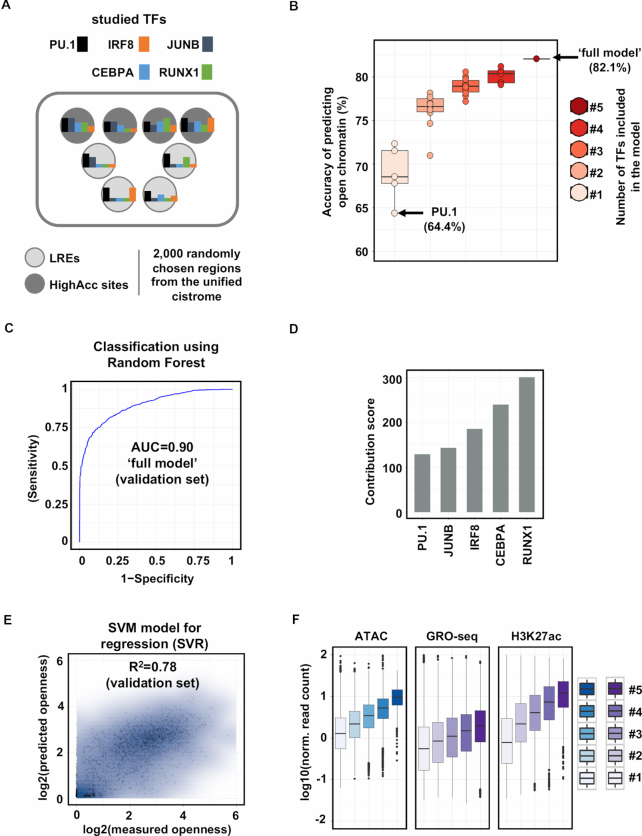
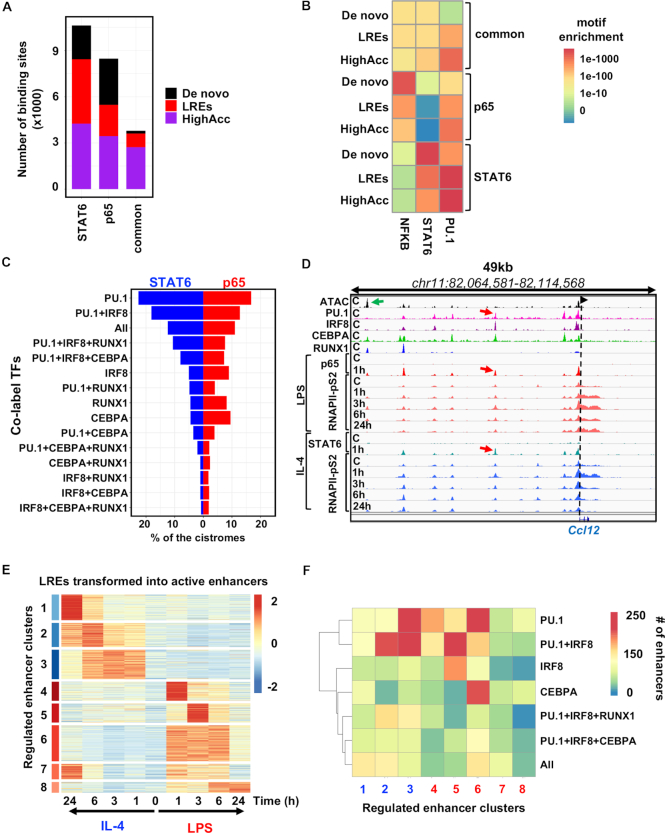
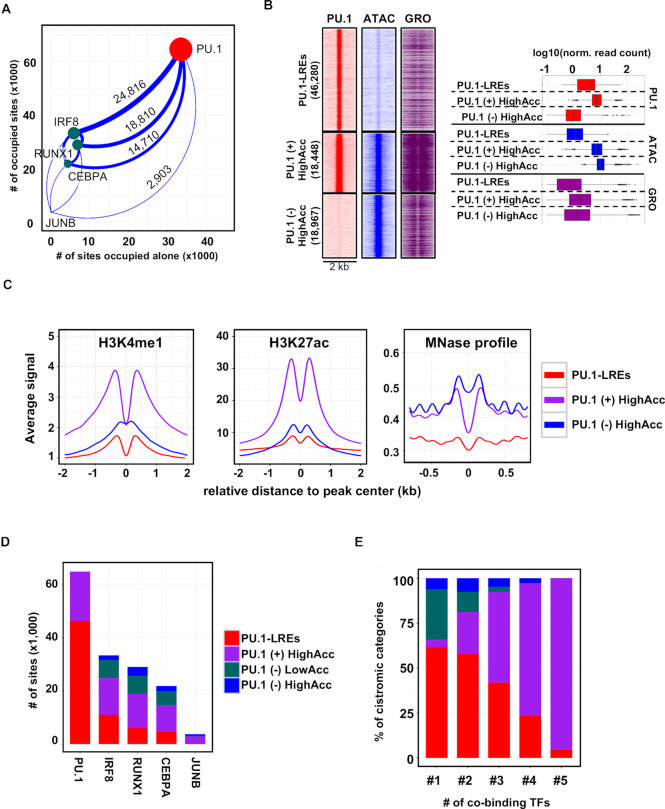
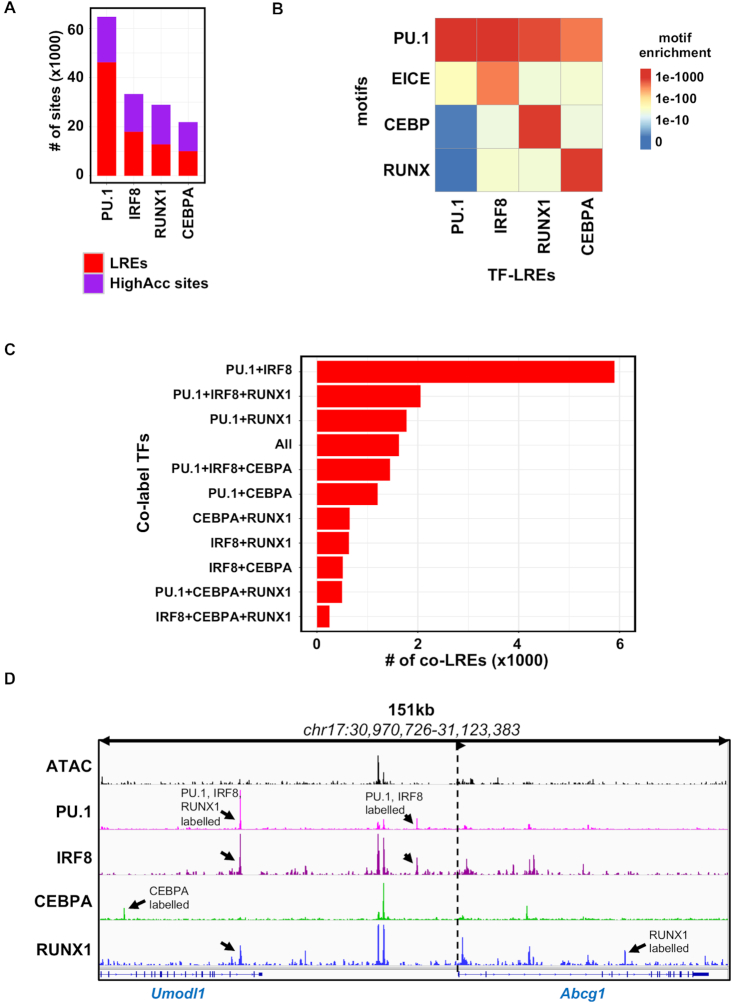
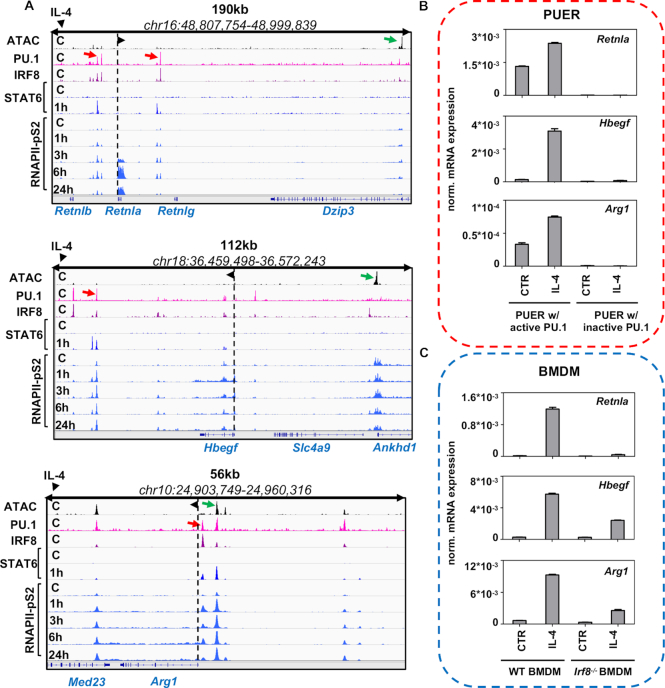
The concept of tissue-specific gene expression posits that lineage-determining transcription factors (LDTFs) determine the open chromatin profile of a cell via collaborative binding, providing molecular beacons to signal-dependent transcription factors (SDTFs). However, the guiding principles of LDTF binding, chromatin accessibility and enhancer activity have not yet been systematically evaluated. We sought to study these features of the macrophage genome by the combination of experimental (ChIP-seq, ATAC-seq and GRO-seq) and computational approaches. We show that Random Forest and Support Vector Regression machine learning methods can accurately predict chromatin accessibility using the binding patterns of the LDTF PU.1 and four other key TFs of macrophages (IRF8, JUNB, CEBPA and RUNX1). Any of these TFs alone were not sufficient to predict open chromatin, indicating that TF binding is widespread at closed or weakly opened chromatin regions. Analysis of the PU.1 cistrome revealed that two-thirds of PU.1 binding occurs at low accessible chromatin. We termed these sites labelled regulatory elements (LREs), which may represent a dormant state of a future enhancer and contribute to macrophage cellular plasticity. Collectively, our work demonstrates the existence of LREs occupied by various key TFs, regulating specific gene expression programs triggered by divergent macrophage polarizing stimuli.
组织特异性基因表达的概念假定谱系决定转录因子(LDTFs)通过协作结合来确定细胞的开放染色质图谱,为信号依赖转录因子(SDTFs)提供分子信标。然而,LDTF 结合、染色质可及性和增强子活性的指导原则尚未得到系统评估。我们试图通过实验(ChIP-seq、ATAC-seq 和 GRO-seq)和计算方法的结合来研究巨噬细胞基因组的这些特征。我们表明,随机森林和支持向量回归机器学习方法可以使用 LDTF PU.1 的结合模式准确预测染色质可及性以及其他四个关键巨噬细胞 TF(IRF8、JUNB、CEBPA 和 RUNX1)。这些 TF 中的任何一个单独都不足以预测开放染色质,这表明 TF 结合在封闭或弱打开的染色质区域广泛存在。PU.1 顺式作用元件的分析表明,PU.1 结合的三分之二发生在低可及性染色质上。我们将这些位点称为标记调节元件(LREs),它们可能代表未来增强子的休眠状态,并有助于巨噬细胞的细胞可塑性。总的来说,我们的工作表明存在由各种关键 TF 占据的 LREs,它们调节由不同的巨噬细胞极化刺激触发的特定基因表达程序。