Wang Dawei, Cheng Zhuoxin, Zhao Ming, Jiao Chengbin, Meng Qinghui, Pan Huayang, Xie Yu, Li Long, Zhu Yexing, Wang Wei, Qu Chunlei, Liang Deshen
Department of General Surgery, The First Affiliated Hospital of Harbin Medical University, Harbin 150001, People's Republic of China,
Department of General Surgery, The First Affiliated Hospital of Jiamusi University, Jiamusi 154002, People's Republic of China.
Cancer Manag Res. 2019 Feb 8;11:1309-1319. doi: 10.2147/CMAR.S187001. eCollection 2019.
Accumulating evidence has shown that protein tyrosine phosphatases (PTPs) are involved in regulating the transduction of many signaling pathways and play important roles in modulating the progression of some cancers, but the functions of PTPs in cancers have not been well elucidated until now. Here, we aimed to identify the roles of protein tyrosine phosphatase nonreceptor type 9 (PTPN9), a cytoplasmic PTP, in the development of colorectal cancer and elucidate the regulatory mechanism involved.
Cell viability assessment, colony formation assay, caspase-3 and caspase-9 activity assay, real-time PCR, and Western blot analysis were applied.
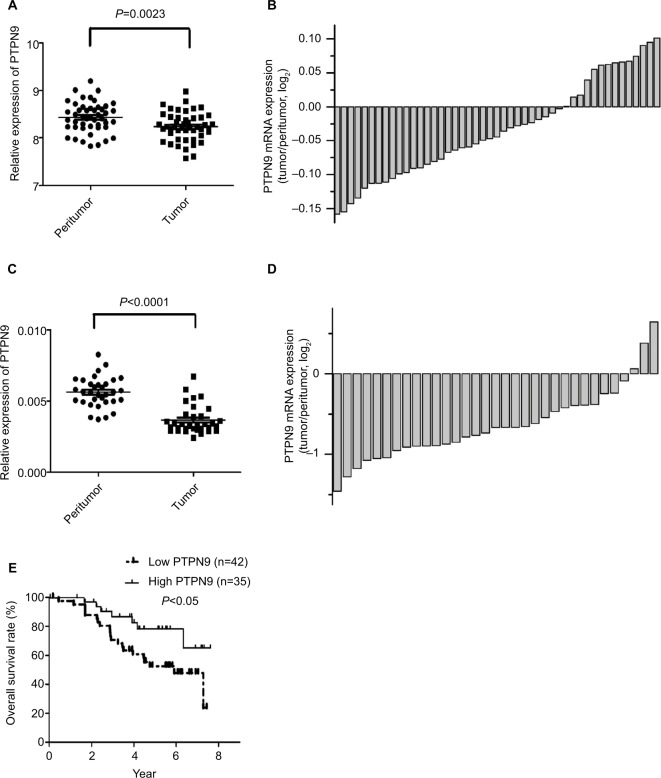
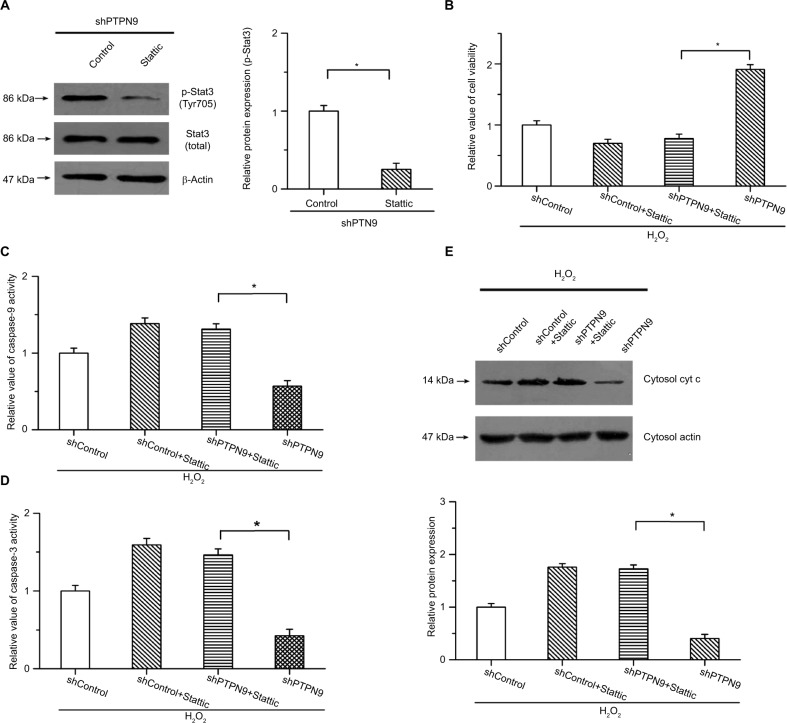
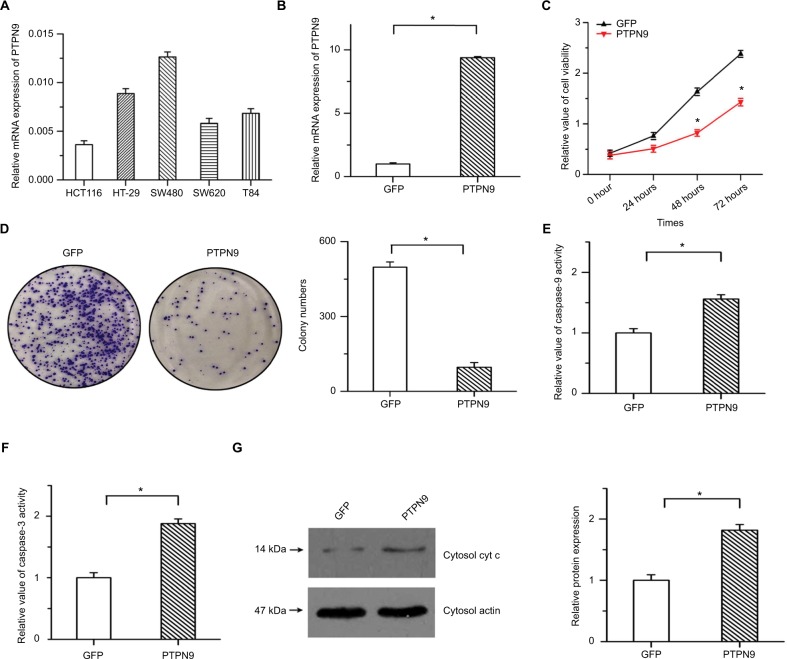
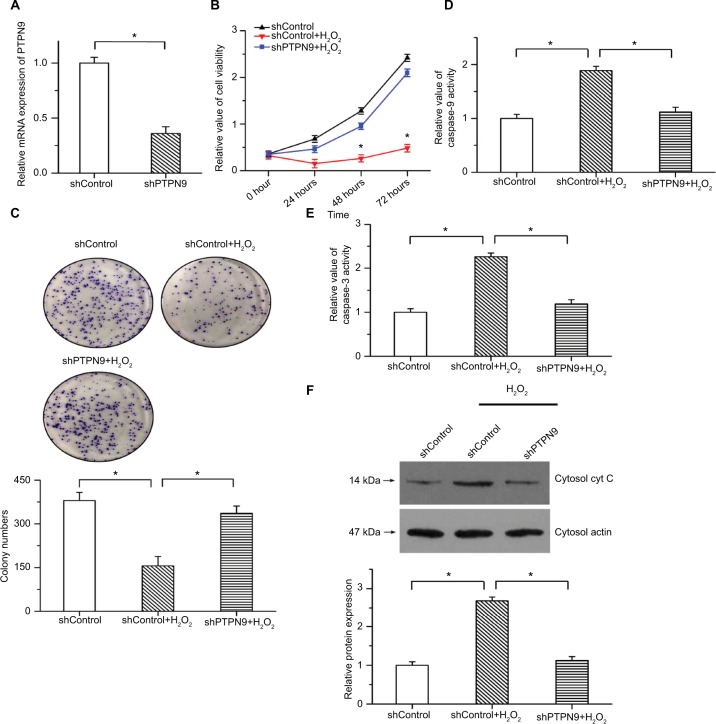
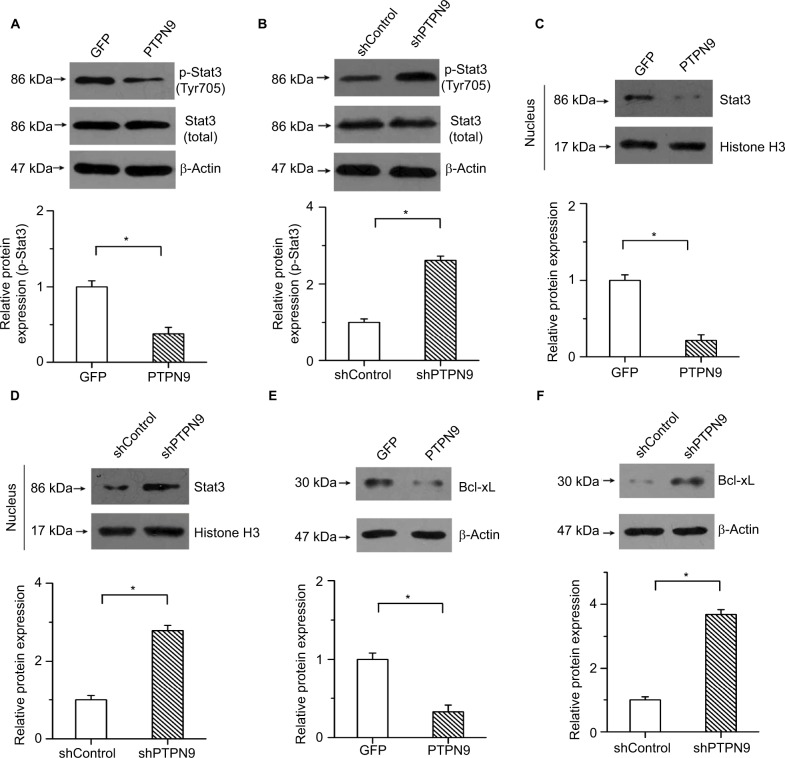
Our results showed that PTPN9 expression was frequently downregulated in colorectal cancer tissues compared with adjacent normal tissues. Overexpression of PTPN9 mitigated cell growth and colony formation and induced cell apoptosis in colorectal cancer. Conversely, PTPN9 knockdown promoted cell growth and survival. Moreover, PTPN9 negatively regulated the activation of Stat3 and depressed its nuclear translocation in colorectal cancer. The effects of PTPN9 knockdown on cell apoptosis were attenuated by inhibition of the Stat3 pathway.
These results indicate that PTPN9 inhibits cell growth and survival by repressing the activation of Stat3 in colorectal cancer, which suggests an important underlying mechanism of regulating cell growth and provides a novel candidate therapeutic target for colorectal cancer.
越来越多的证据表明,蛋白酪氨酸磷酸酶(PTPs)参与调节多种信号通路的转导,并在调控某些癌症的进展中发挥重要作用,但迄今为止,PTPs在癌症中的功能尚未得到充分阐明。在此,我们旨在确定细胞质PTP——蛋白酪氨酸磷酸酶非受体9型(PTPN9)在结直肠癌发生发展中的作用,并阐明其相关调控机制。
采用细胞活力评估、集落形成试验、半胱天冬酶-3和半胱天冬酶-9活性测定、实时聚合酶链反应(PCR)以及蛋白质印迹分析。
我们的结果显示,与相邻正常组织相比,PTPN9在结直肠癌组织中的表达经常下调。PTPN9的过表达减轻了结直肠癌细胞的生长和集落形成,并诱导细胞凋亡。相反,PTPN9基因敲低促进细胞生长和存活。此外,PTPN9在结直肠癌中负向调节Stat3的激活并抑制其核转位。抑制Stat3信号通路可减弱PTPN9基因敲低对细胞凋亡的影响。
这些结果表明,PTPN9通过抑制结直肠癌中Stat3的激活来抑制细胞生长和存活,这提示了一种调节细胞生长的重要潜在机制,并为结直肠癌提供了一个新的候选治疗靶点。