Liu Wei, Li Qingning, Li Ziyu, Chen Lei, Tian Dasheng, Jing Juehua
Department of Orthopedics, The Second affiliated Hospital of Anhui Medical University, Hefei, Anhui, China.
Medicine (Baltimore). 2019 Mar;98(9):e14682. doi: 10.1097/MD.0000000000014682.
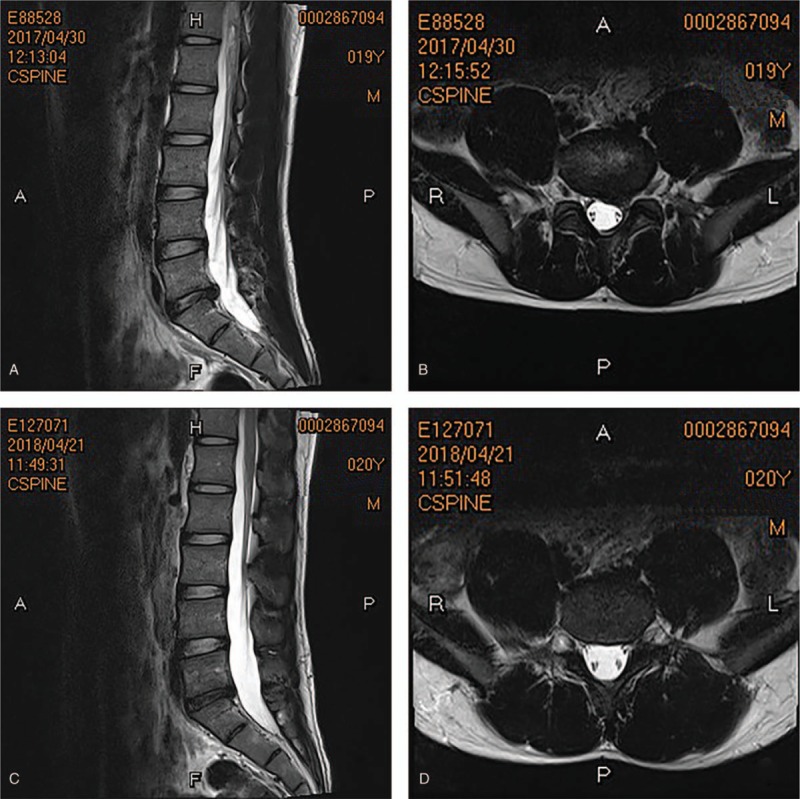
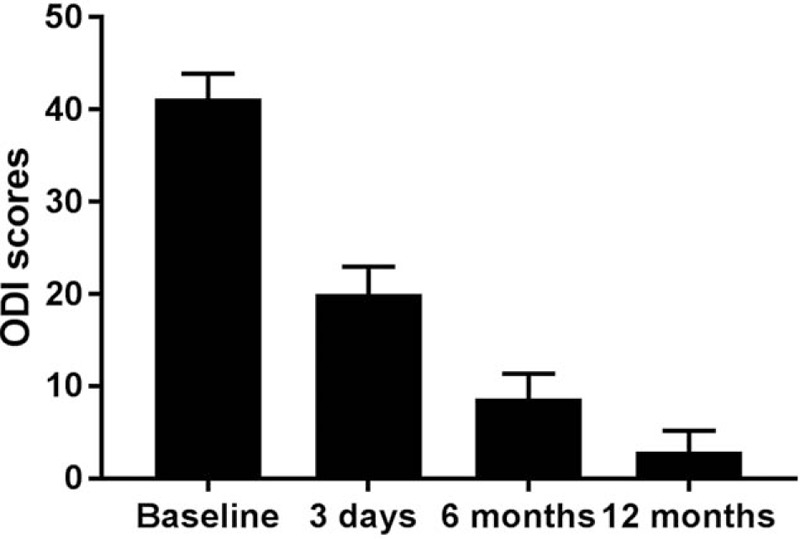
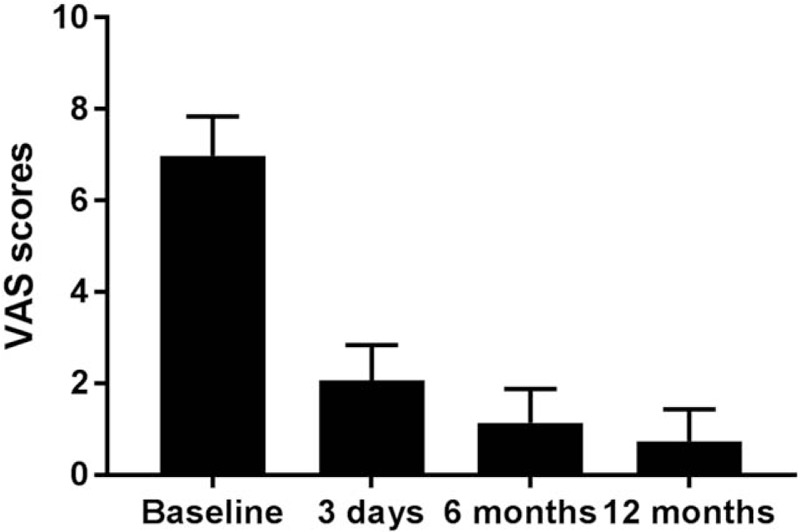
Ten years ago, endoscopic techniques began to prevail in clinical treatment of lumbar disc herniation (LDH), but to date, few studies have reported the clinical efficacy of percutaneous transforaminal endoscopic discectomy (PTED) in treating adolescent LDH. This study aimed to evaluate the surgical outcomes of PTED in treating adolescent patients with LDH.Between June 2012 and June 2016, retrospective analysis of 43 adolescent patients diagnosed with single-segment LDH at spine surgery at the Second Affiliated Hospital of Anhui Medical University. The patients' lower limb pain was evaluated using visual analogue scale (VAS) scores and the Oswestry Disability Index (ODI). The VAS is the most commonly-used quantitative method for assessing the degree of pain in clinical practice. The measurement method is to draw a 10 cm horizontal line on a piece of paper, 1 end of which is 0, indicating no pain, while the other end is 10, which means severe pain, and the middle part indicates different degrees of pain. The clinician then asks the patient to make a mark on the line to indicate the degree of pain based on how he or she feels. The ODI is the most widely-used assessment method internationally for lumbar or leg pain at present. The ODI questionnaire is composed of 10 questions, covering pain intensity, independent living, carrying, walking, sitting, standing, sleep, travel, sex, and social life. Every category comprises 6 options, with the highest score for each question being 5 points. Thus the 1st option is worth 0 points, the last option scores 5 points, and higher scores represent more serious dysfunction. Patient satisfaction was evaluated using the modified MacNab score. Clinical outcomes were measured preoperatively, and at 3 days, 6 months, and 12 months postoperatively.All 43 patients were followed up for 12 to 24 months. The average follow-up time was 18.33 months. The VAS scores and ODI scores at 3 days, 6 months, and 12 months postoperatively were significantly lower than before surgery. The difference was statistically significant (P < .001). The differences in VAS scores and ODI scores at 3 days, 6 months, and 12 months after surgery were also statistically significant (P < .001). According to the modified MacNab criteria, 26 cases were rated excellent, 14 cases were good, and 3 cases were acceptable at the final follow-up, and 93.02% of these patients had excellent outcomes.The PTED is an effective and safe surgical method for the treatment of adolescent patients with LDH, but high-quality randomized controlled trials are still required to further verify these findings.
十年前,内镜技术开始在腰椎间盘突出症(LDH)的临床治疗中盛行,但迄今为止,很少有研究报道经皮椎间孔镜下椎间盘切除术(PTED)治疗青少年LDH的临床疗效。本研究旨在评估PTED治疗青少年LDH患者的手术效果。
2012年6月至2016年6月,对安徽医科大学第二附属医院脊柱外科确诊为单节段LDH的43例青少年患者进行回顾性分析。采用视觉模拟评分(VAS)和Oswestry功能障碍指数(ODI)评估患者下肢疼痛情况。VAS是临床实践中评估疼痛程度最常用的定量方法。测量方法是在一张纸上画一条10厘米的横线,一端为0,表示无疼痛,另一端为10,表示剧痛,中间部分表示不同程度的疼痛。然后临床医生让患者根据自己的感受在横线上做标记以表明疼痛程度。ODI是目前国际上应用最广泛的腰椎或腿部疼痛评估方法。ODI问卷由10个问题组成,涵盖疼痛强度、独立生活、搬运、行走、坐、站、睡眠、旅行、性生活和社会生活。每个类别包括6个选项,每个问题的最高分是5分。因此,第一个选项得0分,最后一个选项得5分,分数越高表示功能障碍越严重。采用改良MacNab评分评估患者满意度。在术前、术后第3天、6个月和12个月测量临床结果。
43例患者均随访12至24个月。平均随访时间为18.33个月。术后3天、6个月和12个月的VAS评分和ODI评分均显著低于术前。差异有统计学意义(P<0.001)。术后3天、6个月和12个月的VAS评分和ODI评分差异也有统计学意义(P<0.001)。根据改良MacNab标准,末次随访时优26例,良14例,可3例,优良率为93.02%。
PTED是治疗青少年LDH患者的一种有效且安全的手术方法,但仍需要高质量的随机对照试验来进一步验证这些结果。