School of Chemistry and Biological Engineering, University of Science and Technology Beijing, Beijing 100083, China.
Hawaii Natural Energy Institute, University of Hawaii, Honolulu, HI 96822, USA.
Int J Environ Res Public Health. 2019 Feb 27;16(5):700. doi: 10.3390/ijerph16050700.
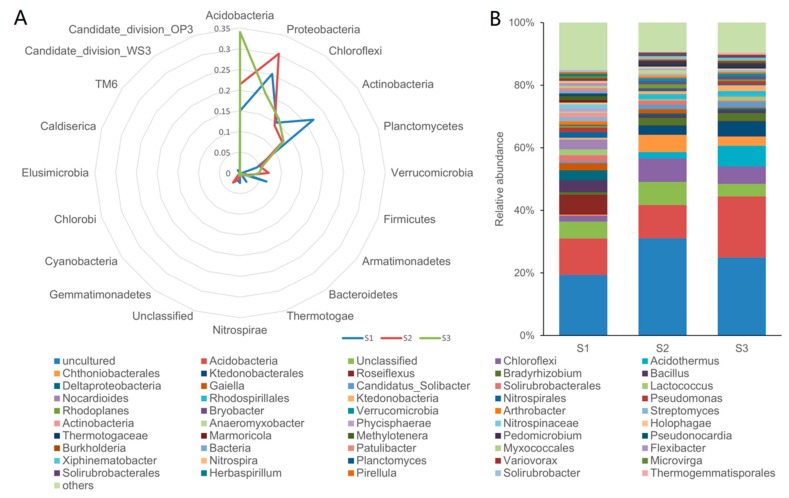
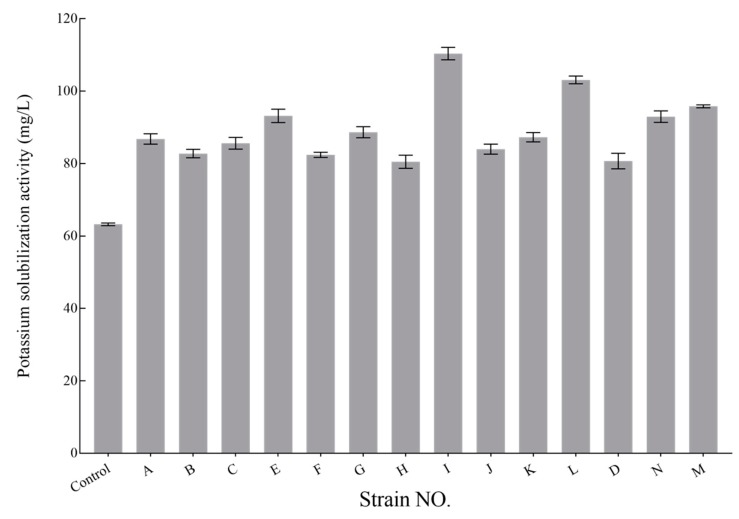
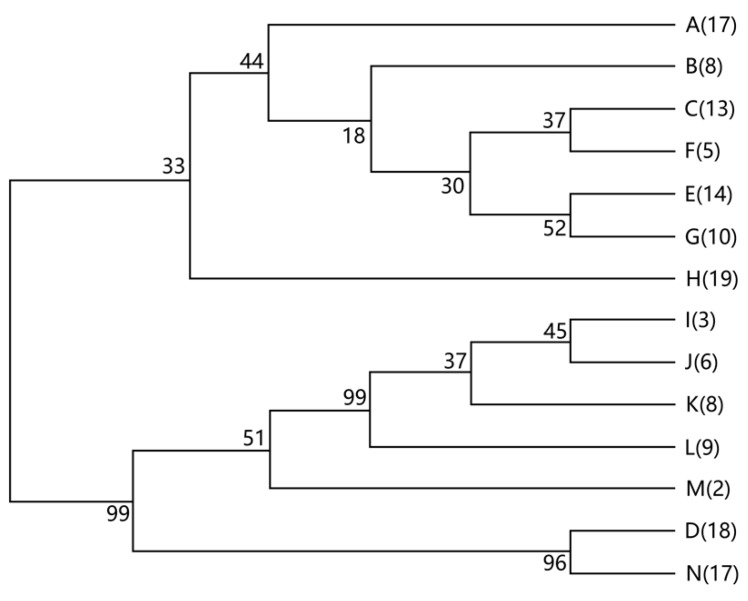
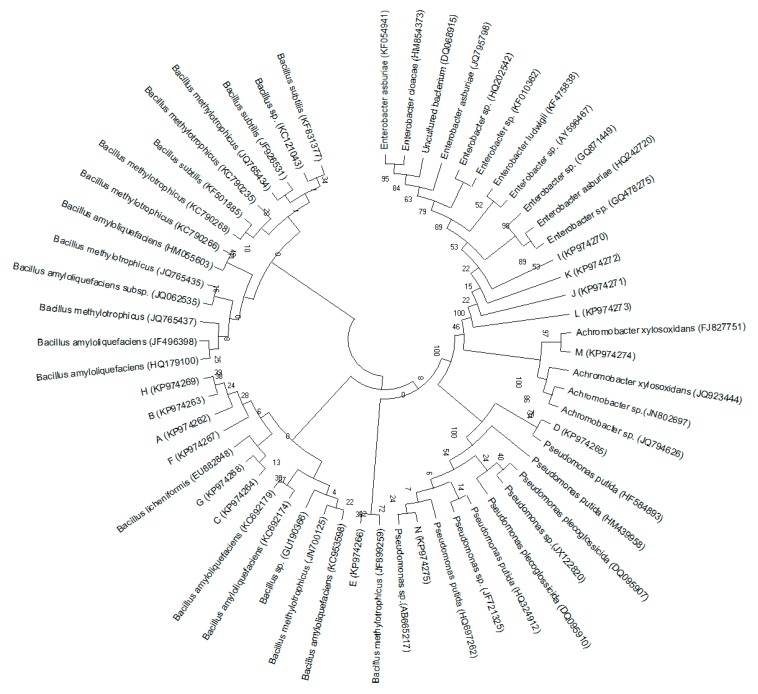
Potassium (K) has been recognized as an essential element in intensive agricultural production systems, and deficiency of K usually results in a decrease in crop yields. The utilization of potassium-solubilizing bacteria (KSB) to increase the soluble K content in soil has been regarded as a desirable pathway to increase plant yields. Following the inoculation of KSB in the soil, potassium can be released (in the form of K⁺) and consumed by plants. This study aims to investigate and compare the distribution characteristics of potassium-solubilizing bacteria between forest and plantation soils in Myanmar. In this study, 14 KSB strains were isolated from rhizosphere samples collected from forest soil, as well as fertilized rubber tree rhizosphere soil and fertilized bare soil from a plantation. Broadleaf forests with high levels of canopy cover mainly comprised the forest environment, and rubber trees were planted in the plantation environment. The Chao and abundance-based coverage estimator (ACE) indices showed that the microbial abundance of the plantation soil was higher than that of the forest soil. According to the Illumina MiSeq sequencing analysis results, the Shannon index of the forest soil was lower while the Simpson index was higher, which demonstrated that the microbial diversity of the forest soil was higher than that of the plantation soil. Potassium-solubilizing test results showed that the strains E, I, M, and N were the most effective KSB under liquid cultivation conditions. Additionally, KSB only accounted for less than 5.47% of the total bacteria detected in either of the sample types, and the distribution of dominant KSB varied with the soil samples. As another result, the abundance of spp. in S1 was higher than in S2 and S3, indicating a negative impact on the growth of in the fertilized rubber tree rhizosphere soil. The significance of our research is that it proves that the increasing use of KSB for restoring soil is a good way to reduce the use of chemical fertilizers, which could further provide a relatively stable environment for plant growth.
钾(K)已被认为是集约化农业生产系统中的一种必需元素,K 缺乏通常会导致作物产量下降。利用解钾菌(KSB)增加土壤中可溶 K 的含量被认为是提高植物产量的一种理想途径。KSB 接种到土壤后,钾可以以 K+的形式被释放出来并被植物消耗。本研究旨在调查和比较缅甸森林和种植园土壤中解钾菌的分布特征。在这项研究中,从森林土壤的根际样本以及施肥橡胶树根际土壤和种植园施肥裸地土壤中分离出 14 株 KSB 菌株。具有高树冠覆盖度的阔叶林主要构成了森林环境,而橡胶树则种植在种植园环境中。Chao 和基于丰富度的覆盖估计(ACE)指数表明,种植园土壤的微生物丰度高于森林土壤。根据 Illumina MiSeq 测序分析结果,森林土壤的 Shannon 指数较低,而 Simpson 指数较高,这表明森林土壤的微生物多样性高于种植园土壤。解钾试验结果表明,在液体培养条件下,菌株 E、I、M 和 N 是最有效的 KSB。此外,KSB 在两种类型的样本中均不到检测到的总细菌的 5.47%,优势 KSB 的分布随土壤样本而变化。另一个结果是,在 S1 中 spp.的丰度高于 S2 和 S3,这表明它对施肥橡胶树根际土壤中 的生长有负面影响。我们研究的意义在于,它证明了越来越多地使用 KSB 来恢复土壤是减少化肥使用的一种好方法,这可以为植物生长提供一个相对稳定的环境。