From the Department of Biological Chemistry, John Innes Centre, Norwich Research Park, Norwich NR4 7UH, United Kingdom.
the Earlham Institute, Norwich Research Park, Norwich NR4 7UZ, United Kingdom.
J Biol Chem. 2019 Apr 19;294(16):6483-6493. doi: 10.1074/jbc.RA119.007712. Epub 2019 Feb 28.
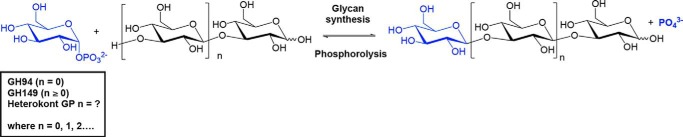
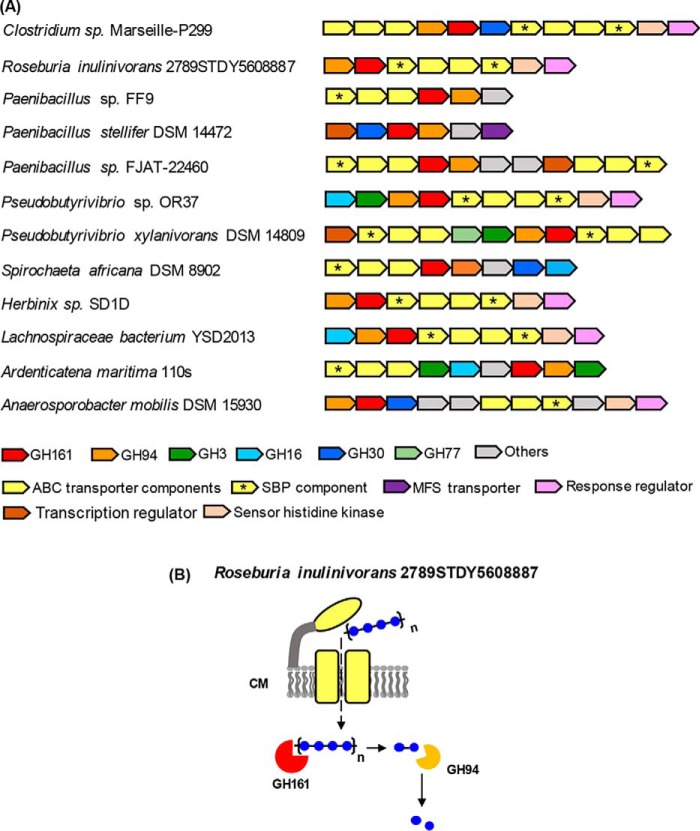
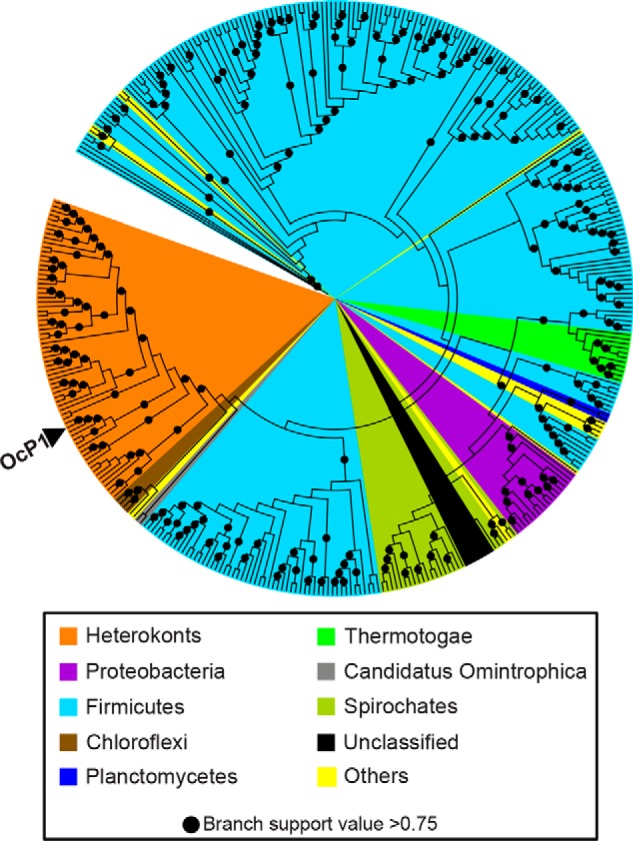
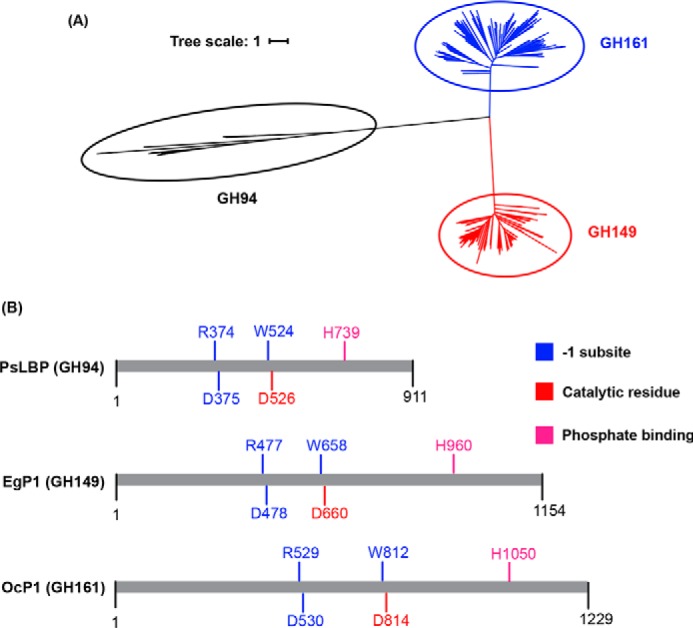
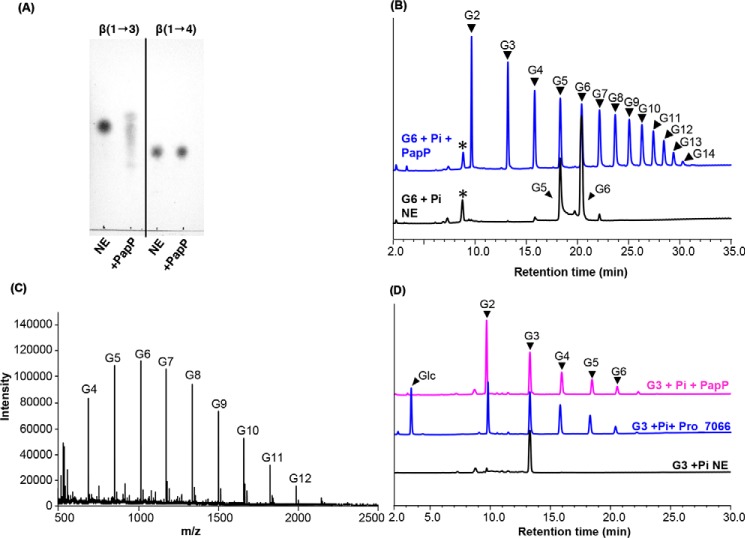
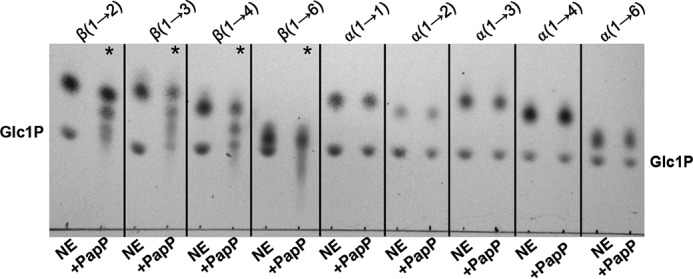
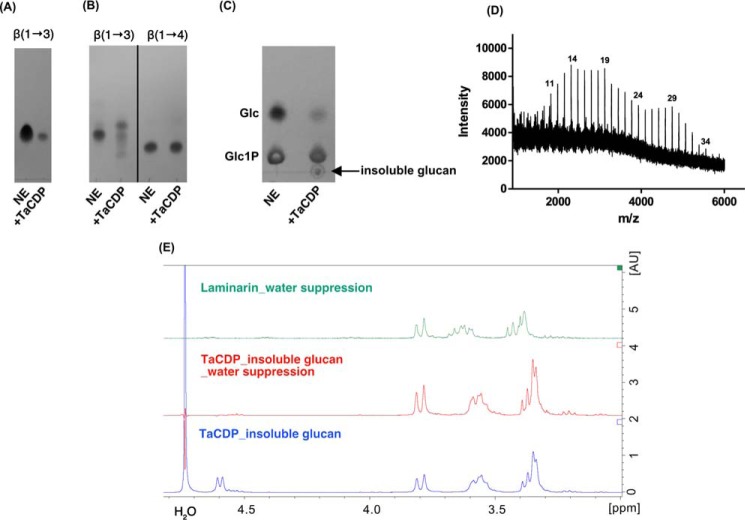
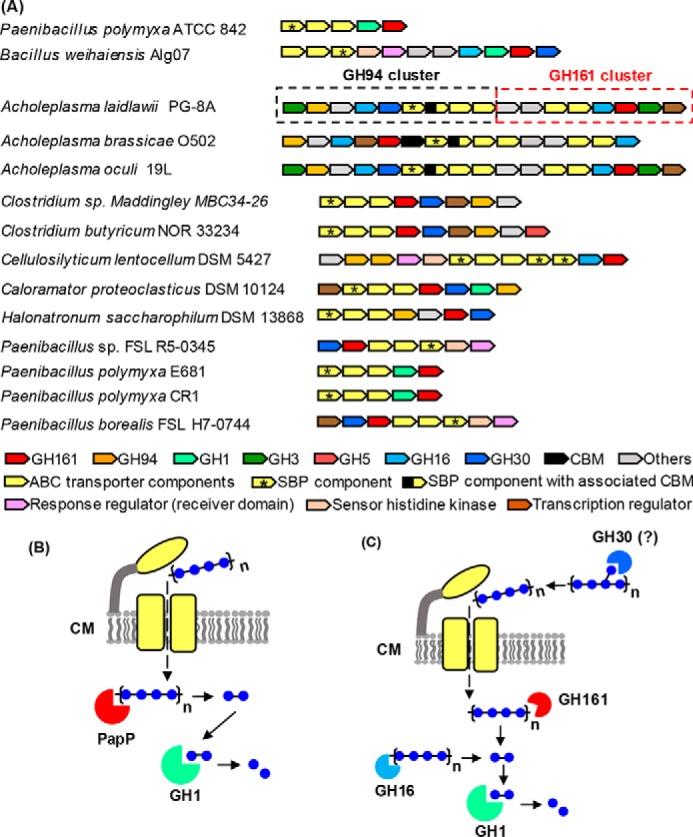
Glycoside phosphorylases (GPs) catalyze the phosphorolysis of glycans into the corresponding sugar 1-phosphates and shortened glycan chains. Given the diversity of natural β-(1→3)-glucans and their wide range of biotechnological applications, the identification of enzymatic tools that can act on β-(1→3)-glucooligosaccharides is an attractive area of research. GP activities acting on β-(1→3)-glucooligosaccharides have been described in bacteria, the photosynthetic excavate , and the heterokont spp. Previously, we characterized β-(1→3)-glucan GPs from bacteria and , leading to their classification in glycoside hydrolase family GH149. Here, we characterized GPs from Gram-positive bacteria and heterokont algae acting on β-(1→3)-glucooligosaccharides. We identified a phosphorylase sequence from spp. (OcP1) together with its orthologs from other species, leading us to propose the establishment of a new GH family, designated GH161. To establish the activity of GH161 members, we recombinantly expressed a bacterial gene sequence (PapP) from the Gram-positive bacterium ATCC 842 in We found that PapP acts on β-(1→3)-glucooligosaccharide acceptors with a degree of polymerization (DP) ≥ 2. This activity was distinct from that of characterized GH149 β-(1→3)-glucan phosphorylases, which operate on acceptors with DP ≥ 1. We also found that bacterial genes co-localize with genes encoding β-glucosidases and ATP-binding cassette transporters, highlighting a probable involvement of GH161 enzymes in carbohydrate degradation. Importantly, in some species, and genes were present in tandem, providing evidence that GPs from different CAZy families may work sequentially to degrade oligosaccharides.
糖苷磷酸化酶 (GPs) 催化聚糖的磷酸解,生成相应的糖 1-磷酸和缩短的聚糖链。鉴于天然β-(1→3)-葡聚糖的多样性及其广泛的生物技术应用,鉴定能够作用于β-(1→3)-葡寡糖的酶学工具是一个具有吸引力的研究领域。在细菌、光合挖掘生物和异源生物中已经描述了作用于β-(1→3)-葡寡糖的 GP 活性。先前,我们从细菌和中表征了β-(1→3)-葡聚糖 GPs,导致它们被分类在糖苷水解酶家族 GH149 中。在这里,我们表征了作用于β-(1→3)-葡寡糖的革兰氏阳性细菌和异源藻类的 GPs。我们从 spp.(OcP1)中鉴定出一个磷酸化酶序列及其来自其他物种的同源物,这促使我们提出建立一个新的 GH 家族,命名为 GH161。为了确定 GH161 成员的活性,我们在大肠杆菌中重组表达了来自革兰氏阳性菌 ATCC 842 的 基因序列 (PapP)。我们发现 PapP 作用于聚合度 (DP)≥2 的β-(1→3)-葡寡糖受体。这种活性与已表征的 GH149β-(1→3)-葡聚糖磷酸化酶不同,后者作用于 DP≥1 的受体。我们还发现,细菌 基因与编码β-葡萄糖苷酶和 ATP 结合盒转运蛋白的基因共定位,这突出了 GH161 酶可能参与碳水化合物降解。重要的是,在一些物种中,和 基因串联存在,这为来自不同 CAZy 家族的 GPs 可能连续工作以降解寡糖提供了证据。