Applied Microbiology, Department of Chemistry, Lund University, P.O. Box 124, SE-221 00, Lund, Sweden.
Sweden Water Research AB, Ideon Science Park, Scheelevägen 15, SE-223 70, Lund, Sweden.
NPJ Biofilms Microbiomes. 2019 Feb 22;5(1):9. doi: 10.1038/s41522-019-0082-9. eCollection 2019.
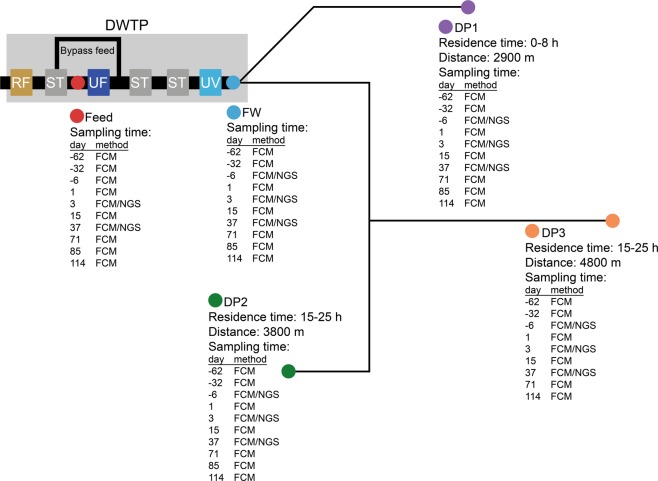
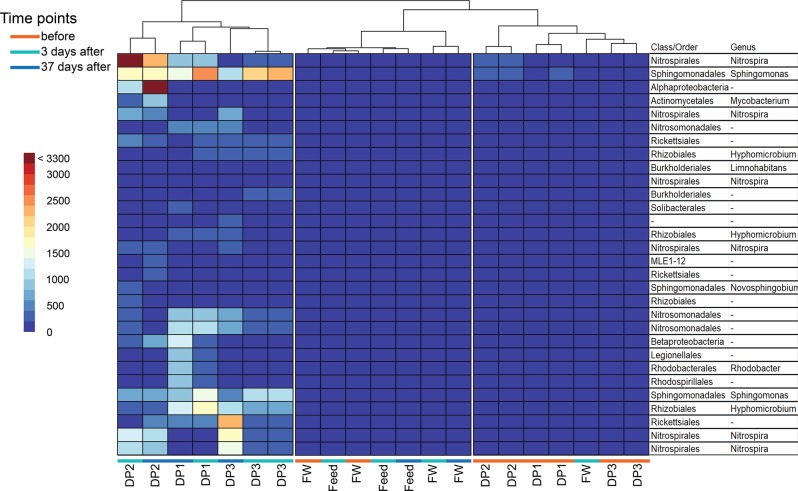
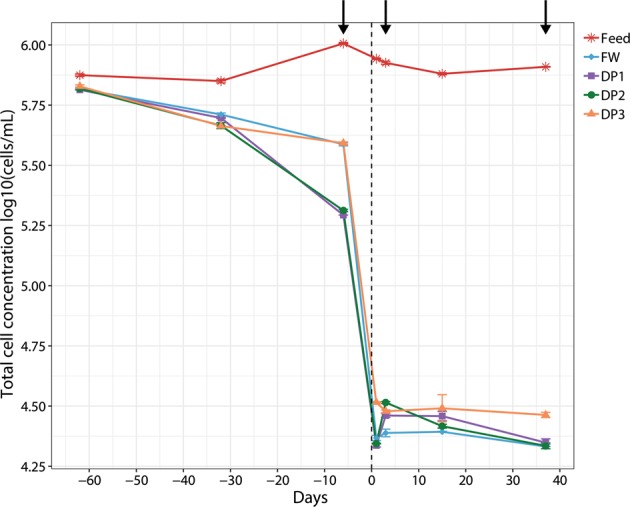
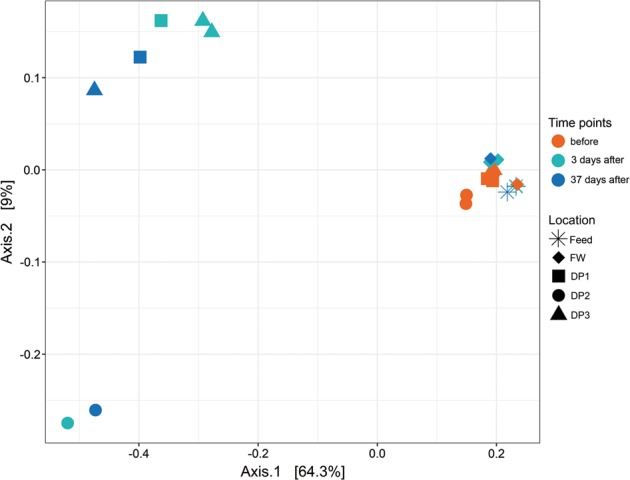
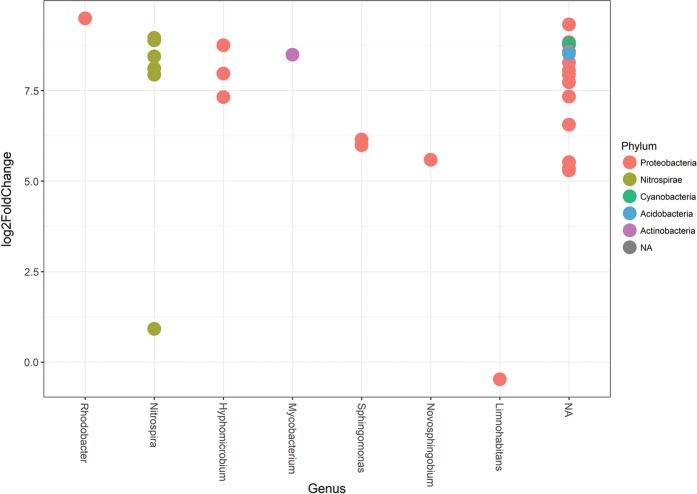
Safe drinking water is delivered to the consumer through kilometres of pipes. These pipes are lined with biofilm, which is thought to affect water quality by releasing bacteria into the drinking water. This study describes the number of cells released from this biofilm, their cellular characteristics, and their identity as they shaped a drinking water microbiome. Installation of ultrafiltration (UF) at full scale in Varberg, Sweden reduced the total cell count to 1.5 × 10 ± 0.5 × 10 cells mL in water leaving the treatment plant. This removed a limitation of both flow cytometry and 16S rRNA amplicon sequencing, which have difficulties in resolving small changes against a high background cell count. Following installation, 58% of the bacteria in the distributed water originated from the pipe biofilm, in contrast to before, when 99.5% of the cells originated from the treatment plant, showing that UF shifts the origin of the drinking water microbiome. The number of bacteria released from the biofilm into the distributed water was 2.1 × 10 ± 1.3 × 10 cells mL and the percentage of HNA (high nucleic acid) content bacteria and intact cells increased as it moved through the distribution system. DESeq2 analysis of 16S rRNA amplicon reads showed increases in 29 operational taxonomic units (OTUs), including genera identified as , , , and . This study demonstrated that, due to the installation of UF, the bacteria entering a drinking water microbiome from a pipe biofilm could be both quantitated and described.
安全饮用水通过数公里长的管道输送到消费者手中。这些管道内衬有生物膜,生物膜被认为会通过向饮用水中释放细菌来影响水质。本研究描述了从生物膜中释放出的细胞数量、它们的细胞特征以及它们作为饮用水微生物组一部分的身份。在瑞典瓦尔贝里(Varberg)全面安装超滤(UF)后,处理厂出水中的总细胞计数减少到 1.5×10±0.5×10 个细胞/mL。这解决了流式细胞术和 16S rRNA 扩增子测序的局限性,因为这两种方法在高背景细胞计数下难以解析小的变化。安装后,分配水中的 58%的细菌来源于管道生物膜,而在安装前,99.5%的细胞来源于处理厂,表明 UF 改变了饮用水微生物组的来源。生物膜释放到分配水中的细菌数量为 2.1×10±1.3×10 个细胞/mL,随着它通过分配系统移动,高核酸(HNA)含量细菌和完整细胞的比例增加。基于 16S rRNA 扩增子读取的 DESeq2 分析显示,包括、、、和等属在内的 29 个操作分类单位(OTU)增加。本研究表明,由于 UF 的安装,可以定量和描述从管道生物膜进入饮用水微生物组的细菌。