Shimane University, Matsue, Shimane, Japan.
Institute of Crop Sciences, NARO, Tsukuba, Ibaraki, Japan.
PLoS One. 2019 Mar 5;14(3):e0212840. doi: 10.1371/journal.pone.0212840. eCollection 2019.
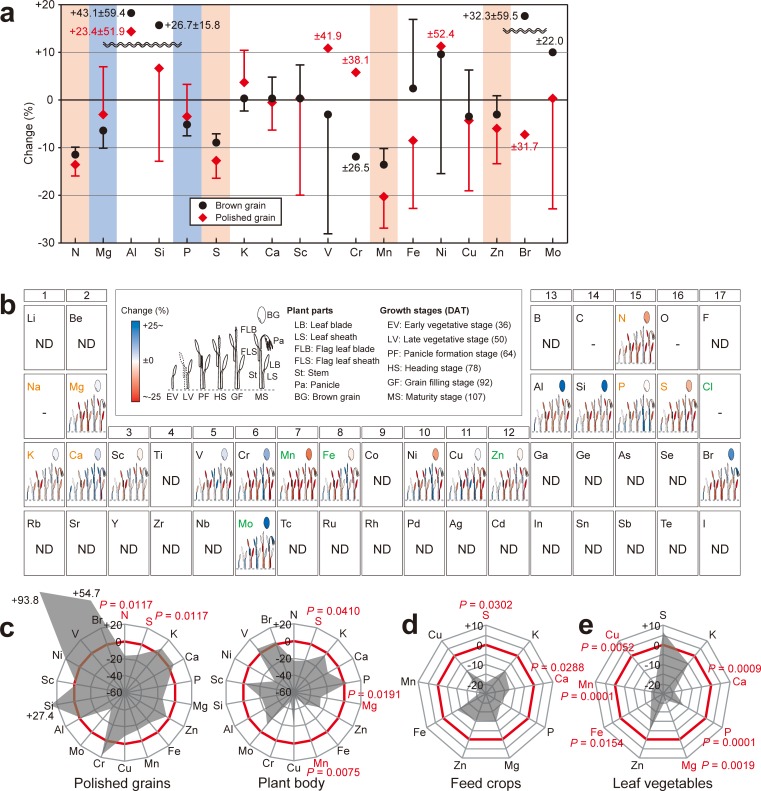
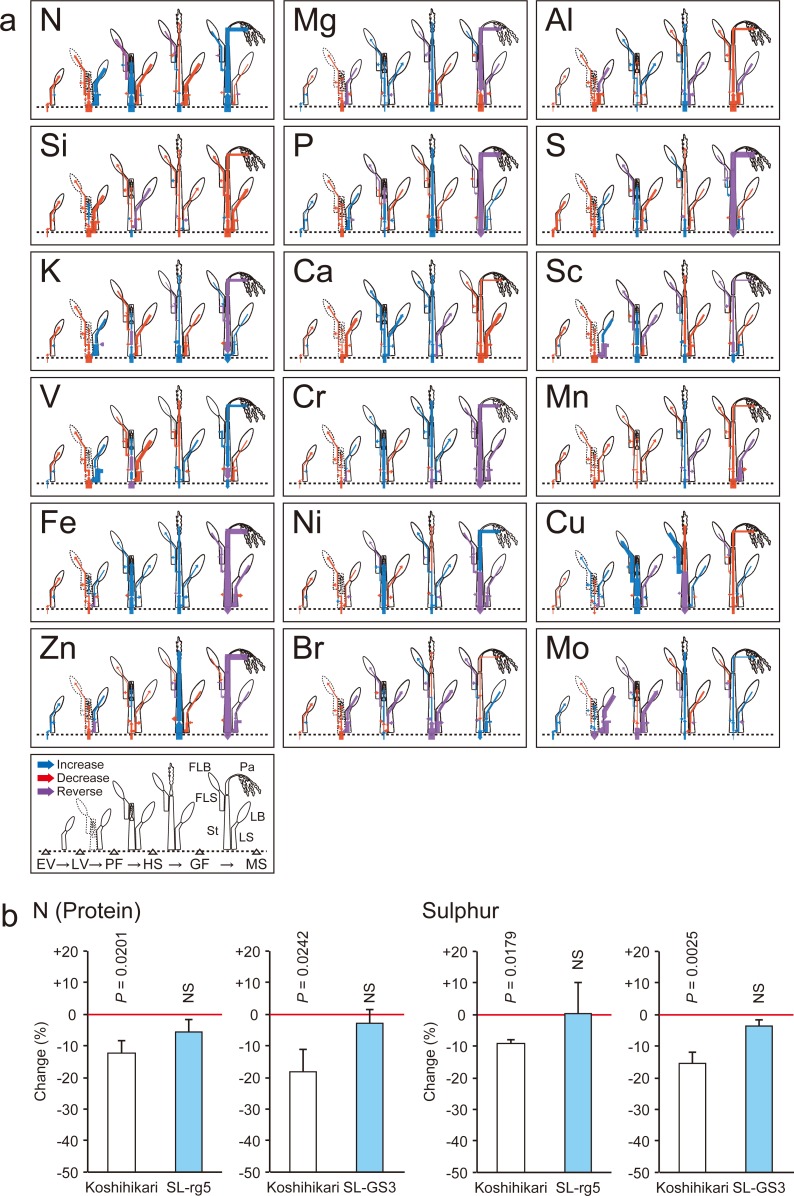
Increased concentrations of atmospheric CO2 are predicted to reduce the content of essential elements such as protein, zinc, and iron in C3 grains and legumes, threatening the nutrition of billions of people in the next 50 years. However, this prediction has mostly been limited to grain crops, and moreover, we have little information about either the underlying mechanism or an effective intervention to mitigate these reductions. Here, we present a broader picture of the reductions in elemental content among crops grown under elevated CO2 concentration. By using a new approach, flow analysis of elements, we show that lower absorption and/or translocation to grains is a key factor underlying such elemental changes. On the basis of these findings, we propose two effective interventions-namely, growing C4 instead of C3 crops, and genetic improvements-to minimize the elemental changes in crops, and thereby avoid an impairment of human nutrition under conditions of elevated CO2.
大气中二氧化碳浓度的增加预计会降低 C3 谷物和豆类中蛋白质、锌和铁等必需元素的含量,从而威胁到未来 50 年内数十亿人的营养。然而,这一预测大多仅限于粮食作物,而且,我们对于潜在机制或有效的干预措施来减轻这些减少几乎没有信息。在这里,我们提出了在升高的二氧化碳浓度下生长的作物中元素含量减少的更广泛情况。通过使用一种新的方法,即元素流动分析,我们表明,较低的吸收和/或向谷物的转运是导致这些元素变化的关键因素。基于这些发现,我们提出了两种有效的干预措施——即种植 C4 作物而不是 C3 作物,以及遗传改良——以最大限度地减少作物中的元素变化,从而避免在升高的二氧化碳条件下人类营养受损。