Parks Canada Agency, Banff National Park Resource Conservation, Banff, Alberta, Canada.
Sci Rep. 2019 Mar 7;9(1):3772. doi: 10.1038/s41598-019-40581-y.
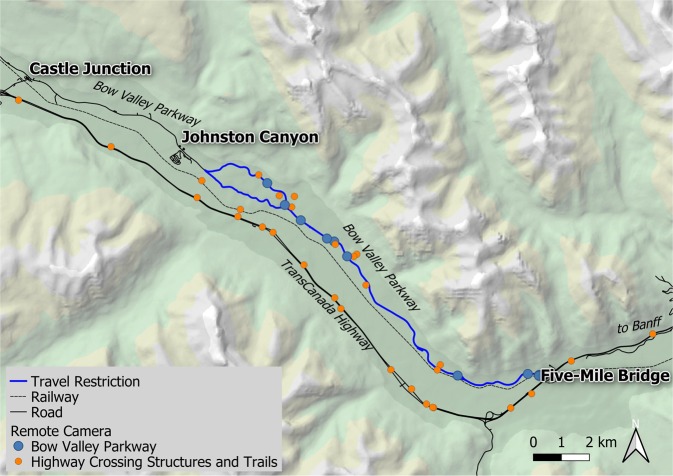
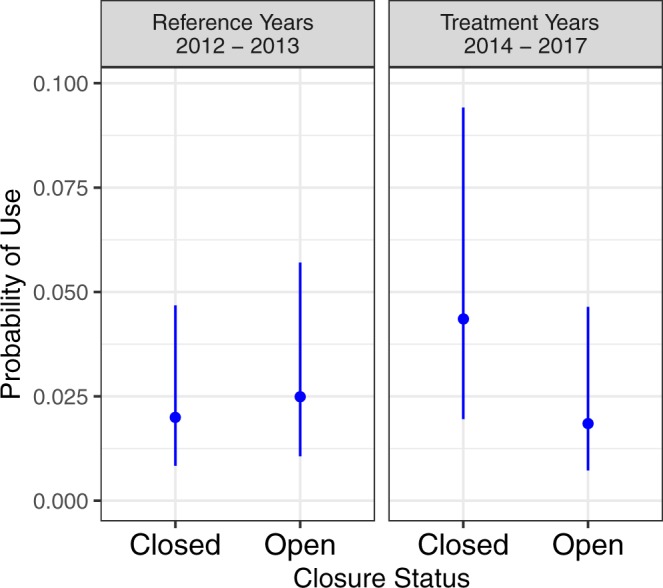
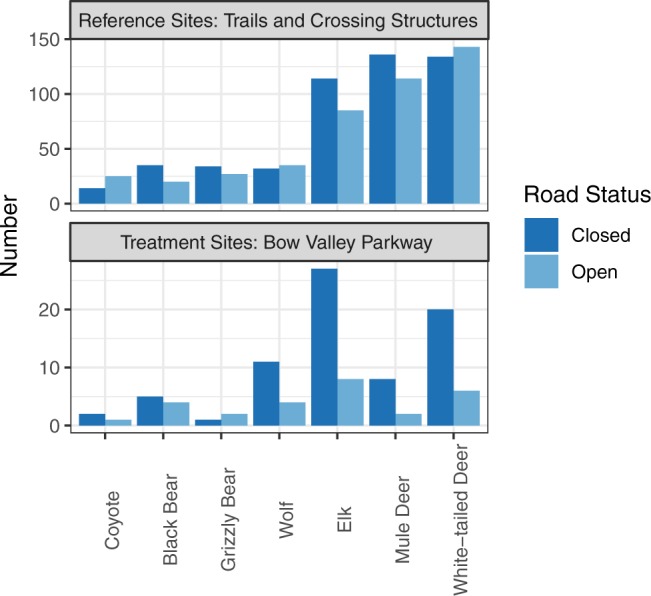
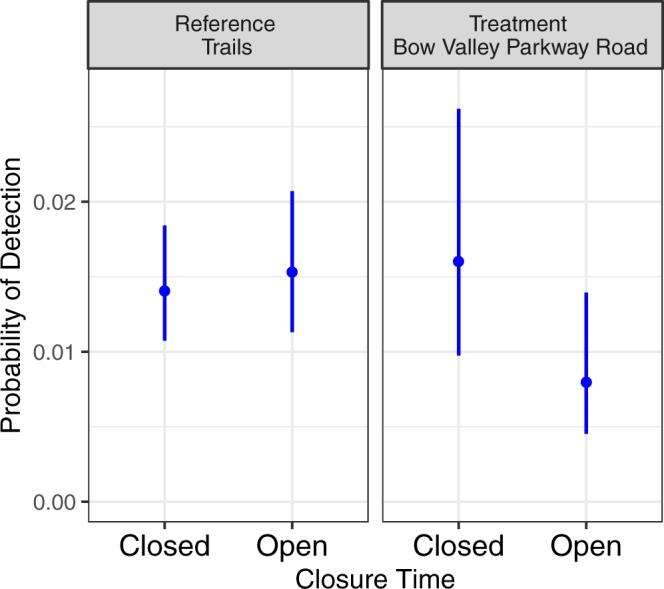
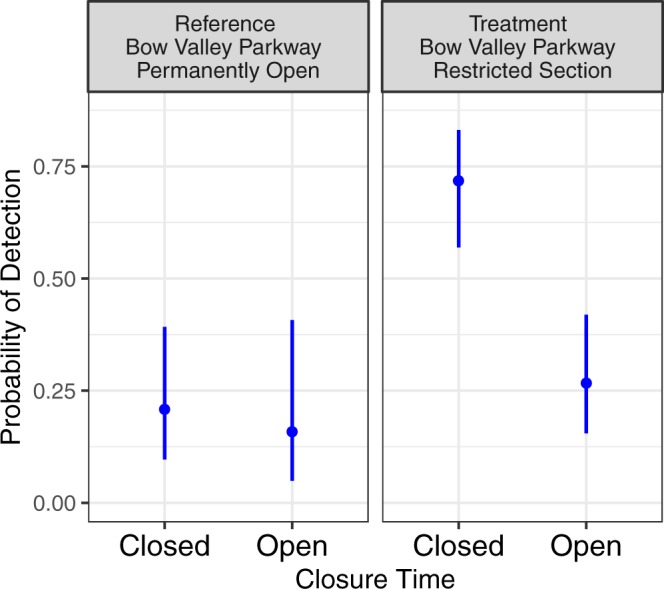
Increasing levels of human activity threaten wildlife populations through direct mortality, habitat degradation, and habitat fragmentation. Area closures can improve habitat quality for wildlife, but may be difficult to achieve where tourism or other economic drivers are a priority. Temporal closures that limit human use during specific times of day have potential to increase habitat quality for wildlife, while continuing to provide opportunities for human use. However, the effectiveness of daily temporal closures has not been tested. We assessed how implementation of a temporal road closure affected wildlife movements in Banff National Park. Parks Canada closed a popular 17 km stretch of road between 2000 and 0800 hours to improve habitat quality for wildlife. We assessed the effectiveness of the closure on nine mammal species using three sets of data: remote cameras, road surveys, and grizzly bear (Ursus arctos) GPS data. In all three analyses, wildlife detection rates on the road doubled during the closure while remaining unchanged in reference areas. Our strong and consistent results suggest temporal closures are an important conservation tool that can increase habitat quality for wildlife while minimizing effects on people.
人类活动水平的提高通过直接死亡率、栖息地退化和栖息地破碎化威胁野生动物种群。区域封闭可以改善野生动物的栖息地质量,但在旅游业或其他经济驱动因素优先的情况下,可能难以实现。在特定时间限制人类使用的时间封闭有潜力提高野生动物的栖息地质量,同时继续为人类提供使用机会。然而,每日时间封闭的有效性尚未得到检验。我们评估了实施时间性道路封闭如何影响班夫国家公园的野生动物运动。加拿大公园在 2000 至 0800 小时之间关闭了一条受欢迎的 17 公里长的道路,以提高野生动物的栖息地质量。我们使用三组数据评估了封闭对 9 种哺乳动物的有效性:远程摄像机、道路调查和灰熊(Ursus arctos)GPS 数据。在所有三种分析中,野生动物在封闭期间的道路检测率增加了一倍,而参考区域的检测率保持不变。我们强有力且一致的结果表明,时间封闭是一种重要的保护工具,可以提高野生动物的栖息地质量,同时将对人类的影响降到最低。