Kim Hyeonseok, Yoshimura Natsue, Koike Yasuharu
Department of Information and Communications Engineering, Tokyo Institute of Technology, Yokohama, Japan.
Institute of Innovative Research, Tokyo Institute of Technology, Yokohama, Japan.
Front Hum Neurosci. 2019 Feb 22;13:63. doi: 10.3389/fnhum.2019.00063. eCollection 2019.
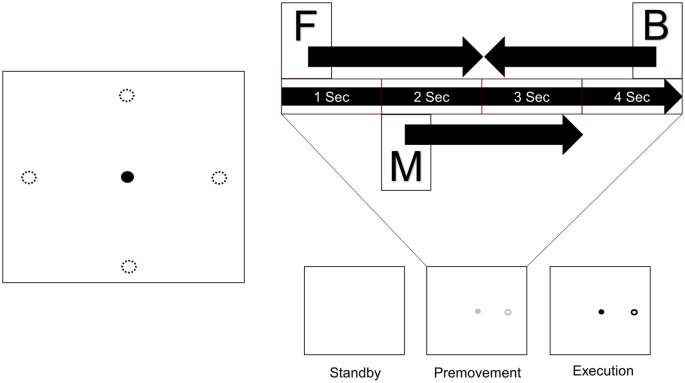
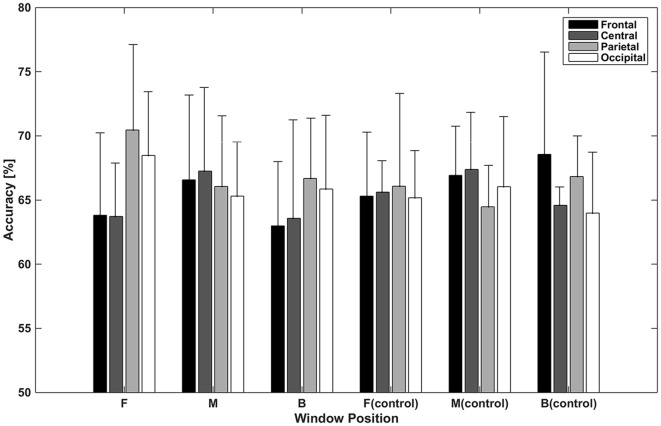
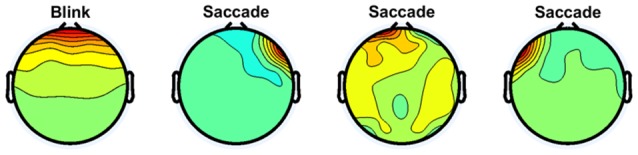
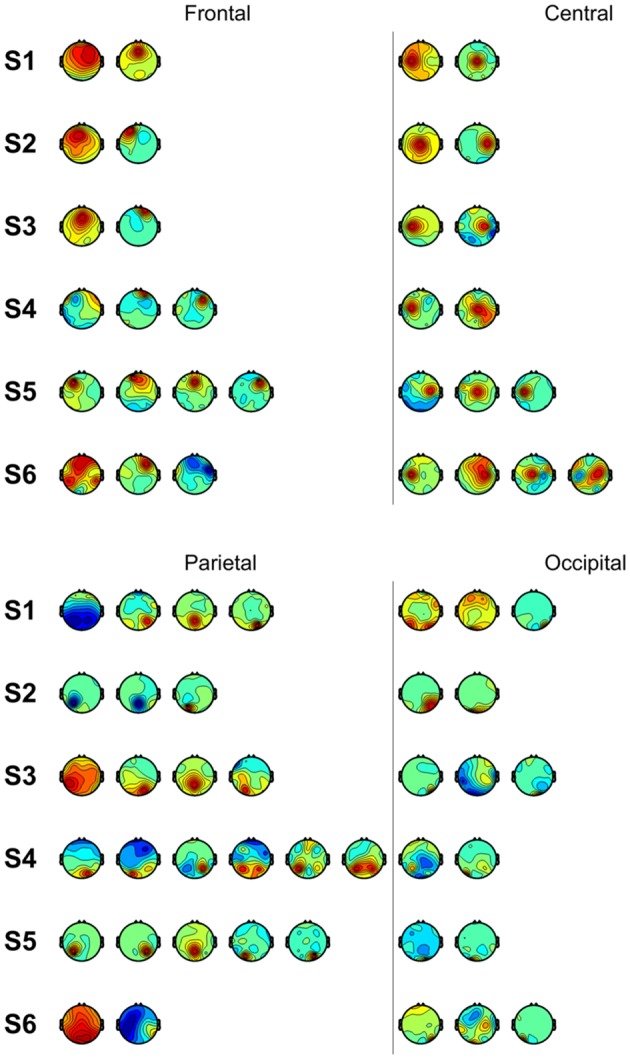
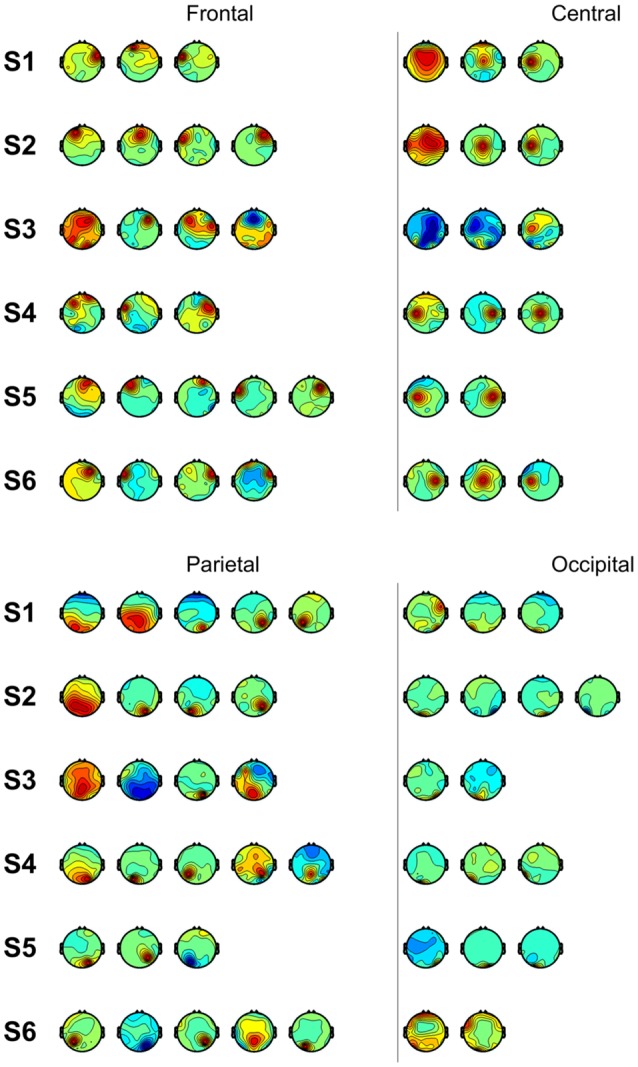
Many previous studies on brain-machine interfaces (BMIs) have focused on electroencephalography (EEG) signals elicited during motor-command execution to generate device commands. However, exploiting pre-execution brain activity related to movement intention could improve the practical applicability of BMIs. Therefore, in this study we investigated whether EEG signals occurring before movement execution could be used to classify movement intention. Six subjects performed reaching tasks that required them to move a cursor to one of four targets distributed horizontally and vertically from the center. Using independent components of EEG acquired during a premovement phase, two-class classifications were performed for left vs. right trials and top vs. bottom trials using a support vector machine. Instructions were presented visually (test) and aurally (condition). In the test condition, accuracy for a single window was about 75%, and it increased to 85% in classification using two windows. In the control condition, accuracy for a single window was about 73%, and it increased to 80% in classification using two windows. Classification results showed that a combination of two windows from different time intervals during the premovement phase improved classification performance in the both conditions compared to a single window classification. By categorizing the independent components according to spatial pattern, we found that information depending on the modality can improve classification performance. We confirmed that EEG signals occurring during movement preparation can be used to control a BMI.
此前许多关于脑机接口(BMI)的研究都聚焦于运动指令执行过程中诱发的脑电图(EEG)信号,以生成设备指令。然而,利用与运动意图相关的执行前脑活动可以提高BMI的实际适用性。因此,在本研究中,我们调查了运动执行前出现的EEG信号是否可用于对运动意图进行分类。六名受试者执行了伸手任务,要求他们将光标移动到从中心水平和垂直分布的四个目标之一。利用运动前阶段采集的EEG独立成分,使用支持向量机对左对右试验和上对下试验进行二分类。指令以视觉(测试)和听觉(条件)方式呈现。在测试条件下,单个窗口的准确率约为75%,使用两个窗口进行分类时,准确率提高到85%。在对照条件下,单个窗口的准确率约为73%,使用两个窗口进行分类时,准确率提高到80%。分类结果表明,与单个窗口分类相比,运动前阶段不同时间间隔的两个窗口组合在两种条件下均提高了分类性能。通过根据空间模式对独立成分进行分类,我们发现依赖于模态的信息可以提高分类性能。我们证实,运动准备期间出现的EEG信号可用于控制BMI。