Department of Physiology, Semmelweis University School of Medicine, Budapest, Hungary.
MTA-SE "Lendület" Lymphatic Physiology Research Group of the Hungarian Academy of Sciences and the Semmelweis University, Budapest, Hungary.
Front Immunol. 2019 Feb 25;10:252. doi: 10.3389/fimmu.2019.00252. eCollection 2019.
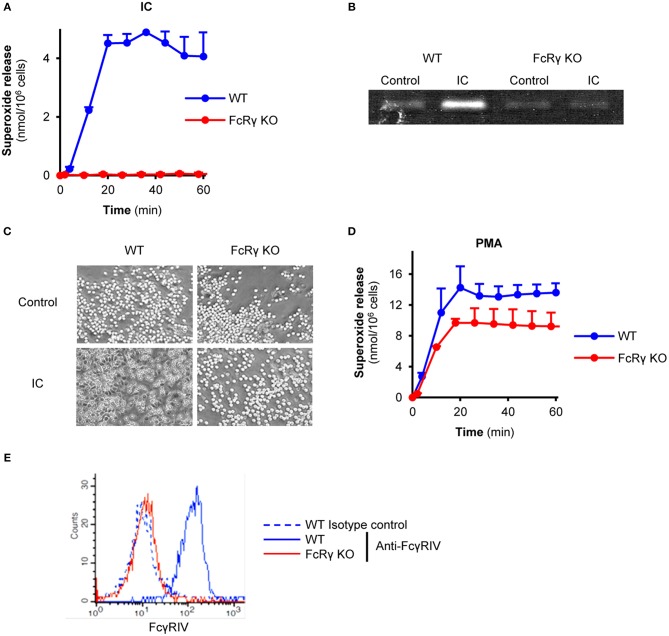
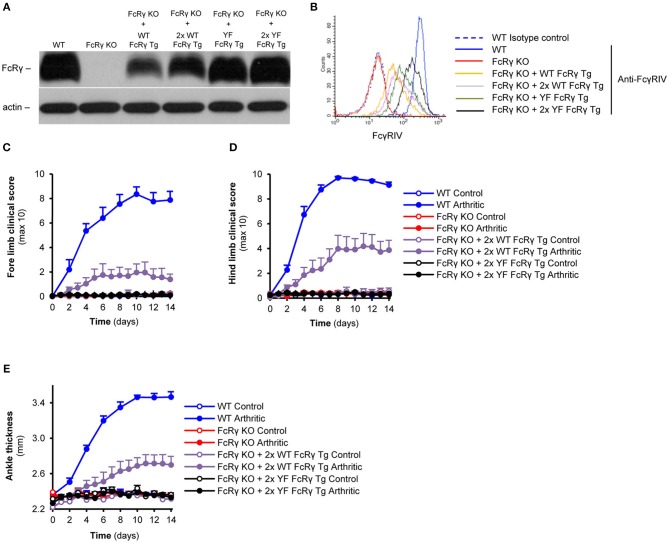
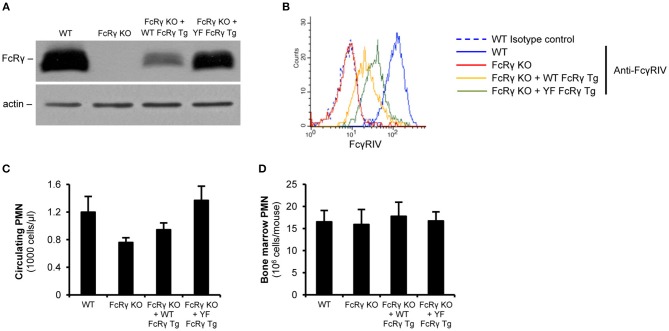
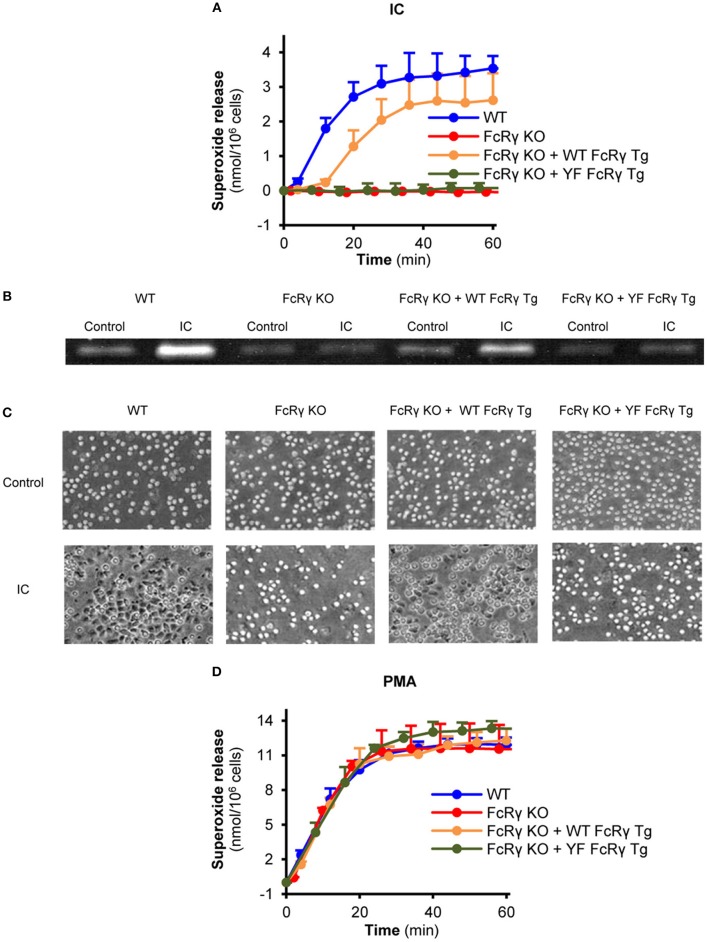
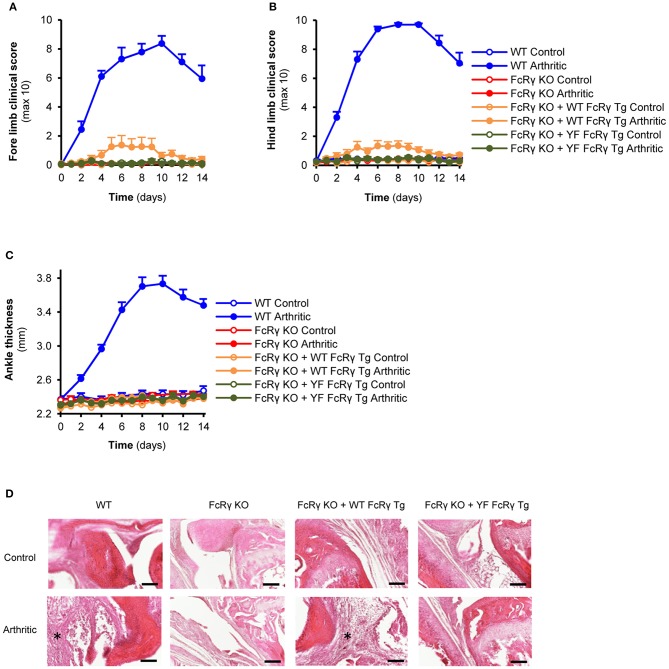
Activating Fcγ receptors associated with Fc receptor γ-chain (FcRγ) are critical for mediating neutrophil effector functions in immune complex-mediated autoimmune diseases. FcRγ contains ITAM tyrosines and the role of these tyrosines has not been defined in neutrophils and arthritis. In this study, the functions of FcRγ ITAM tyrosines were characterized using wild type and ITAM tyrosine mutant (Y65F/Y76F) transgenic mice crossed to an FcRγ-deficient genetic background. FcRγ-deficient neutrophils showed undetectable cell surface expression of the activating Fcγ receptor IV, defective immune complex-induced superoxide production, degranulation and spreading. Although the re-expression of both the wild type and the ITAM tyrosine mutant (Y65F/Y76F) FcRγ could restore activating Fcγ receptor expression of FcRγ-deficient neutrophils, only the wild type transgenic form could mediate Fcγ receptor-dependent effector functions. In contrast, neutrophils carrying ITAM tyrosine mutant FcRγ were unable to produce superoxide, mediate degranulation and perform active spreading. In addition, our results confirmed the protection of FcRγ-deficient mice from autoimmune arthritis. Importantly, the presence of the wild type FcRγ transgene, in contrast to the ITAM tyrosine mutant transgene, partially reversed autoimmune arthritis development. The reversing effect of the wild type transgene was even more robust when animals carried the wild type transgene in a homozygous form. Collectively, FcRγ ITAM tyrosines play a critical role in the induction of neutrophil effector responses, the initiation and progression of an autoantibody-induced experimental arthritis , indicating a signaling, rather than just a receptor stabilizing function of the molecule.
激活与 Fc 受体 γ 链(FcRγ)相关的 Fcγ 受体对于介导免疫复合物介导的自身免疫疾病中的中性粒细胞效应功能至关重要。FcRγ 包含 ITAM 酪氨酸,但其在中性粒细胞和关节炎中的作用尚未确定。在这项研究中,使用野生型和 ITAM 酪氨酸突变(Y65F/Y76F)转基因小鼠与 FcRγ 缺陷遗传背景交叉,研究了 FcRγ ITAM 酪氨酸的功能。FcRγ 缺陷中性粒细胞表现出可检测的激活型 Fcγ 受体 IV 细胞表面表达,免疫复合物诱导的超氧化物产生、脱颗粒和扩散受损。尽管野生型和 ITAM 酪氨酸突变(Y65F/Y76F)FcRγ 的重新表达都可以恢复 FcRγ 缺陷中性粒细胞的激活型 Fcγ 受体表达,但只有野生型转基因形式才能介导 Fcγ 受体依赖性效应功能。相比之下,携带 ITAM 酪氨酸突变 FcRγ 的中性粒细胞无法产生超氧化物、介导脱颗粒和进行主动扩散。此外,我们的结果证实了 FcRγ 缺陷小鼠对自身免疫性关节炎的保护作用。重要的是,与 ITAM 酪氨酸突变转基因相比,野生型 FcRγ 转基因的存在部分逆转了自身免疫性关节炎的发展。当动物携带纯合形式的野生型转基因时,野生型转基因的逆转作用更加显著。总之,FcRγ ITAM 酪氨酸在诱导中性粒细胞效应反应、启动和进展自身抗体诱导的实验性关节炎中发挥着关键作用,表明该分子具有信号转导作用,而不仅仅是受体稳定作用。