Porcelli Letizia, Iacobazzi Rosa Maria, Di Fonte Roberta, Serratì Simona, Intini Angelica, Solimando Antonio Giovanni, Brunetti Oronzo, Calabrese Angela, Leonetti Francesco, Azzariti Amalia, Silvestris Nicola
Experimental Pharmacology Laboratory, IRCCS Istituto Tumori "Giovanni Paolo II", 70124 Bari, Italy.
Department of Biomedical Sciences and Human Oncology, Section of Internal Medicine 'G. Baccelli', University of Bari Medical School Bari, 70124 Bari, Italy.
Cancers (Basel). 2019 Mar 7;11(3):330. doi: 10.3390/cancers11030330.
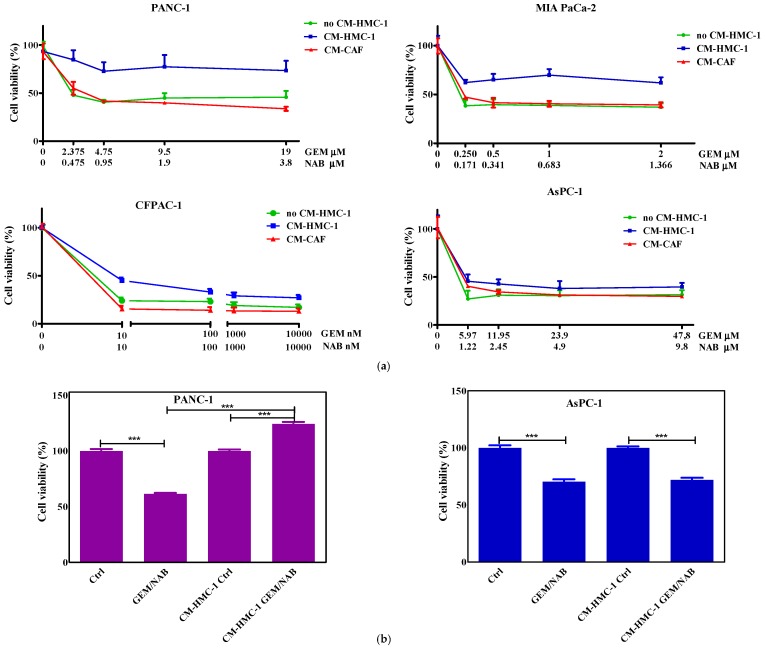
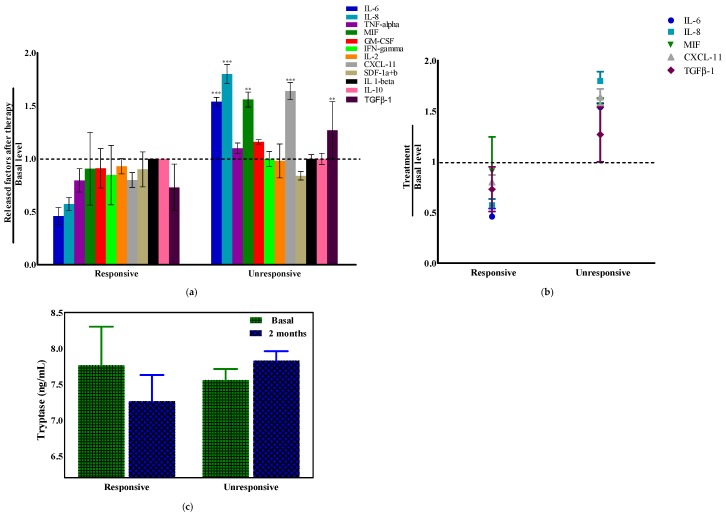
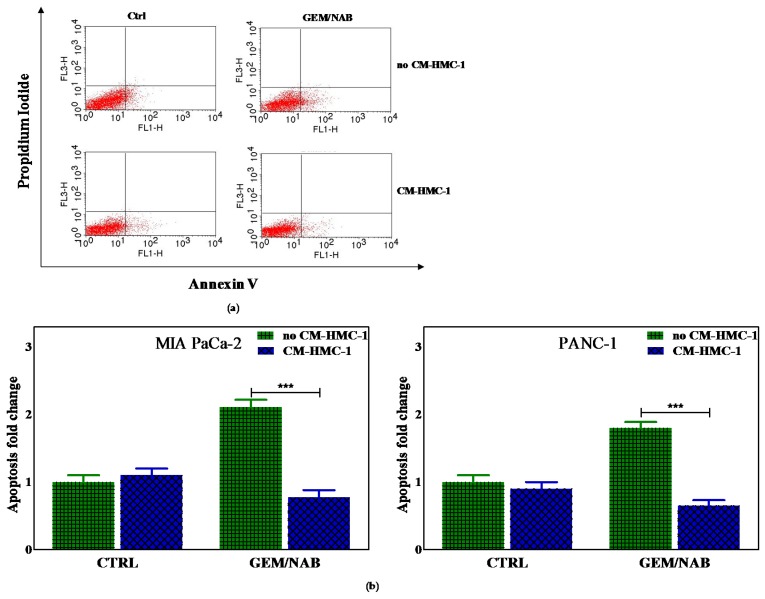
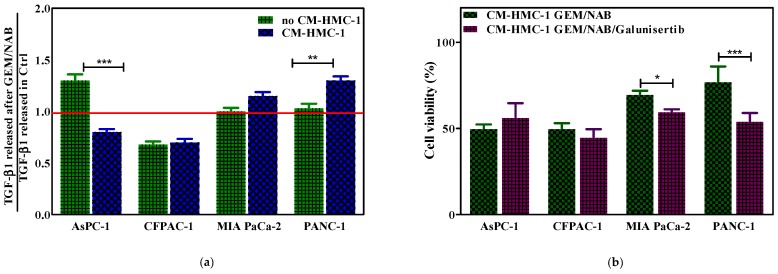
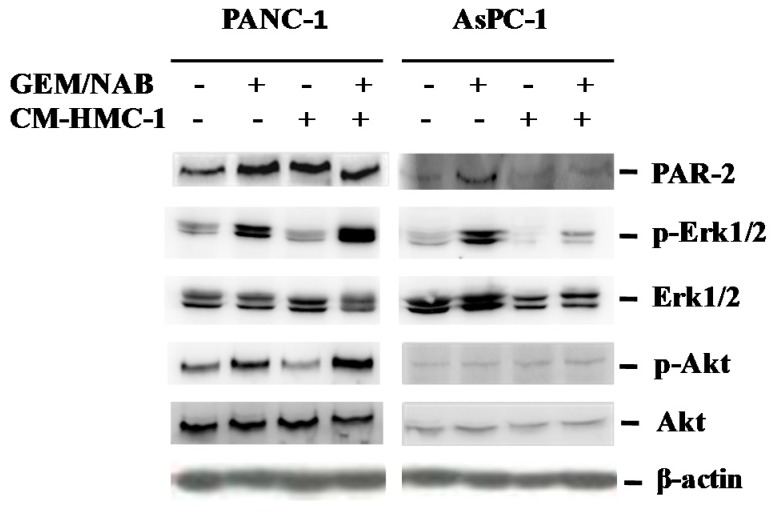
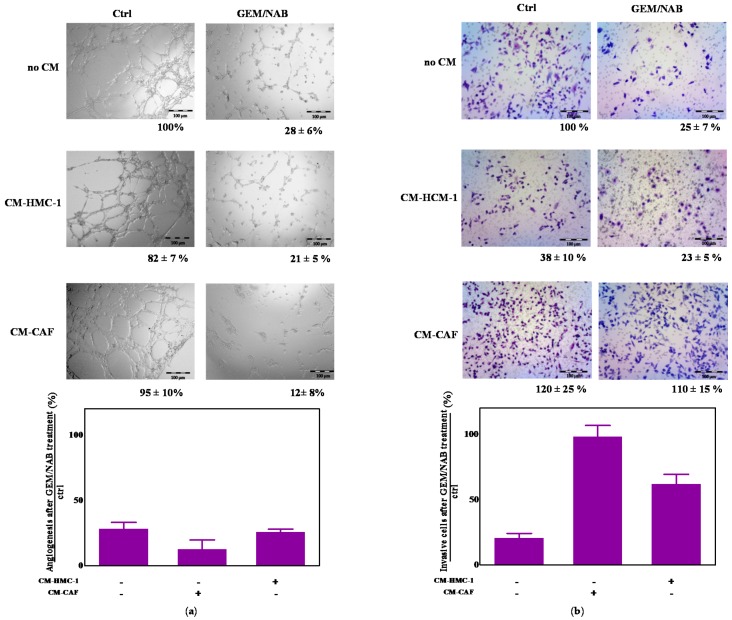
Tumor⁻stroma interactions are of key importance for pancreatic ductal adenocarcinoma (PDAC) progression. Our aim was to investigate whether cancer associated fibroblasts (CAFs) and mast cells (MC) affected the sensitivity of PDAC cells to gemcitabine/nabpaclitaxel (GEM/NAB). For this purpose, the combination cytotoxicity and the effect on tumor invasion and angiogenesis were evaluated with or without a conditioned medium from the mast cell line HMC-1 (human mast cell line-1 cells) and CAFs. Beside the clinical outcome of a homogenous population of PDAC patients, receiving GEM/NAB, was correlated to the circulating levels of mast cell tryptase and to a panel of inflammatory and immunosuppressive cytokines. CAFs neither affected drugs' cytotoxicity nor the inhibition of angiogenesis, but promoted tumor cell invasion. The MC instead, caused resistance to drugs by reducing apoptosis, by activating the TGF-β signalling and by promoting tumor invasion. Indeed, the inhibition of TβRI serine/threonine kinase activity by galunisertib restored drugs cytotoxicity. Moreover, MC induced the release of TGF-β1, and increased expression of PAR-2, ERK1/2 and Akt activation. Accordingly, TGF-β1, tryptase and other pro-inflammatory and immunosuppressive cytokines increased in the unresponsive patients. In conclusion, MC play a pivotal role in the resistance to GEM/NAB. A correlation between high level of circulating pro-inflammatory/ immunosuppressive cytokines and unresponsiveness was found in PDAC patients.
肿瘤与基质的相互作用对胰腺导管腺癌(PDAC)的进展至关重要。我们的目的是研究癌症相关成纤维细胞(CAFs)和肥大细胞(MC)是否会影响PDAC细胞对吉西他滨/纳米白蛋白紫杉醇(GEM/NAB)的敏感性。为此,我们评估了在有或没有肥大细胞系HMC-1(人肥大细胞系-1细胞)和CAFs的条件培养基的情况下,联合细胞毒性以及对肿瘤侵袭和血管生成的影响。此外,接受GEM/NAB治疗的同质PDAC患者群体的临床结果与肥大细胞类胰蛋白酶的循环水平以及一组炎症和免疫抑制细胞因子相关。CAFs既不影响药物的细胞毒性,也不影响血管生成的抑制,但会促进肿瘤细胞的侵袭。相反,MC通过减少细胞凋亡、激活TGF-β信号通路和促进肿瘤侵袭导致对药物产生抗性。事实上,加鲁尼塞替布抑制TβRI丝氨酸/苏氨酸激酶活性可恢复药物的细胞毒性。此外,MC诱导TGF-β1的释放,并增加PAR-2、ERK1/2的表达和Akt的激活。相应地,在无反应的患者中,TGF-β1、类胰蛋白酶和其他促炎和免疫抑制细胞因子增加。总之,MC在对GEM/NAB的抗性中起关键作用。在PDAC患者中发现循环促炎/免疫抑制细胞因子水平高与无反应之间存在相关性。