Department of Biology and Biological Engineering, Chalmers University of Technology, 41296, Gothenburg, Sweden.
Novo Nordisk Foundation Center for Biosustainability, Technical University of Denmark, 2800, Lyngby, Denmark.
BMC Genomics. 2019 Mar 12;20(1):208. doi: 10.1186/s12864-019-5591-7.
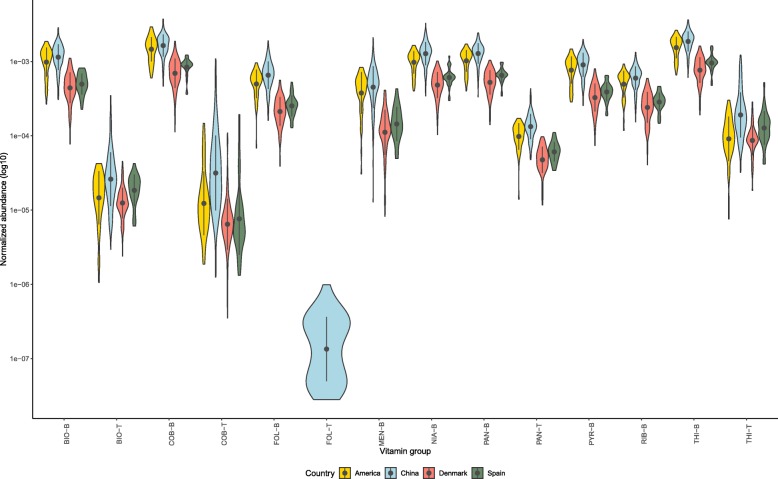
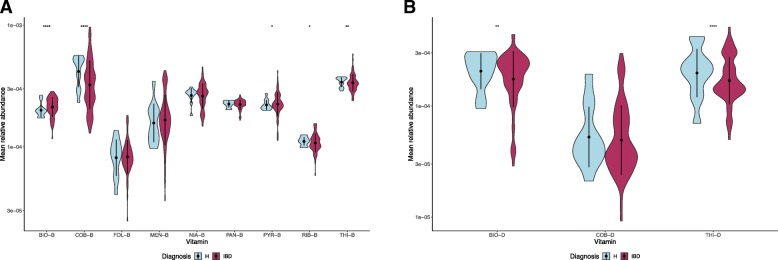
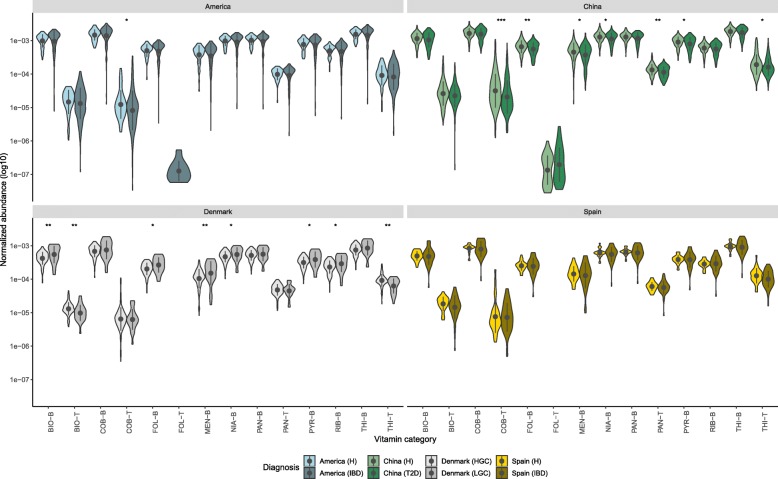
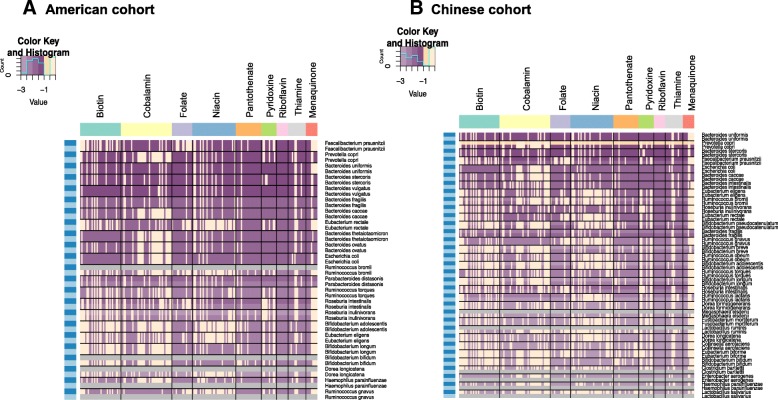
Human gut microbial communities have been known to produce vitamins, which are subsequently absorbed by the host in the large intestine. However, the relationship between species with vitamin pathway associated functional features or their gene abundance in different states of health and disease is lacking. Here, we analyzed shotgun fecal metagenomes of individuals from four different countries for genes that are involved in vitamin biosynthetic pathways and transport mechanisms and corresponding species' abundance.
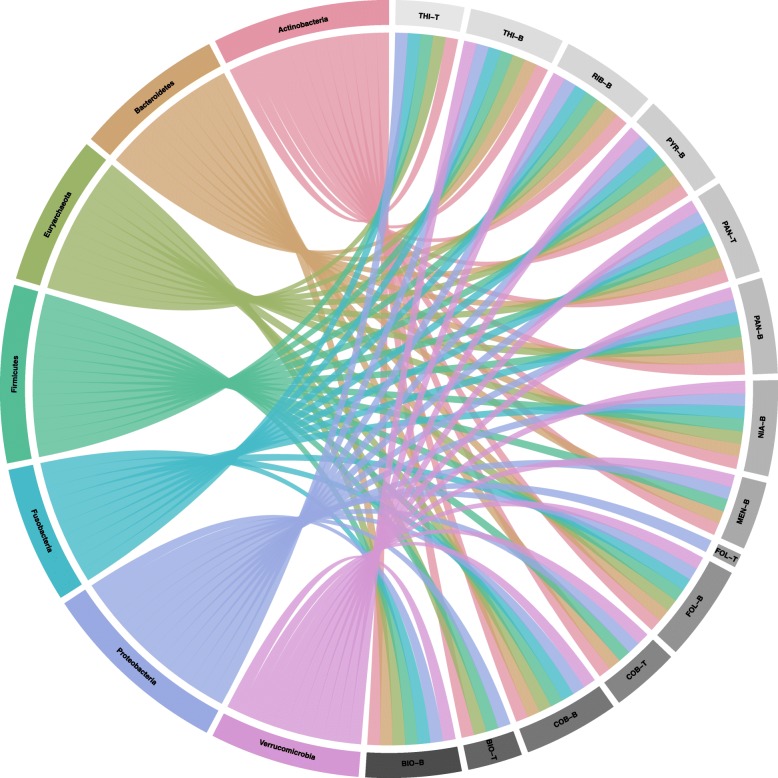
We found that the prevalence of these genes were found to be distributed across the dominant phyla of gut species. The number of positive correlations were high between species harboring genes related to vitamin biosynthetic pathways and transporter mechanisms than that with either alone. Although, the range of total gene abundances remained constant across healthy populations at the global level, species composition and their presence for metabolic pathway related genes determine the abundance and functional genetic content of vitamin metabolism. Based on metatranscriptomics data, the equation between abundance of vitamin-biosynthetic enzymes and vitamin-dependent enzymes suggests that the production and utilization potential of these enzymes seems way more complex usage allocations than just mere direct linear associations.
Our findings provide a rationale to examine and disentangle the interrelationship between B-vitamin dosage (dietary or microbe-mediated) on gut microbial members and the host, in the gut microbiota of individuals with under- or overnutrition.
人体肠道微生物群落被认为能够产生维生素,这些维生素随后在大肠中被宿主吸收。然而,目前还缺乏关于具有维生素途径相关功能特征的物种之间的关系,或者它们在不同健康和疾病状态下的基因丰度的关系。在这里,我们分析了来自四个不同国家的个体的粪便宏基因组,以研究参与维生素生物合成途径和运输机制的基因及其相应物种的丰度。
我们发现这些基因的存在与肠道物种的优势门分布有关。与单独的维生素生物合成途径或运输机制相关的基因有关的物种之间的正相关数量比单独的基因之间的正相关数量要高。尽管在全球范围内,健康人群的总基因丰度保持不变,但物种组成及其存在的代谢途径相关基因决定了维生素代谢的丰度和功能遗传内容。基于宏转录组学数据,维生素生物合成酶和维生素依赖酶的丰度之间的关系表明,这些酶的产生和利用潜力比仅仅是直接线性关联更为复杂。
我们的发现为研究和解析在营养不足或营养过剩的个体的肠道微生物群中,B 族维生素剂量(饮食或微生物介导)与肠道微生物成员和宿主之间的相互关系提供了依据。