Bian Guozhi, Ma Haibin, Luo Mengping, Gong Fengping, Li Bo, Wang Guiping, Mohiuddin Mudassar, Liao Ming, Yuan Jianfeng
Veterinary Medicine College of South China Agricultural University, Guangzhou, 510642, China.
Guangdong Haid Institute of Animal Husbandry & Veterinary, Guangzhou, 511400, China.
BMC Vet Res. 2019 Mar 12;15(1):88. doi: 10.1186/s12917-019-1833-9.
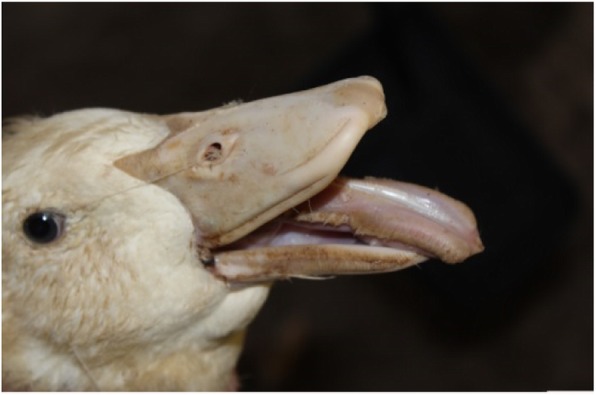
Since early 2015, mule duck and Cherry Valley duck flocks have been suffering from short beak and dwarfism syndrome. This widely spreading infectious disease is characterized by growth retardation, smaller beak and tarsus with high morbidity and low mortality rate. For better understanding, we identified and characterized virus isolates named AH and GD from diseased Cherry Valley duck and mule duck flocks and investigated the damage caused by novel parvovirus-related virus (NGPV) to tissues and organs, including kidney, brain, pancreas, liver, spleen, bursa of fabricius and myocardial tissues.
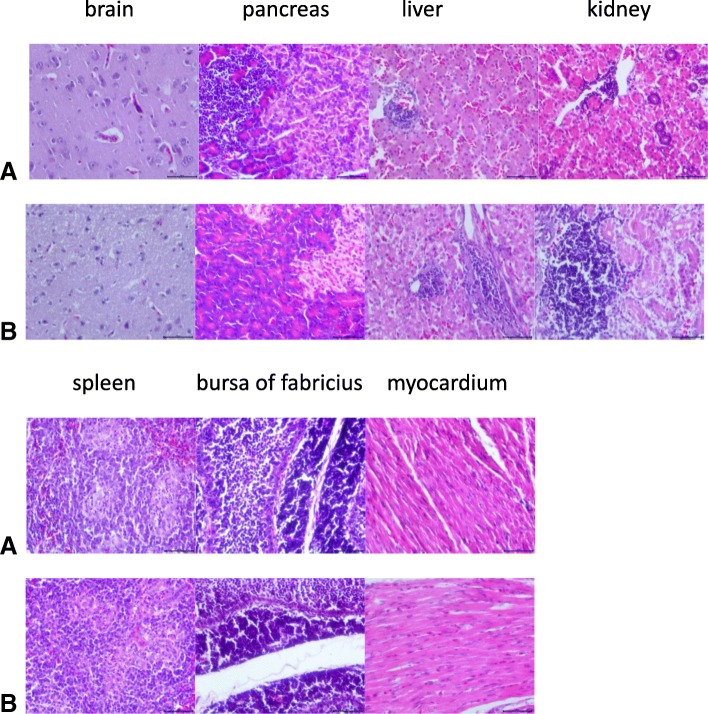
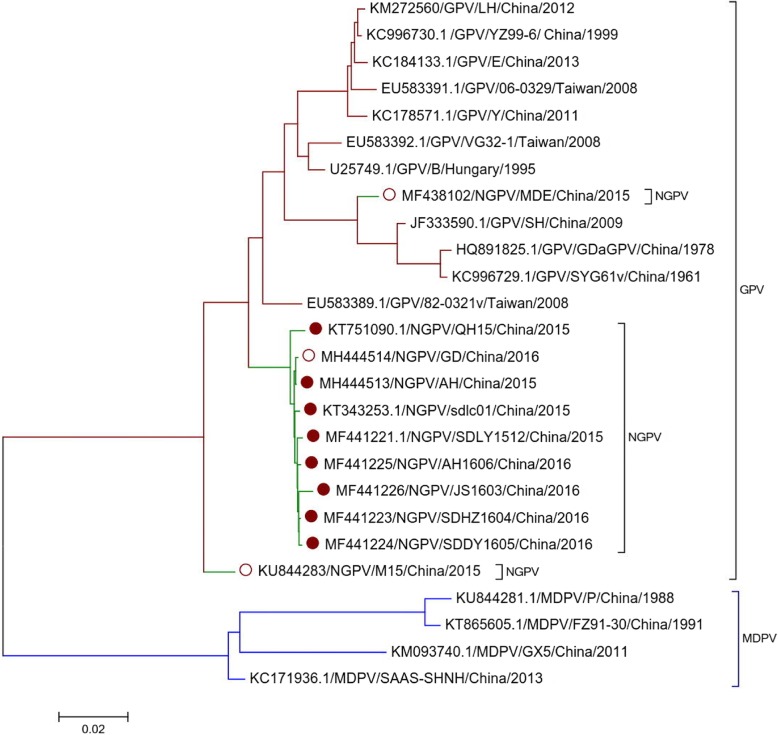
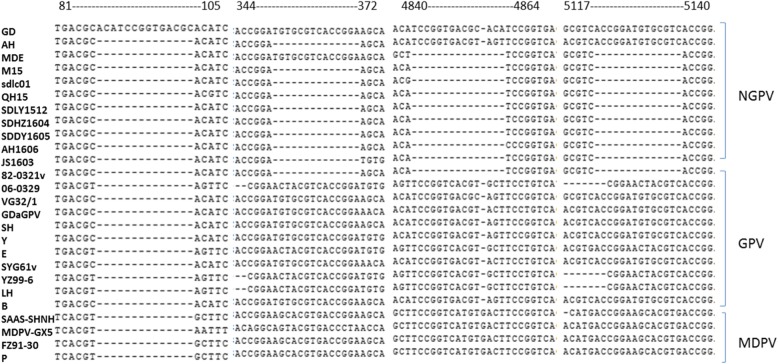
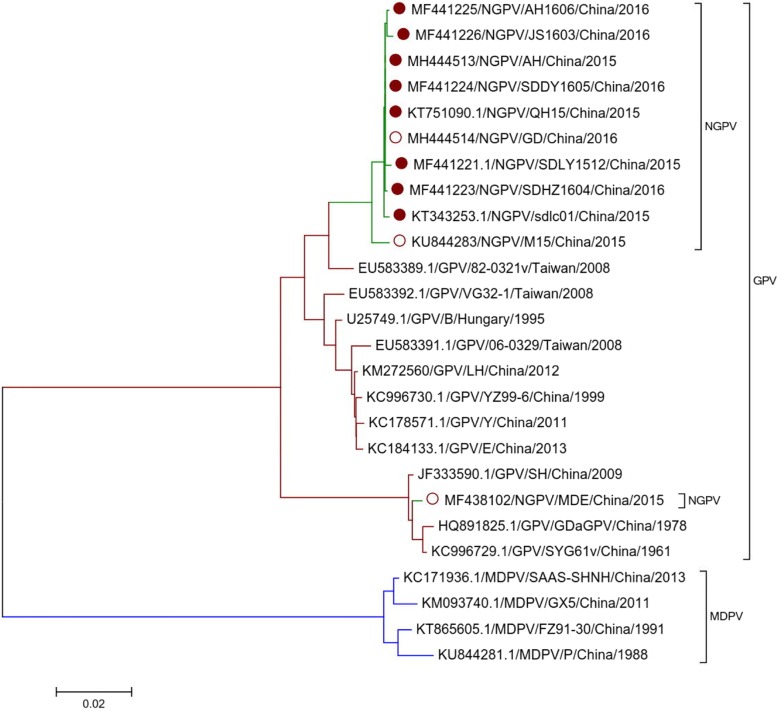
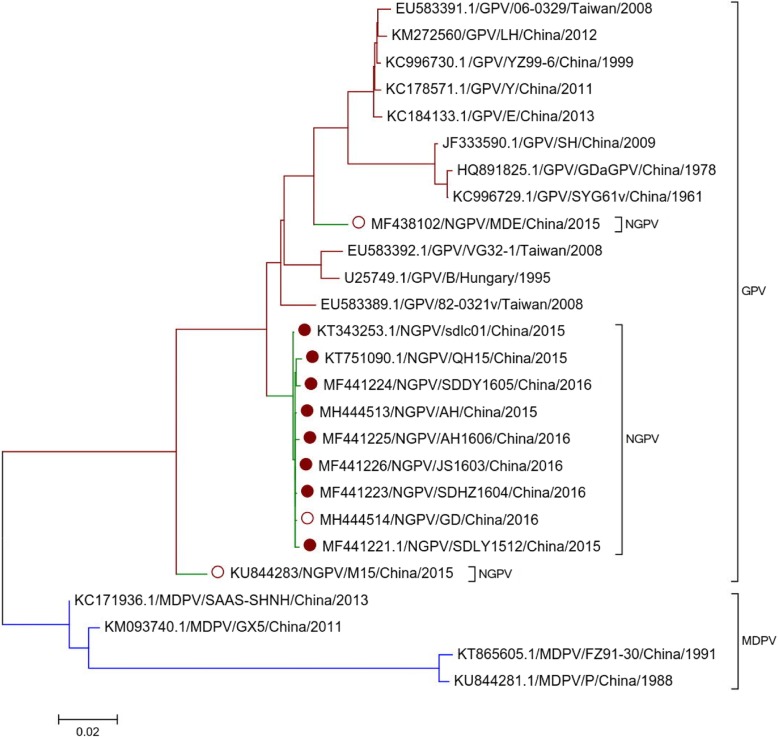
AH and GD isolates shared high nucleotide identity with goose parvovirus (GPV). Alignment studies of AH and GD isolates showed 94.5-99.2% identity with novel parvovirus-related virus (NGPV), 98.7-91.5% identity with GPV and 79.9-83.7% with muscovy duck parvovirus (MDPV). Compared with other NGPV, classical GPV and MDPV sequences, a four 14-nucleotide-pair insertion in GD isolate was found in left open reading frame (ORF) (87-100 nt and 350-363 nt) and in right ORF (4847-4861 nt and 5122-5135 nt). However, in AH isolate, a five 14-nucleotide-pair deletions similar to other NGPV were found. The complete genome sequence comparison of eleven NGPV isolates from mule ducks and cherry valley ducks revealed no remarkable difference between them. Notably, the myocardium and bursa of fabricius of both disease and healthy animals are perfectly normal while other tissues have inflammatory cells exudation.
The AH and GD strains are novel parvovirus-related virus that isolates from mule ducks or cherry valley ducks which DNA sequence has no remarkable difference. The histopathology of tissues and organs such as kidney, brain etc. revealed non-significant changes in experimental and control animals. Overall, this study has contributed better understanding of molecular biology of NGPV strains and will help to develop the candidate strain for vaccine preparation to get better protection against these viral infections.
自2015年初以来,骡鸭和樱桃谷鸭群一直遭受短喙和侏儒综合征的困扰。这种广泛传播的传染病的特征是生长发育迟缓、喙和跗骨较小,发病率高但死亡率低。为了更好地了解,我们从患病的樱桃谷鸭和骡鸭群中鉴定并表征了名为AH和GD的病毒分离株,并研究了新型细小病毒相关病毒(NGPV)对包括肾脏、大脑、胰腺、肝脏、脾脏、法氏囊和心肌组织在内的组织和器官造成的损害。
AH和GD分离株与鹅细小病毒(GPV)具有高度的核苷酸同一性。AH和GD分离株的比对研究表明,它们与新型细小病毒相关病毒(NGPV)的同一性为94.5 - 99.2%,与GPV的同一性为98.7 - 91.5%,与番鸭细小病毒(MDPV)的同一性为79.9 - 83.7%。与其他NGPV、经典GPV和MDPV序列相比,在GD分离株的左开放阅读框(ORF)(87 - 100 nt和350 - 363 nt)和右ORF(4847 - 4861 nt和5122 - 5135 nt)中发现了一个四个14核苷酸对的插入。然而,在AH分离株中,发现了与其他NGPV相似的五个14核苷酸对的缺失。对来自骡鸭和樱桃谷鸭的11个NGPV分离株的全基因组序列比较显示它们之间没有显著差异。值得注意的是,患病动物和健康动物的心肌和法氏囊完全正常,而其他组织有炎性细胞渗出。
AH和GD毒株是从骡鸭或樱桃谷鸭中分离出的新型细小病毒相关病毒,其DNA序列没有显著差异。肾脏、大脑等组织器官的组织病理学显示,实验动物和对照动物没有明显变化。总体而言,本研究有助于更好地了解NGPV毒株的分子生物学,并将有助于开发候选毒株用于制备疫苗,以更好地预防这些病毒感染。