Biobank, National Cancer Institute, Baublio Str. 3b, 08406, Vilnius, Lithuania.
Laboratory of Immunology, National Cancer Institute, Baublio Str. 3b, 08406, Vilnius, Lithuania.
J Nanobiotechnology. 2019 Mar 13;17(1):39. doi: 10.1186/s12951-019-0470-6.
Human mesenchymal stem cells (MSCs) have drawn much attention in the field of regenerative medicine for their immunomodulatory and anti-inflammatory effects. MSCs possess specific tumor-oriented migration and incorporation highlighting the potential for MSCs to be used as an ideal carrier for anticancer agents. Bone marrow is the main source of MSCs for clinical applications. MSCs tracking in vivo is a critical component of the safety and efficacy evaluation of therapeutic cell products; therefore, cells must be labeled with contrast agents to enable visualization of the MSCs migration in vivo. Due to their unique properties, quantum dots (QDs) are emerging as optimal tools in long-term MSC optical imaging applications. The aim of this study was to investigate the uptake dynamics, cytotoxity, subcellular and extracellular distribution of non-targeted carboxylated quantum dots in human bone marrow MSCs at different cell growing densities.
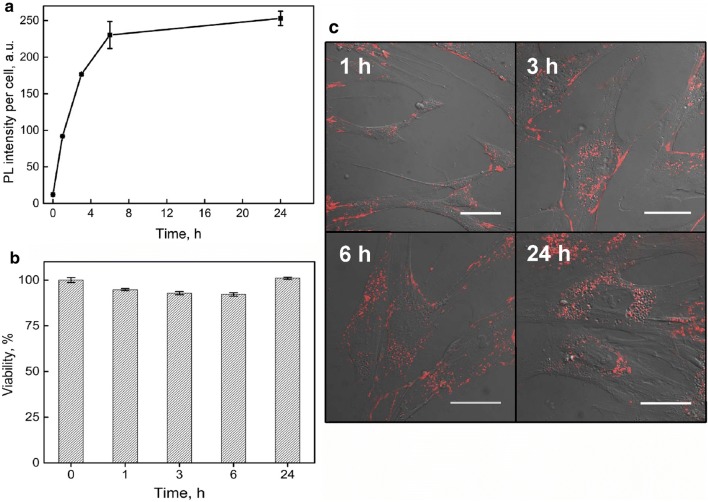
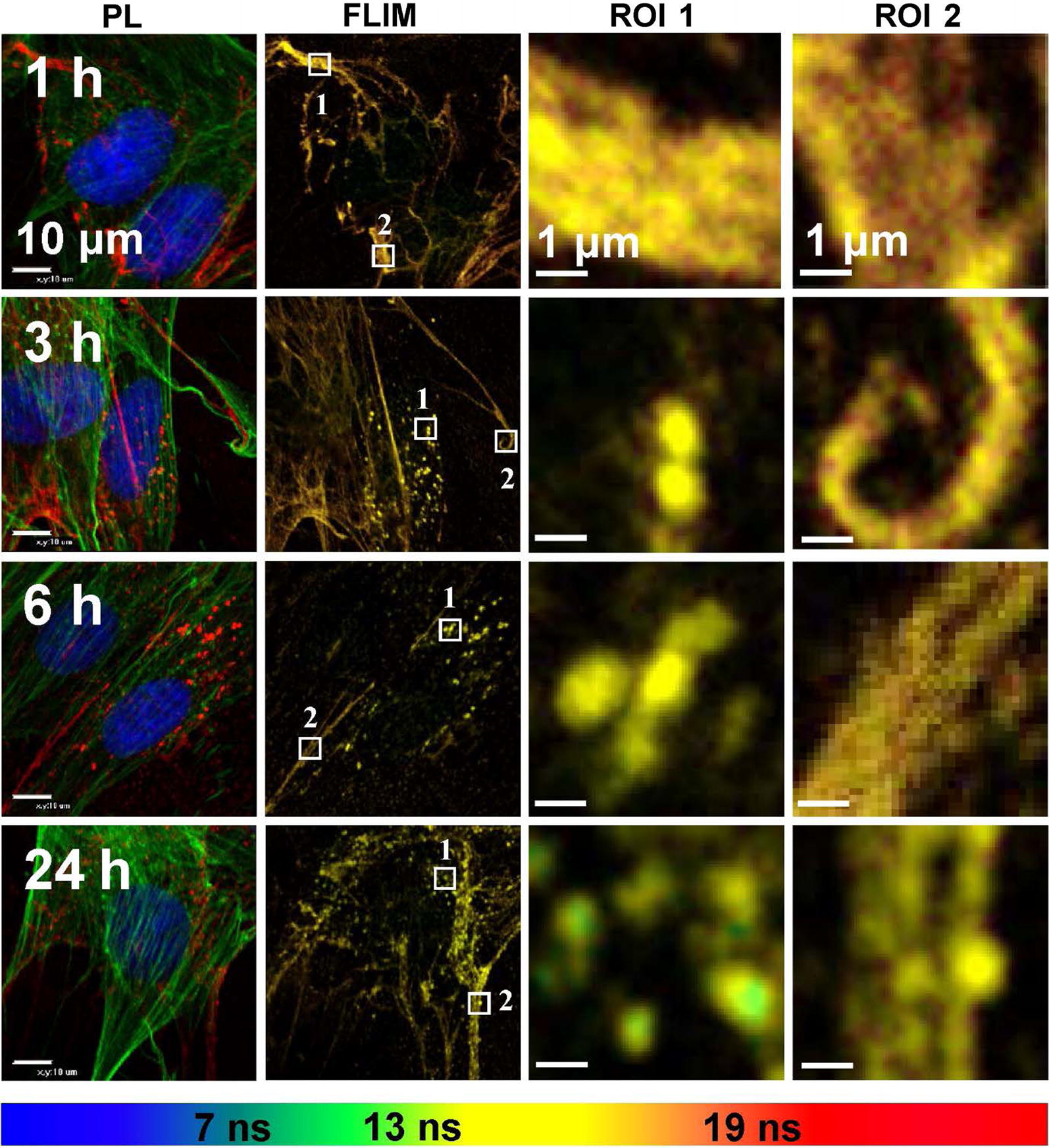
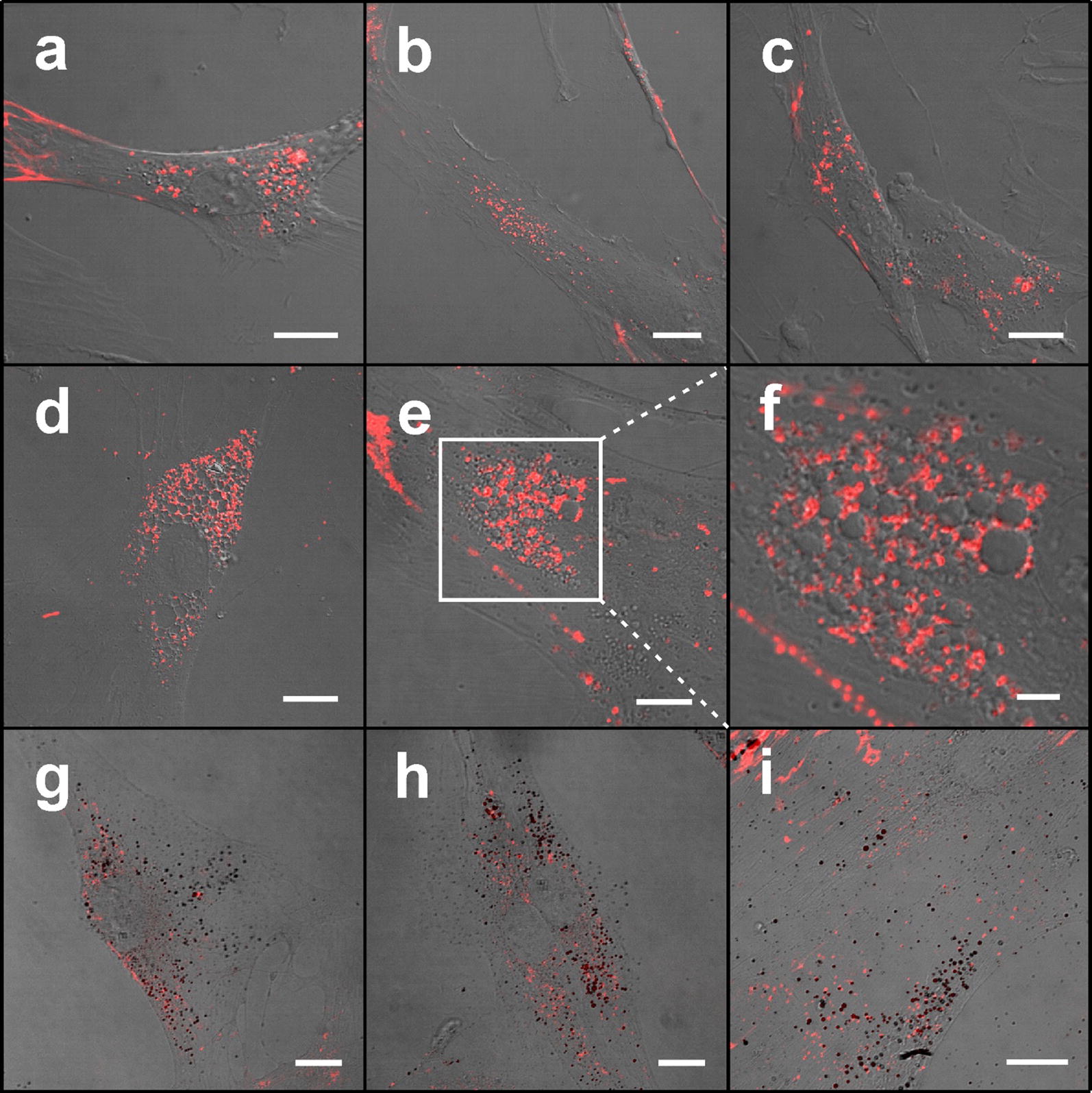
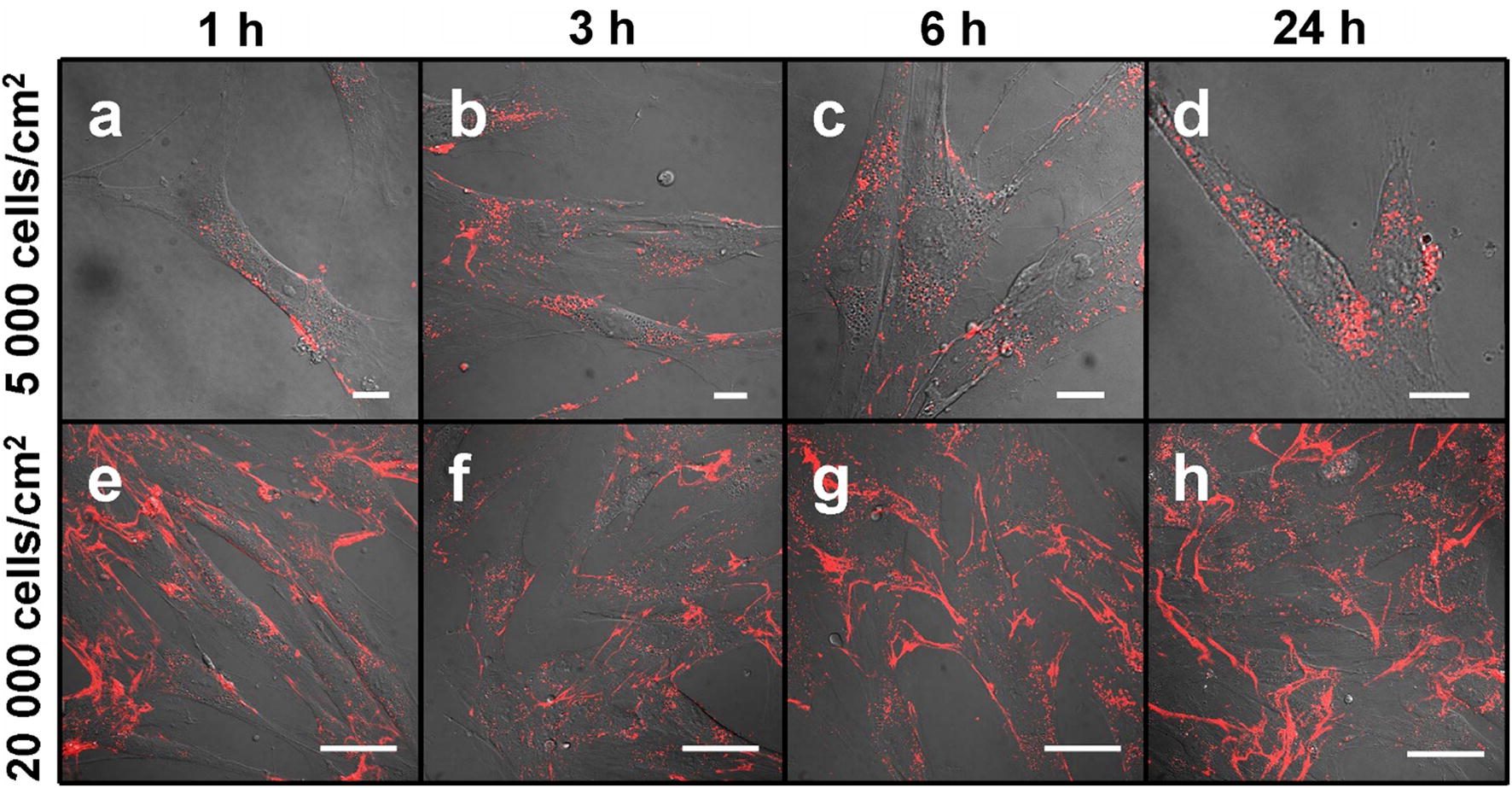
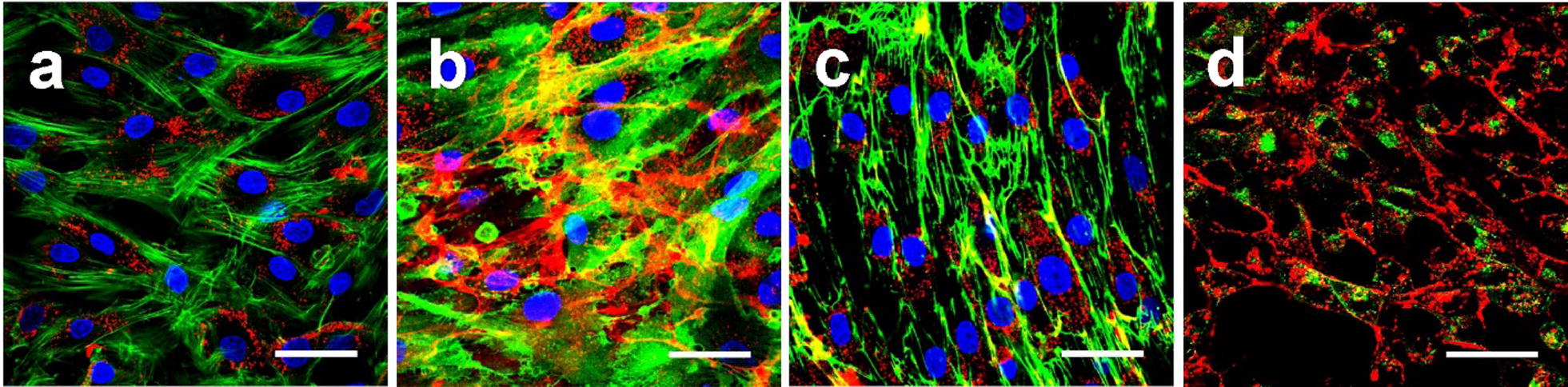
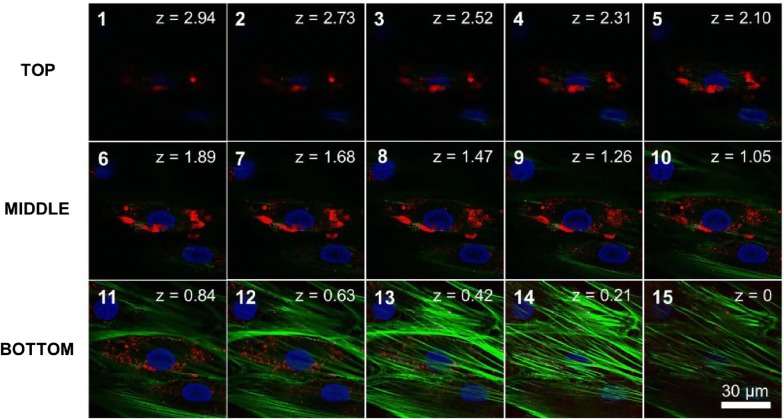
QDs had no negative impact on MSC viability throughout the experiment and accumulated in all observed cells efficiently; however, in some MSCs QDs induced formation of lipid droplets. At low cell growing densities QDs distribute within MSCs cytoplasm already after 1 h of incubation reaching saturation after 6 h. After 24 h QDs localize mainly in the perinuclear region of the cells in endosomes. Interestingly, in more confluent culture QDs localize mostly outside MSCs. QDs abundantly mark MSC long filopodia-like structures attaching neighboring cells. At high cell density cultivation, we for the first time demonstrated that carboxylated QDs localize in human bone marrow MSC extracellular matrix. Moreover, we observed that average photoluminescence lifetime of QDs distributed in extracellular matrix are longer than lifetimes of QDs entrapped in endocytic vesicles; thus, for the first time showing the possibility to identify and distinguish localization of QDs in various extracellular and intracellular structures using fluorescence-lifetime imaging microscopy without additional staining assays.
Carboxylated QDs can be used as nonspecific and effective dye for staining of human bone marrow MSCs and their specific extracellular structures. These results are promising in fundamental stem cell biology as well as in cellular therapy, anticancer drug delivery and tissue engineering.
人类间充质干细胞(MSCs)因其免疫调节和抗炎作用而在再生医学领域引起了广泛关注。MSCs 具有特定的肿瘤靶向迁移和整合特性,这突出了 MSCs 作为抗癌药物理想载体的潜力。骨髓是临床应用中 MSCs 的主要来源。MSCs 的体内示踪是治疗性细胞产品安全性和疗效评估的关键组成部分;因此,细胞必须用对比剂进行标记,以实现 MSCs 体内迁移的可视化。由于其独特的性质,量子点(QDs)在长期 MSC 光学成像应用中成为最佳工具。本研究旨在研究非靶向羧基化量子点在不同细胞生长密度下在人骨髓间充质干细胞中的摄取动力学、细胞毒性、亚细胞和细胞外分布。
在整个实验过程中,QDs 对 MSC 活力没有负面影响,并能有效地在所有观察到的细胞中积累;然而,在一些 MSC 中,QDs 诱导了脂滴的形成。在低细胞生长密度下,QDs 在孵育 1 小时后即可分布在 MSC 细胞质中,并在 6 小时后达到饱和。孵育 24 小时后,QDs 主要定位于细胞的核周区,位于内体中。有趣的是,在更致密的培养物中,QDs 主要位于 MSC 之外。QDs 大量标记 MSC 长丝状伪足状结构,附着相邻细胞。在高细胞密度培养时,我们首次证明了羧基化 QDs 定位于人骨髓 MSC 细胞外基质中。此外,我们观察到分布在细胞外基质中的 QDs 的平均荧光寿命长于内体中 QDs 的荧光寿命;因此,首次表明可以使用荧光寿命成像显微镜来识别和区分 QDs 在各种细胞外和细胞内结构中的定位,而无需额外的染色测定。
羧基化 QDs 可用作非特异性和有效染料,用于染色人骨髓间充质干细胞及其特定的细胞外结构。这些结果在基础干细胞生物学以及细胞治疗、抗癌药物输送和组织工程中具有广阔的应用前景。