Amador Paula, Fernandes Ruben, Prudêncio Cristina, Duarte Isabel
Environment Department, Research Centre for Natural Resources, Environment and Society (CERNAS), College of Agriculture, Polytechnic of Coimbra, 3045-601 Coimbra, Portugal.
Department Chemical Sciences and Biomolecules, School Allied Health Sciences, Polytechnic of Porto, 4200-072 Porto, Portugal.
Antibiotics (Basel). 2019 Mar 13;8(1):23. doi: 10.3390/antibiotics8010023.
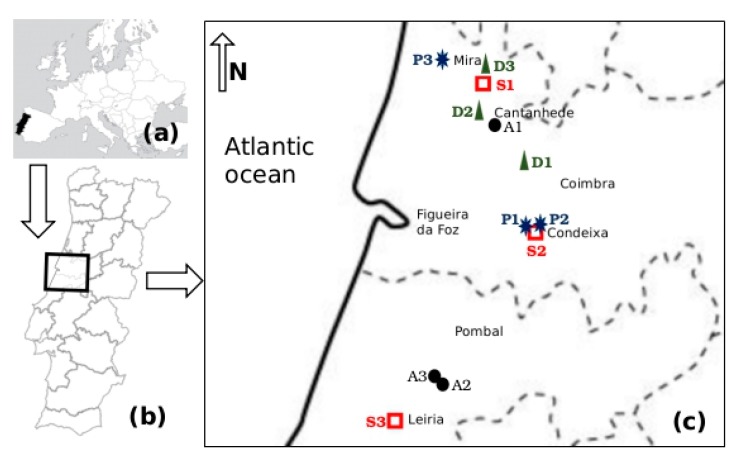
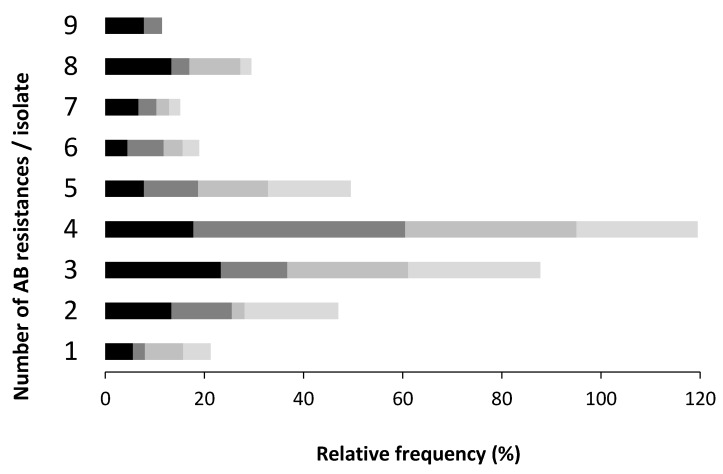
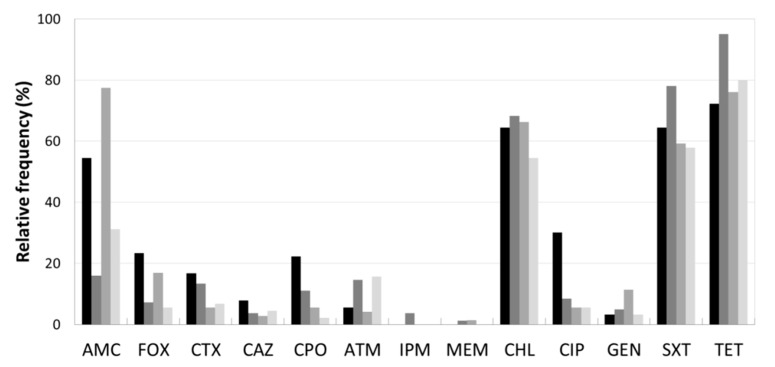
The exposure of both crop fields and humans to antibiotic-resistant bacteria in animal excreta is an emergent concern of the One Health initiative. This study assessed the contamination of livestock manure from poultry, pig, dairy farms and slaughterhouses in Portugal with resistance determinants. The resistance profiles of 331 isolates to eight β-lactam (amoxicillin, cefoxitin, cefotaxime, cefpirome, aztreonam, ceftazidime, imipenem and meropenem) and to five non-β-lactam antibiotics (tetracycline (TET), trimethoprim/sulfamethoxazole (SXT), ciprofloxacin (CIP), chloramphenicol (CHL) and gentamicin) was investigated. Forty-nine integron and non-β-lactam resistance genes were also screened for. Rates of resistance to the 13 antibiotics ranged from 80.8% to 0.6%. Multidrug resistance (MDR) rates were highest in pig farm samples (79%). Thirty different integron and resistance genes were identified. These were mainly associated with resistance to CHL (I and II), CIP (mainly, S, B and ), TET (mainly (A) and (M)) and SXT (mostly Ia group and 3). In MDR isolates, integron presence and non-β-lactam resistance to TET, SXT and CHL were positively correlated. Overall, a high prevalence of MDR was found in livestock manure. The high gene diversity for antibiotic resistance identified in this study highlights the risk of MDR spread within the environment through manure use.
农田和人类接触动物排泄物中抗生素耐药菌的问题是“同一健康”倡议新出现的一个关注点。本研究评估了葡萄牙家禽养殖场、养猪场、奶牛场和屠宰场的牲畜粪便中耐药决定因素的污染情况。对331株分离菌针对8种β-内酰胺类抗生素(阿莫西林、头孢西丁、头孢噻肟、头孢匹罗、氨曲南、头孢他啶、亚胺培南和美罗培南)以及5种非β-内酰胺类抗生素(四环素(TET)、甲氧苄啶/磺胺甲恶唑(SXT)、环丙沙星(CIP)、氯霉素(CHL)和庆大霉素)的耐药谱进行了研究。还筛查了49种整合子和非β-内酰胺类耐药基因。对这13种抗生素的耐药率在80.8%至0.6%之间。养猪场样本中的多重耐药(MDR)率最高(79%)。鉴定出30种不同的整合子和耐药基因。这些主要与对CHL(I和II)、CIP(主要是S、B和)、TET(主要是(A)和(M))以及SXT(大多为Ia组和3)的耐药性有关。在MDR分离株中,整合子的存在与对TET、SXT和CHL的非β-内酰胺类耐药呈正相关。总体而言,在牲畜粪便中发现了较高的MDR流行率。本研究中鉴定出的抗生素耐药基因多样性高,突出了通过粪便使用导致MDR在环境中传播的风险。