Departamento de Biología Celular y Molecular, Facultad de Ciencias Biológicas, Pontificia Universidad Católica de Chile, Santiago, Chile.
Centro de Biología Celular y Biomedicina (CEBICEM), Facultad de Medicina y Facultad de Ciencias, Universidad San Sebastián, Santiago, Chile.
Front Immunol. 2019 Feb 19;10:225. doi: 10.3389/fimmu.2019.00225. eCollection 2019.
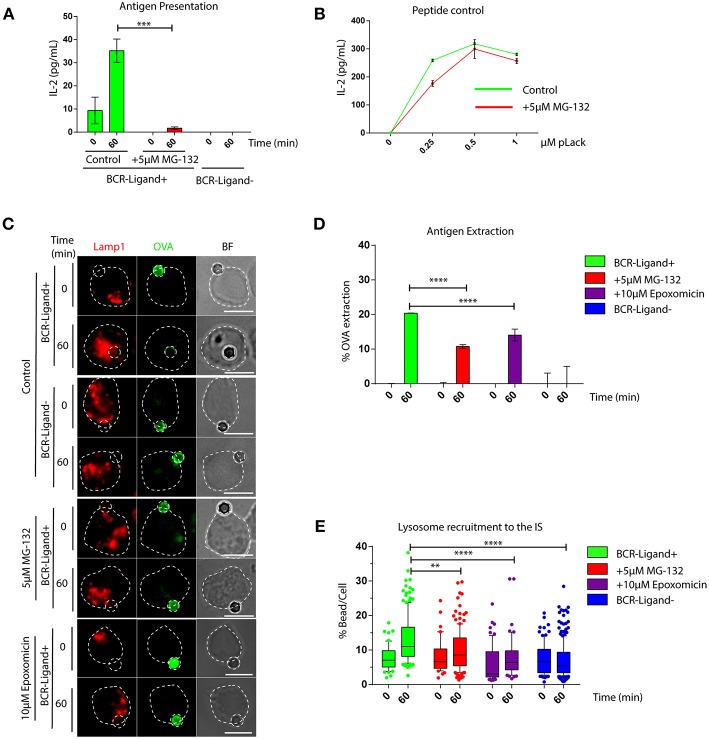
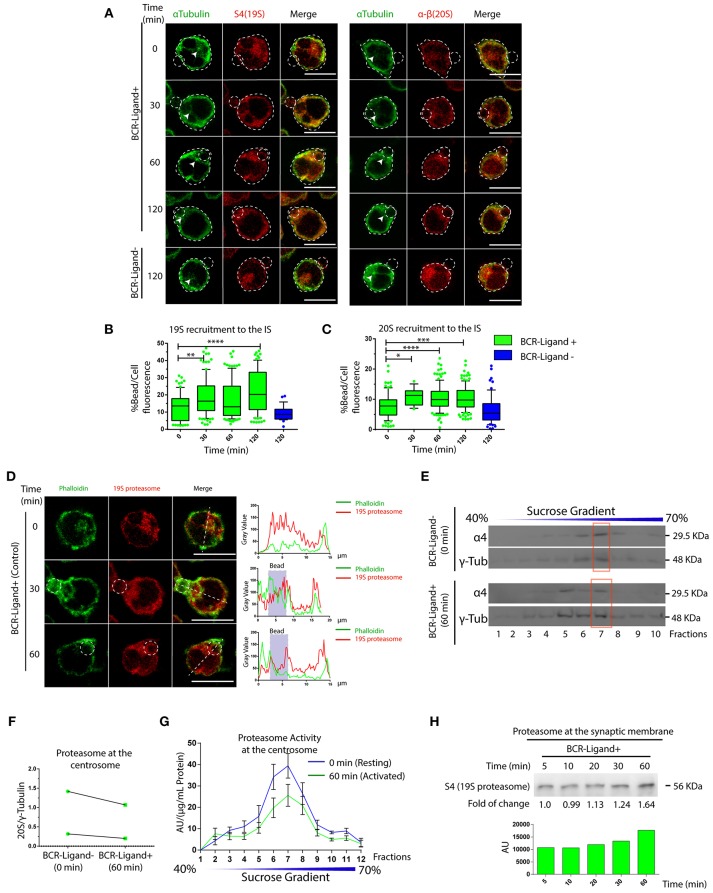
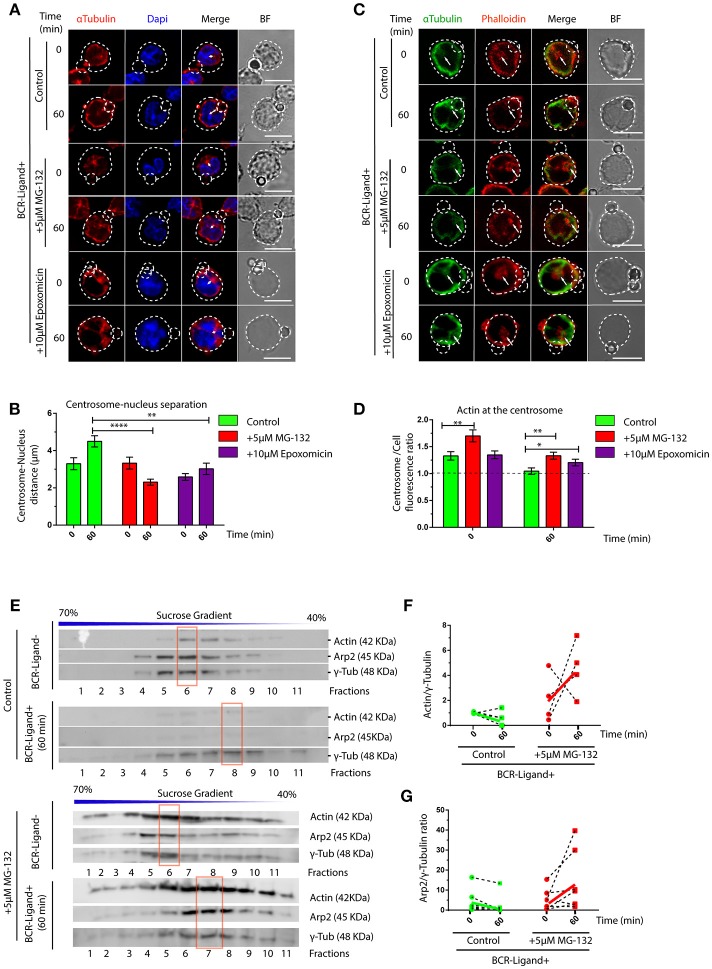
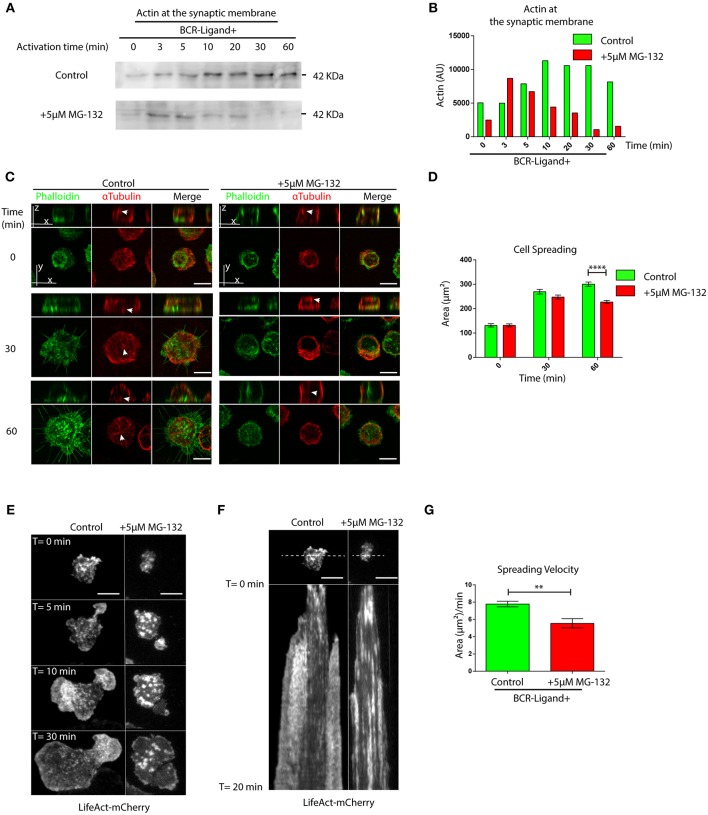
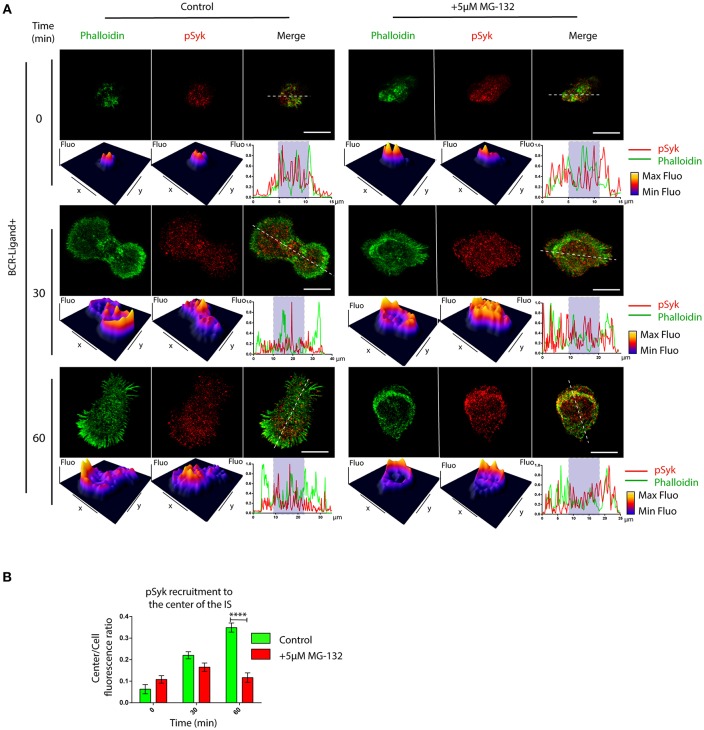
Engagement of the B cell receptor (BCR) with surface-tethered antigens leads to the formation of an immune synapse (IS), where cell signaling and antigen uptake are tightly coordinated. Centrosome re-orientation to the immune synapse has emerged as a critical regulatory step to guide the local recruitment and secretion of lysosomes, which can facilitate the extraction of immobilized antigens. This process is coupled to actin remodeling at the centrosome and at the immune synapse, which is crucial to promote cell polarity. How B cells balance both pools of actin cytoskeleton to achieve a polarized phenotype during the formation of an immune synapse is not fully understood. Here, we reveal that B cells rely on proteasome activity to achieve this task. The proteasome is a multi-catalytic protease that degrades cytosolic and nuclear proteins and its dysfunction is associated with diseases, such as cancer and autoimmunity. Our results show that resting B cells contain an active proteasome pool at the centrosome, which is required for efficient actin clearance at this level. As a result of proteasome inhibition, activated B cells do not deplete actin at the centrosome and are unable to separate the centrosome from the nucleus and thus display impaired polarity. Consequently, lysosome recruitment to the immune synapse, antigen extraction and presentation are severely compromised in B cells with diminished proteasome activity. Additionally, we found that proteasome inhibition leads to impaired actin remodeling at the immune synapse, where B cells display defective spreading responses and distribution of key signaling molecules at the synaptic membrane. Overall, our results reveal a new role for the proteasome in regulating the immune synapse of B cells, where the intracellular compartmentalization of proteasome activity controls cytoskeleton remodeling between the centrosome and synapse, with functional repercussions in antigen extraction and presentation.
B 细胞受体(BCR)与表面连接的抗原结合会导致免疫突触(IS)的形成,在该过程中,细胞信号转导和抗原摄取紧密协调。中心体向免疫突触的重新定向已成为指导溶酶体局部募集和分泌的关键调节步骤,这有助于提取固定化抗原。这个过程与中心体和免疫突触处的肌动蛋白重塑相关联,这对于促进细胞极性至关重要。B 细胞如何平衡这两个肌动蛋白细胞骨架池,以在免疫突触形成过程中实现极化表型,目前还不完全清楚。在这里,我们揭示了 B 细胞依赖蛋白酶体活性来完成这项任务。蛋白酶体是一种多催化蛋白酶,可降解细胞质和核蛋白,其功能障碍与癌症和自身免疫等疾病有关。我们的研究结果表明,静止 B 细胞在中心体中含有一个活跃的蛋白酶体池,这对于在该水平上有效清除肌动蛋白是必需的。由于蛋白酶体抑制,激活的 B 细胞不能在中心体中耗尽肌动蛋白,也不能将中心体与细胞核分离,因此显示出极化受损。因此,溶酶体向免疫突触的募集、抗原提取和呈递在蛋白酶体活性降低的 B 细胞中受到严重损害。此外,我们发现蛋白酶体抑制导致免疫突触处肌动蛋白重塑受损,B 细胞在突触膜上显示出扩散反应和关键信号分子分布缺陷。总的来说,我们的研究结果揭示了蛋白酶体在调节 B 细胞免疫突触中的新作用,其中蛋白酶体活性的细胞内区室化控制着中心体和突触之间的肌动蛋白重塑,对抗原提取和呈递具有功能影响。