College of Medicine and Veterinary Medicine, University of Edinburgh, Edinburgh EH16 4SB, UK.
Department of Neuroimaging Sciences, Centre for Clinical Brain Sciences, University of Edinburgh, Edinburgh EH16 4SB, UK.
Int J Mol Sci. 2019 Mar 14;20(6):1293. doi: 10.3390/ijms20061293.
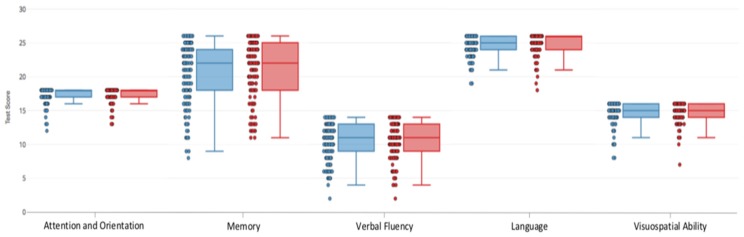
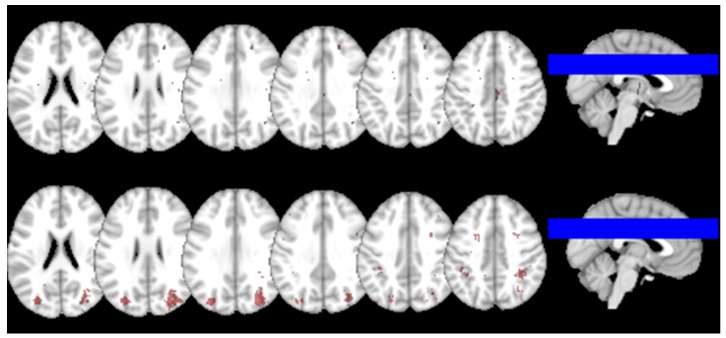
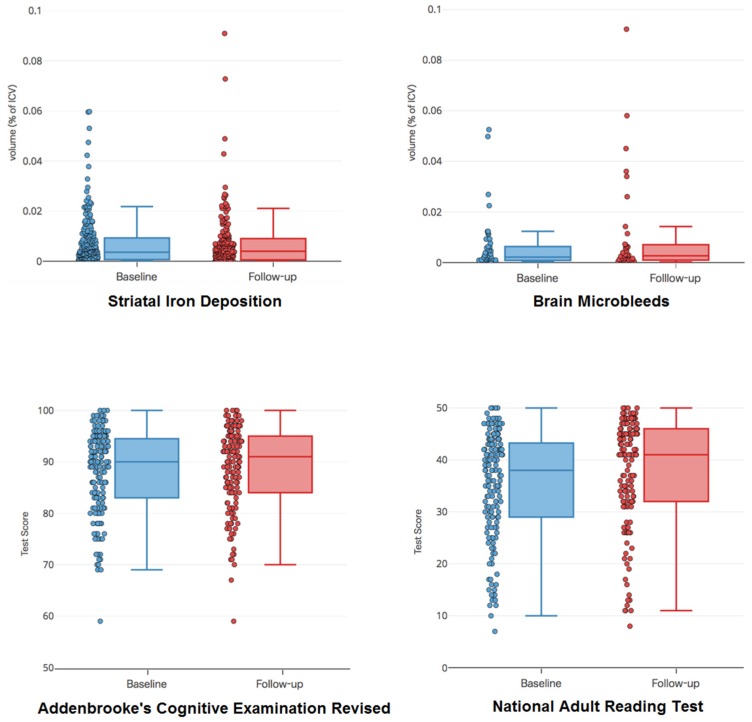
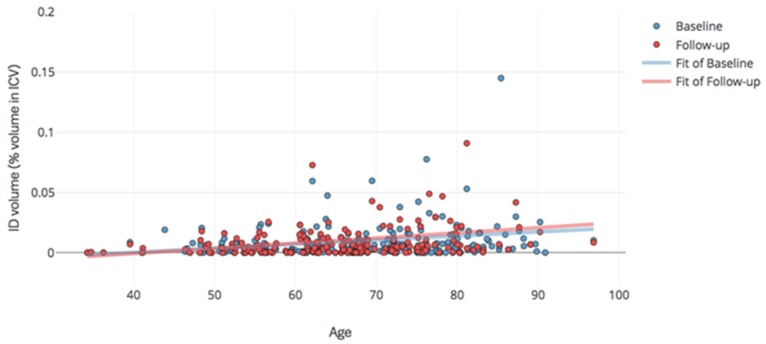
Brain iron deposits (IDs) are inversely associated with cognitive function in community-dwelling older people, but their association with cognition after ischemic stroke, and whether that differs from microbleeds, is unknown. We quantified basal ganglia IDs (BGID) and microbleeds (BMBs) semi-automatically on brain magnetic resonance images from patients with minor stroke (NIHSS < 7), at presentation and 12 months after stroke. We administered the National Adult Reading Test (NART, estimates premorbid or peak adult cognition) and the Revised Addenbrooke's Cognitive Examination (ACE-R; current cognition) at 1 and 12 months after stroke. We adjusted analyses for baseline cognition, age, gender, white matter hyperintensity (WMH) volume and vascular risk factors. In 200 patients, mean age 65 years, striatal IDs and BMBs volumes did not change over the 12 months. Baseline BGID volumes correlated positively with NART scores at both times (ρ = 0.19, < 0.01). Baseline and follow-up BGID volumes correlated positively with age (ρ = 0.248, < 0.001 and ρ = 0.271, < 0.001 respectively), but only baseline (and not follow-up) BMB volume correlated with age (ρ = 0.129, < 0.05). Both smoking and baseline WMH burden predicted verbal fluency and visuospatial abilities scores (B = -1.13, < 0.02 and B = -0.22, = 0.001 respectively) at 12 months after stroke. BGIDs and BMBs are associated differently with cognition post-stroke; studies of imaging and post-stroke cognition should adjust for premorbid cognition. The positive correlation of BGID with NART may reflect the lower premorbid cognition in patients with stroke at younger vs older ages.
脑铁沉积(IDs)与社区居住的老年人的认知功能呈负相关,但它们与缺血性中风后的认知功能的关系以及与微出血的区别尚不清楚。我们使用脑磁共振成像对半自动量化了小中风患者(NIHSS<7)的基底节 IDs(BGID)和微出血(BMBs),在中风发作时和 12 个月后。我们在中风发作后 1 个月和 12 个月时进行了国家成人阅读测试(NART,估计为前病或高峰成人认知)和修订后的 Addenbrooke 认知测验(ACE-R;当前认知)。我们对基线认知、年龄、性别、白质高信号(WMH)体积和血管危险因素进行了分析调整。在 200 名患者中,平均年龄为 65 岁,纹状体 IDs 和 BMBs 体积在 12 个月内没有变化。基线 BGID 体积与两次 NART 评分均呈正相关(ρ=0.19, <0.01)。基线和随访 BGID 体积与年龄呈正相关(ρ=0.248, <0.001 和 ρ=0.271, <0.001 分别),但只有基线(而非随访)BMB 体积与年龄相关(ρ=0.129, <0.05)。吸烟和基线 WMH 负担均预测中风后 12 个月时的语言流畅性和视空间能力评分(B=-1.13, <0.02 和 B=-0.22, =0.001 分别)。BGIDs 和 BMBs 与中风后认知的相关性不同;对影像学和中风后认知的研究应调整为前病认知。BGID 与 NART 的正相关可能反映了年轻患者与老年患者相比,中风患者的前病认知水平较低。