Zhejiang Provincial Engineering Technology Research Center of Marine Biomedical Products, School of Food and Pharmacy, Zhejiang Ocean University, Zhoushan 316022, China.
Mar Drugs. 2019 Mar 15;17(3):169. doi: 10.3390/md17030169.
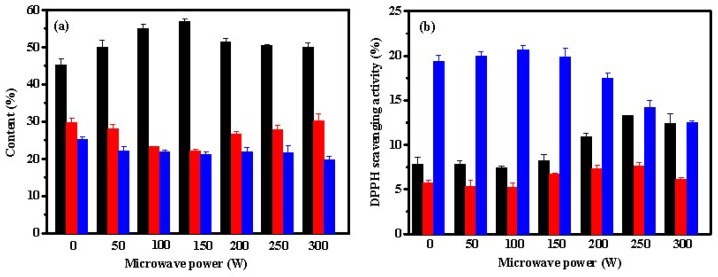
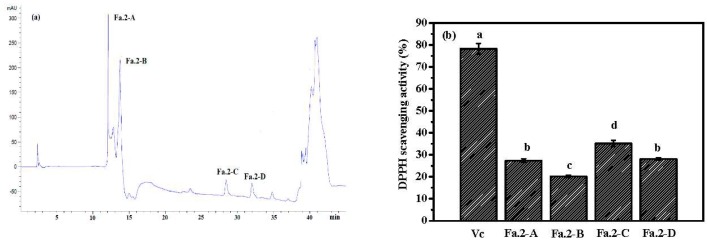
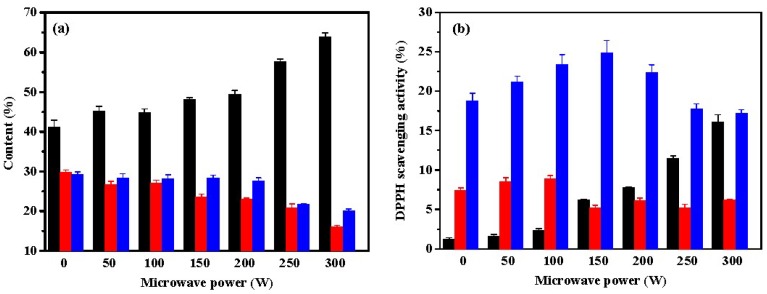
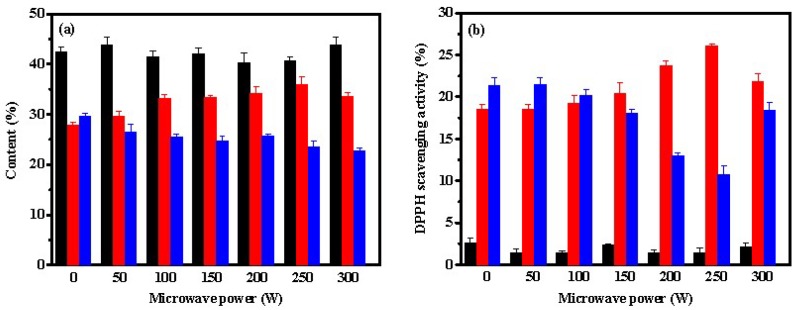
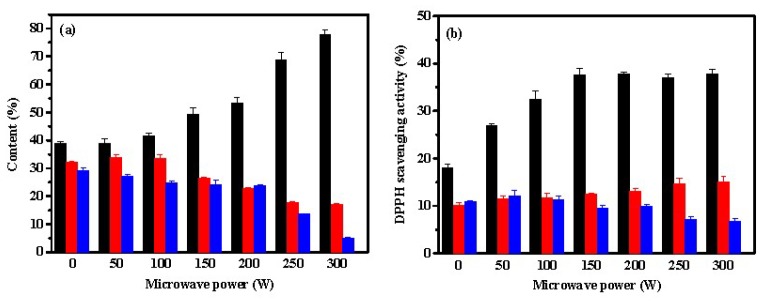
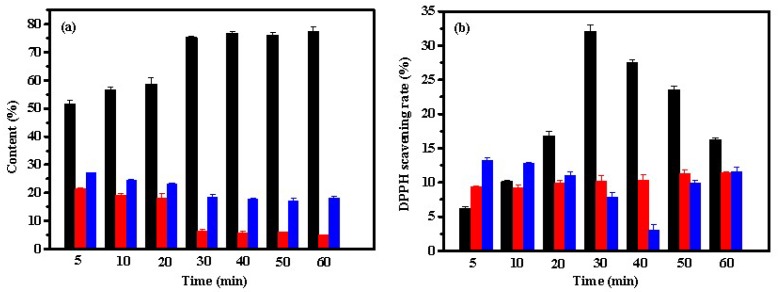
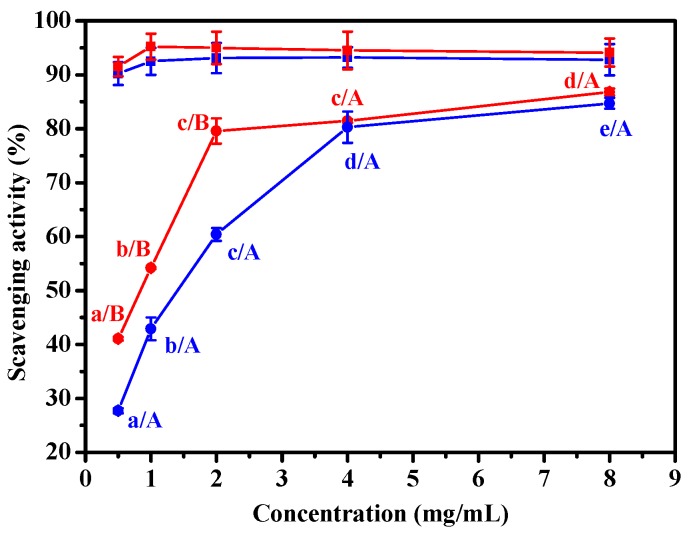
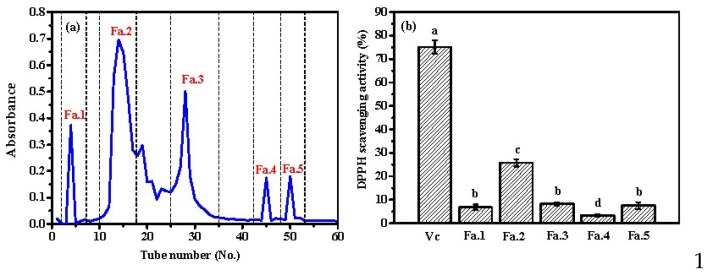
The present study was focused on the preparation and characterization of the antioxidant peptides by microwave-assisted enzymatic hydrolysis of collagen from sea cucumber (ASC-Am) obtained from Zhejiang Province in China. The results exhibited the effects of microwave irradiation on hydrolysis of ASC-Am with different protease. Neutrase was selected from the four common proteases (papain, pepsin, trypsin, and neutrase) based on the highest content and DPPH scavenging activity of hydrolysate Fa (Molecular weight < 1 kDa). The content and 2,2-diphenyl-1-picrylhydrazyl (DPPH) scavenging activity of Fa obtained by hydrolysis of neutrase increased by 100% and 109% respectively at a microwave power of 300 W compared with no microwave irradiation. Five subfractions were obtained after performing the gel filtration chromatography, and the Fa.2 exhibited the highest DPPH scavenging activity. The amino acid analysis showed that the contents of Glutamic acid, Alanine, Tyrosine, and Phenylalanine in fraction Fa.2 increased significantly, but an obvious decrease in the content of Glycine was observed compared to Fa. Four peptides (Fa.2-A, Fa.2-B, Fa.2-C, and Fa.2-D) were purified from Fa.2 by high performance liquid chromatography, and Fa.2-C showed the highest DPPH scavenging activity. The sequence of Fa.2-C was identified as Phenylalanine-Leucine- Alanine-Proline with a half elimination ratio (EC) of 0.385 mg/mL. The antioxidant activity of Fa.2-C was probably attributed to the small molecular sizes and the presence of hydrophobic amino acid residues in its sequence. This report provided a promising method for the preparation of antioxidant peptides from collagen for food and medicinal purposes.
本研究聚焦于通过微波辅助酶解来自中国浙江的海参胶原蛋白(ASC-Am)来制备和表征抗氧化肽。结果表明,微波辐射对不同蛋白酶水解 ASC-Am 的影响。根据水解产物 Fa(分子量<1 kDa)的含量和 DPPH 清除活性,从四种常用蛋白酶(木瓜蛋白酶、胃蛋白酶、胰蛋白酶和中性蛋白酶)中选择了中性蛋白酶。与无微波辐射相比,在微波功率为 300 W 时,中性蛋白酶水解得到的 Fa 的含量和 2,2-二苯基-1-苦基肼(DPPH)清除活性分别提高了 100%和 109%。经凝胶过滤色谱分离后得到 5 个级分,其中 Fa.2 表现出最高的 DPPH 清除活性。氨基酸分析表明,与 Fa 相比,级分 Fa.2 中的谷氨酸、丙氨酸、酪氨酸和苯丙氨酸含量显著增加,但甘氨酸含量明显下降。通过高效液相色谱从 Fa.2 中分离得到 4 个肽(Fa.2-A、Fa.2-B、Fa.2-C 和 Fa.2-D),其中 Fa.2-C 具有最高的 DPPH 清除活性。Fa.2-C 的序列被鉴定为苯丙氨酸-亮氨酸-丙氨酸-脯氨酸,半消除率(EC)为 0.385mg/mL。Fa.2-C 的抗氧化活性可能归因于其小分子量和序列中存在疏水性氨基酸残基。本报告为食品和医药用途的胶原蛋白抗氧化肽的制备提供了一种有前景的方法。