Max Planck Institute for the Science of Human History (MPI-SHH), Kahlaische Strasse 10, 07745, Jena, Germany.
Department of Archaeology, Durham University, Durham, South Road, DH1 3LE, UK.
Nat Commun. 2019 Mar 19;10(1):1218. doi: 10.1038/s41467-019-09209-7.
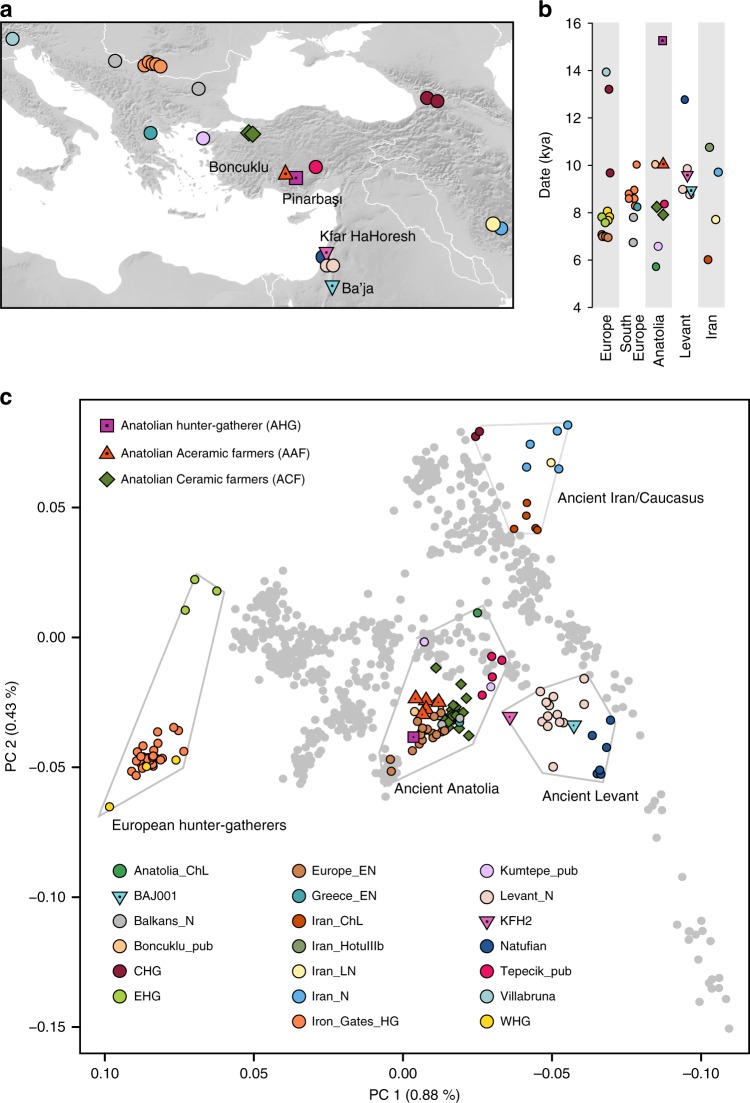
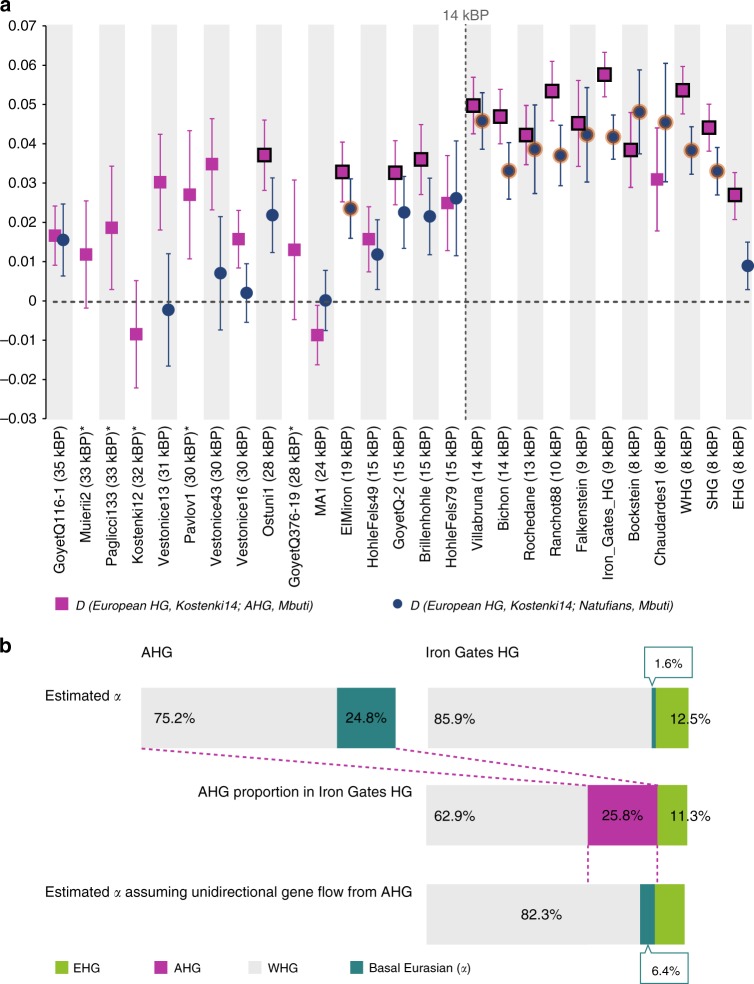
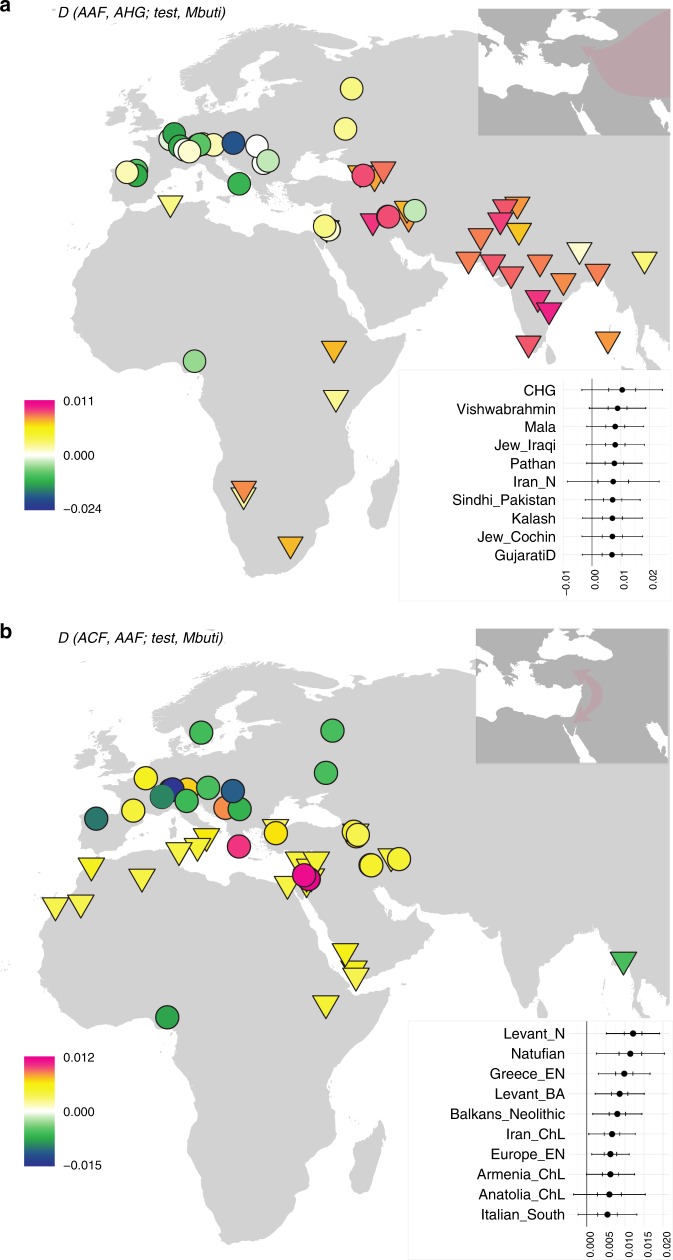
Anatolia was home to some of the earliest farming communities. It has been long debated whether a migration of farming groups introduced agriculture to central Anatolia. Here, we report the first genome-wide data from a 15,000-year-old Anatolian hunter-gatherer and from seven Anatolian and Levantine early farmers. We find high genetic continuity (~80-90%) between the hunter-gatherers and early farmers of Anatolia and detect two distinct incoming ancestries: an early Iranian/Caucasus related one and a later one linked to the ancient Levant. Finally, we observe a genetic link between southern Europe and the Near East predating 15,000 years ago. Our results suggest a limited role of human migration in the emergence of agriculture in central Anatolia.
安纳托利亚是一些最早的农业社区的所在地。长期以来,人们一直在争论是否有一个农业群体的迁移将农业引入了安纳托利亚中部。在这里,我们报告了来自一个 15000 年前的安纳托利亚狩猎采集者和七个安纳托利亚和黎凡特早期农民的第一个全基因组数据。我们发现狩猎采集者和安纳托利亚和黎凡特早期农民之间存在高度的遗传连续性(约 80-90%),并检测到两个不同的传入祖先:一个与早期伊朗/高加索有关的祖先和一个与古代黎凡特有关的祖先。最后,我们观察到 15000 年前之前南欧和近东之间存在遗传联系。我们的研究结果表明,人类迁移在安纳托利亚中部农业的出现中作用有限。