• 文献检索
  • 文档翻译
  • 深度研究
  • 学术资讯
  • Suppr Zotero 插件Zotero 插件
  • 邀请有礼
  • 套餐&价格
  • 历史记录
应用&插件
Suppr Zotero 插件Zotero 插件浏览器插件Mac 客户端Windows 客户端微信小程序
定价
高级版会员购买积分包购买API积分包
服务
文献检索文档翻译深度研究API 文档MCP 服务
关于我们
关于 Suppr公司介绍联系我们用户协议隐私条款
关注我们

Suppr 超能文献

核心技术专利:CN118964589B侵权必究
粤ICP备2023148730 号-1Suppr @ 2026

文献检索

告别复杂PubMed语法,用中文像聊天一样搜索,搜遍4000万医学文献。AI智能推荐,让科研检索更轻松。

立即免费搜索

文件翻译

保留排版,准确专业,支持PDF/Word/PPT等文件格式,支持 12+语言互译。

免费翻译文档

深度研究

AI帮你快速写综述,25分钟生成高质量综述,智能提取关键信息,辅助科研写作。

立即免费体验

基于深度学习的利用卷积神经网络对黄瓜白粉病进行分割与量化

Deep Learning-Based Segmentation and Quantification of Cucumber Powdery Mildew Using Convolutional Neural Network.

作者信息

Lin Ke, Gong Liang, Huang Yixiang, Liu Chengliang, Pan Junsong

机构信息

School of Mechanical Engineering, Shanghai Jiao Tong University, Shanghai, China.

School of Agriculture and Biology, Shanghai Jiao Tong University, Shanghai, China.

出版信息

Front Plant Sci. 2019 Feb 15;10:155. doi: 10.3389/fpls.2019.00155. eCollection 2019.

DOI:10.3389/fpls.2019.00155
PMID:30891048
原文链接:https://pmc.ncbi.nlm.nih.gov/articles/PMC6413718/
Abstract

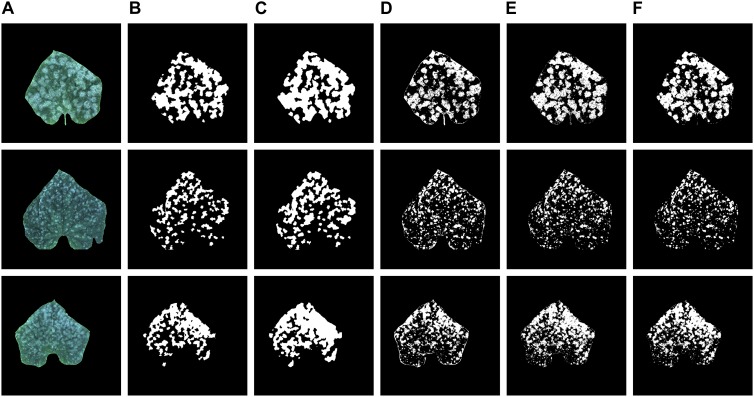
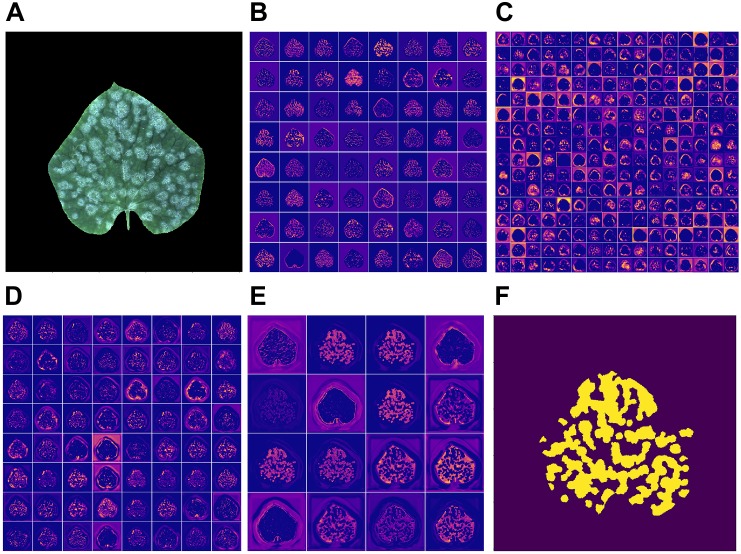
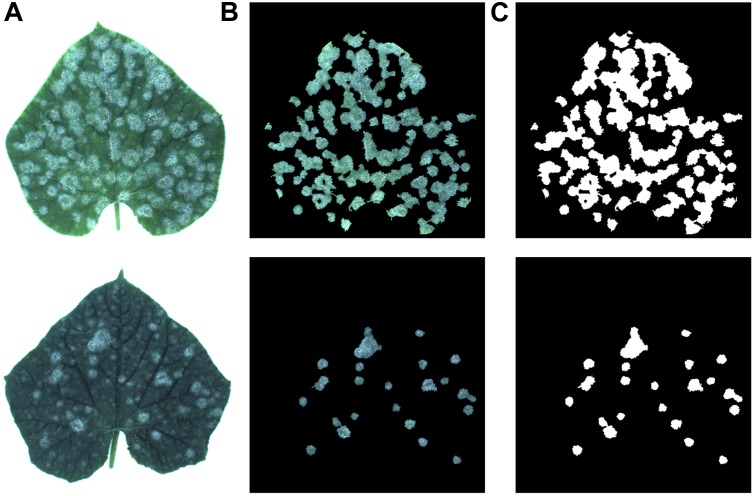
Powdery mildew is a common disease in plants, and it is also one of the main diseases in the middle and final stages of cucumber (). Powdery mildew on plant leaves affects the photosynthesis, which may reduce the plant yield. Therefore, it is of great significance to automatically identify powdery mildew. Currently, most image-based models commonly regard the powdery mildew identification problem as a dichotomy case, yielding a true or false classification assertion. However, quantitative assessment of disease resistance traits plays an important role in the screening of breeders for plant varieties. Therefore, there is an urgent need to exploit the extent to which leaves are infected which can be obtained by the area of diseases regions. In order to tackle these challenges, we propose a semantic segmentation model based on convolutional neural networks (CNN) to segment the powdery mildew on cucumber leaf images at pixel level, achieving an average pixel accuracy of 96.08%, intersection over union of 72.11% and Dice accuracy of 83.45% on twenty test samples. This outperforms the existing segmentation methods, K-means, Random forest, and GBDT methods. In conclusion, the proposed model is capable of segmenting the powdery mildew on cucumber leaves at pixel level, which makes a valuable tool for cucumber breeders to assess the severity of powdery mildew.

摘要

白粉病是植物中的常见病害,也是黄瓜生长中后期的主要病害之一。植物叶片上的白粉病会影响光合作用,可能导致作物减产。因此,自动识别白粉病具有重要意义。目前,大多数基于图像的模型通常将白粉病识别问题视为二分类问题,给出真或假的分类判断。然而,抗病性状的定量评估在植物品种育种筛选中起着重要作用。因此,迫切需要利用病害区域面积来获取叶片的感染程度。为应对这些挑战,我们提出了一种基于卷积神经网络(CNN)的语义分割模型,用于在像素级别分割黄瓜叶片图像上的白粉病,在20个测试样本上实现了平均像素准确率96.08%、交并比72.11%和Dice准确率83.45%。这优于现有的分割方法,如K均值、随机森林和梯度提升决策树(GBDT)方法。总之,所提出的模型能够在像素级别分割黄瓜叶片上的白粉病,这为黄瓜育种者评估白粉病的严重程度提供了一个有价值的工具。
https://cdn.ncbi.nlm.nih.gov/pmc/blobs/6d03/6413718/4befc549487a/fpls-10-00155-g008.jpg
https://cdn.ncbi.nlm.nih.gov/pmc/blobs/6d03/6413718/c62a32f8489d/fpls-10-00155-g002.jpg
https://cdn.ncbi.nlm.nih.gov/pmc/blobs/6d03/6413718/2e635bb7dd2c/fpls-10-00155-g003.jpg
https://cdn.ncbi.nlm.nih.gov/pmc/blobs/6d03/6413718/67c8fdb08588/fpls-10-00155-g004.jpg
https://cdn.ncbi.nlm.nih.gov/pmc/blobs/6d03/6413718/d6740830c65d/fpls-10-00155-g005.jpg
https://cdn.ncbi.nlm.nih.gov/pmc/blobs/6d03/6413718/7351fb8fa633/fpls-10-00155-g006.jpg
https://cdn.ncbi.nlm.nih.gov/pmc/blobs/6d03/6413718/87de2f43c8b2/fpls-10-00155-g007.jpg
https://cdn.ncbi.nlm.nih.gov/pmc/blobs/6d03/6413718/4befc549487a/fpls-10-00155-g008.jpg
https://cdn.ncbi.nlm.nih.gov/pmc/blobs/6d03/6413718/c62a32f8489d/fpls-10-00155-g002.jpg
https://cdn.ncbi.nlm.nih.gov/pmc/blobs/6d03/6413718/2e635bb7dd2c/fpls-10-00155-g003.jpg
https://cdn.ncbi.nlm.nih.gov/pmc/blobs/6d03/6413718/67c8fdb08588/fpls-10-00155-g004.jpg
https://cdn.ncbi.nlm.nih.gov/pmc/blobs/6d03/6413718/d6740830c65d/fpls-10-00155-g005.jpg
https://cdn.ncbi.nlm.nih.gov/pmc/blobs/6d03/6413718/7351fb8fa633/fpls-10-00155-g006.jpg
https://cdn.ncbi.nlm.nih.gov/pmc/blobs/6d03/6413718/87de2f43c8b2/fpls-10-00155-g007.jpg
https://cdn.ncbi.nlm.nih.gov/pmc/blobs/6d03/6413718/4befc549487a/fpls-10-00155-g008.jpg

相似文献

1
Deep Learning-Based Segmentation and Quantification of Cucumber Powdery Mildew Using Convolutional Neural Network.基于深度学习的利用卷积神经网络对黄瓜白粉病进行分割与量化
Front Plant Sci. 2019 Feb 15;10:155. doi: 10.3389/fpls.2019.00155. eCollection 2019.
2
Transcriptome profiling analysis reveals distinct resistance response of cucumber leaves infected with powdery mildew.转录组谱分析揭示了黄瓜叶片感染白粉病后的明显抗性反应。
Plant Biol (Stuttg). 2021 Mar;23(2):327-340. doi: 10.1111/plb.13213. Epub 2020 Dec 26.
3
Performance matching between the surface structure of cucumber powdery mildew in different growth stages and the properties of surfactant solution.不同生长阶段的黄瓜白粉病表面结构与表面活性剂溶液性能的匹配关系。
Pest Manag Sci. 2021 Jul;77(7):3538-3546. doi: 10.1002/ps.6407. Epub 2021 May 11.
4
Increasing the activities of protective enzymes is an important strategy to improve resistance in cucumber to powdery mildew disease and melon aphid under different infection/infestation patterns.提高保护酶活性是提高黄瓜在不同感染/侵染模式下对白粉病和瓜蚜抗性的重要策略。
Front Plant Sci. 2022 Aug 17;13:950538. doi: 10.3389/fpls.2022.950538. eCollection 2022.
5
QTL analysis of powdery mildew resistance in cucumber (Cucumis sativus L.).黄瓜(Cucumis sativus L.)白粉病抗性的QTL分析。
Theor Appl Genet. 2006 Jan;112(2):243-50. doi: 10.1007/s00122-005-0121-1. Epub 2005 Oct 21.
6
Preliminary research on the identification system for anthracnose and powdery mildew of sandalwood leaf based on image processing.基于图像处理的檀香树叶炭疽病和白粉病识别系统的初步研究
PLoS One. 2017 Jul 27;12(7):e0181537. doi: 10.1371/journal.pone.0181537. eCollection 2017.
7
Oil Adjuvants Enhance the Efficacy of Pyraclostrobin in Managing Cucumber Powdery Mildew () by Modifying the Affinity of Fungicide Droplets on Diseased Leaves.油助剂通过改变杀菌剂液滴在感病叶片上的亲和力增强了吡唑醚菌酯防治黄瓜白粉病的效果。
Plant Dis. 2019 Jul;103(7):1657-1664. doi: 10.1094/PDIS-09-18-1606-RE. Epub 2019 May 13.
8
Wuyiencin produced by Streptomyces albulus CK-15 displays biocontrol activities against cucumber powdery mildew.由白僵菌 CK-15 产生的武夷菌素对黄瓜白粉病具有生物防治活性。
J Appl Microbiol. 2021 Dec;131(6):2957-2970. doi: 10.1111/jam.15168. Epub 2021 Jun 26.
9
Chemical induction of leaf senescence and powdery mildew resistance involves ethylene-mediated chlorophyll degradation and ROS metabolism in cucumber.黄瓜叶片衰老和白粉病抗性的化学诱导涉及乙烯介导的叶绿素降解和活性氧代谢。
Hortic Res. 2022 May 17;9:uhac101. doi: 10.1093/hr/uhac101. eCollection 2022.
10
Relative biochemical and physiological docking of cucumber varieties for supporting innate immunity against Podosphaera xanthii.黄瓜品种支持先天免疫对蔓枯病菌的相对生化和生理对接。
Microb Pathog. 2023 Nov;184:106359. doi: 10.1016/j.micpath.2023.106359. Epub 2023 Sep 15.

引用本文的文献

1
Constructing segmentation method for wheat powdery mildew using deep learning.基于深度学习构建小麦白粉病分割方法。
Front Plant Sci. 2025 May 26;16:1524283. doi: 10.3389/fpls.2025.1524283. eCollection 2025.
2
FFAE-UNet: An Efficient Pear Leaf Disease Segmentation Network Based on U-Shaped Architecture.FFAE-UNet:一种基于U型架构的高效梨叶病害分割网络。
Sensors (Basel). 2025 Mar 12;25(6):1751. doi: 10.3390/s25061751.
3
A deep learning-based approach for the detection of cucumber diseases.一种基于深度学习的黄瓜病害检测方法。

本文引用的文献

1
A Robust Deep-Learning-Based Detector for Real-Time Tomato Plant Diseases and Pests Recognition.基于深度学习的实时番茄病虫害识别稳健探测器。
Sensors (Basel). 2017 Sep 4;17(9):2022. doi: 10.3390/s17092022.
2
Automatic Image-Based Plant Disease Severity Estimation Using Deep Learning.基于深度学习的自动图像植物病害严重程度估计
Comput Intell Neurosci. 2017;2017:2917536. doi: 10.1155/2017/2917536. Epub 2017 Jul 5.
3
Using Deep Learning for Image-Based Plant Disease Detection.利用深度学习进行基于图像的植物病害检测。
PLoS One. 2025 Apr 11;20(4):e0320764. doi: 10.1371/journal.pone.0320764. eCollection 2025.
4
Conventional and cutting-edge advances in plant virus detection: emerging trends and techniques.植物病毒检测的传统与前沿进展:新兴趋势与技术
3 Biotech. 2025 Apr;15(4):100. doi: 10.1007/s13205-025-04253-1. Epub 2025 Mar 25.
5
Image-based yield prediction for tall fescue using random forests and convolutional neural networks.基于图像的高羊茅产量预测:使用随机森林和卷积神经网络
Front Plant Sci. 2025 Mar 12;16:1549099. doi: 10.3389/fpls.2025.1549099. eCollection 2025.
6
Leveraging deep learning for plant disease and pest detection: a comprehensive review and future directions.利用深度学习进行植物病虫害检测:全面综述与未来方向
Front Plant Sci. 2025 Feb 21;16:1538163. doi: 10.3389/fpls.2025.1538163. eCollection 2025.
7
A novel dataset and deep learning object detection benchmark for grapevine pest surveillance.一个用于葡萄害虫监测的新型数据集和深度学习目标检测基准。
Front Plant Sci. 2024 Dec 12;15:1485216. doi: 10.3389/fpls.2024.1485216. eCollection 2024.
8
Spray inoculation and image analysis-based quantification of powdery mildew disease severity on pea leaves.基于喷雾接种和图像分析的豌豆叶片白粉病严重程度定量分析
MethodsX. 2024 Sep 25;13:102980. doi: 10.1016/j.mex.2024.102980. eCollection 2024 Dec.
9
Enhanced climate change resilience on wheat anther morphology using optimized deep learning techniques.利用优化的深度学习技术提高小麦花粉形态的气候变化适应能力。
Sci Rep. 2024 Oct 19;14(1):24533. doi: 10.1038/s41598-024-74875-7.
10
Confronting the data deluge: How artificial intelligence can be used in the study of plant stress.应对数据洪流:人工智能如何用于植物胁迫研究。
Comput Struct Biotechnol J. 2024 Sep 17;23:3454-3466. doi: 10.1016/j.csbj.2024.09.010. eCollection 2024 Dec.
Front Plant Sci. 2016 Sep 22;7:1419. doi: 10.3389/fpls.2016.01419. eCollection 2016.
4
Deep Neural Networks Based Recognition of Plant Diseases by Leaf Image Classification.基于深度神经网络的植物病害叶片图像分类识别
Comput Intell Neurosci. 2016;2016:3289801. doi: 10.1155/2016/3289801. Epub 2016 Jun 22.
5
Fully Convolutional Networks for Semantic Segmentation.全卷积网络用于语义分割。
IEEE Trans Pattern Anal Mach Intell. 2017 Apr;39(4):640-651. doi: 10.1109/TPAMI.2016.2572683. Epub 2016 May 24.
6
Image-based phenotyping of plant disease symptoms.基于图像的植物病害症状表型分析。
Front Plant Sci. 2015 Jan 5;5:734. doi: 10.3389/fpls.2014.00734. eCollection 2014.
7
Effect of downy mildew development on transpiration of cucumber leaves visualized by digital infrared thermography.数字红外表征霜霉病发生对黄瓜叶片蒸腾作用的影响。
Phytopathology. 2005 Mar;95(3):233-40. doi: 10.1094/PHYTO-95-0233.
8
Chlorophyll fluorescence: a probe of photosynthesis in vivo.叶绿素荧光:体内光合作用的一种探针。
Annu Rev Plant Biol. 2008;59:89-113. doi: 10.1146/annurev.arplant.59.032607.092759.