Department of Periodontics and Oral Mucosa, Affiliated Stomatology Hospital, Southwest Medical University, Luzhou, Sichuan 646000, P.R. China.
Department of Orthodontics, Mianyang Stomatological Hospital, Mianyang, Sichuan 621000, P.R. China.
Mol Med Rep. 2019 May;19(5):4043-4056. doi: 10.3892/mmr.2019.10066. Epub 2019 Mar 21.
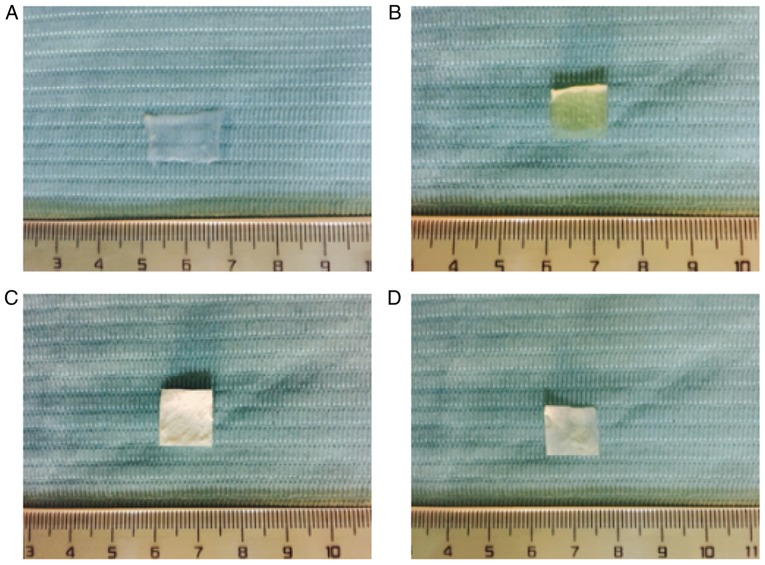
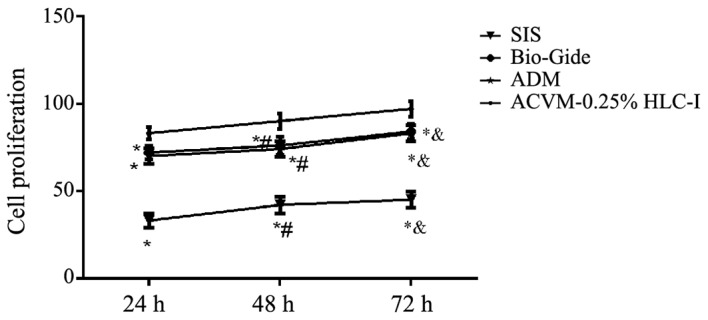
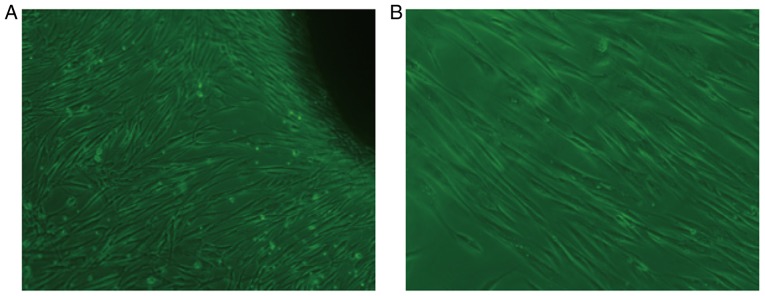
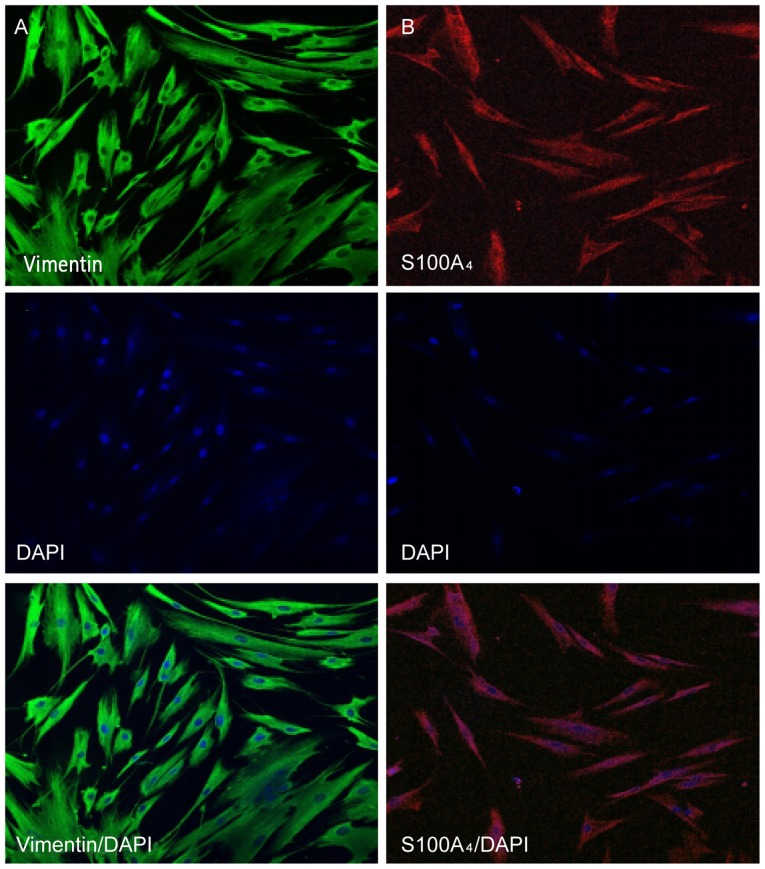
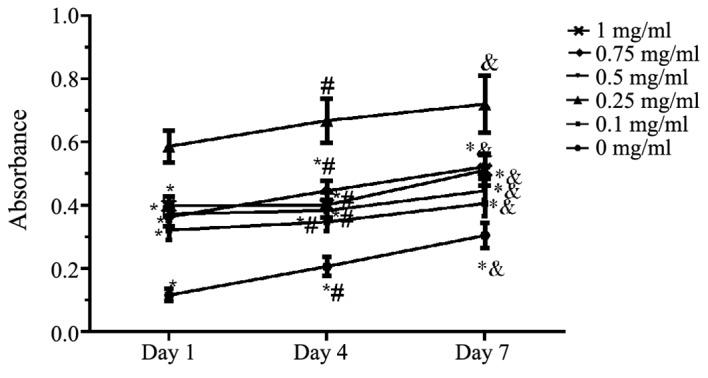
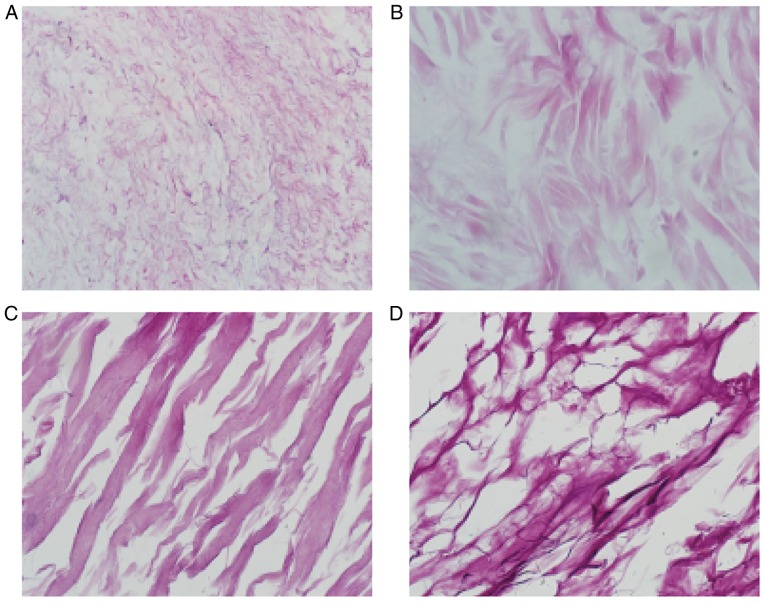
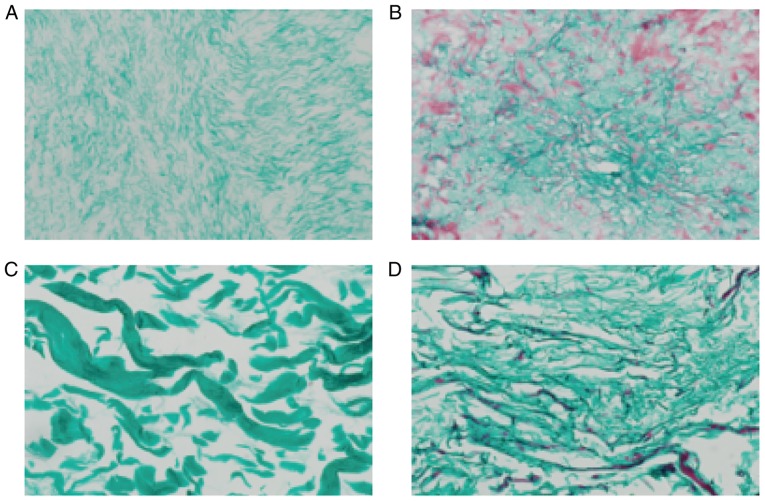
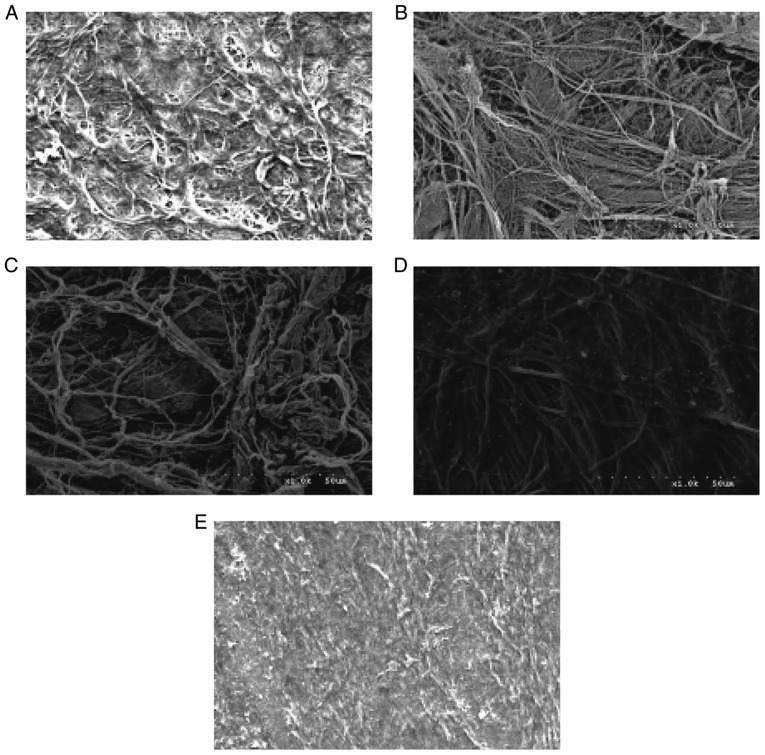
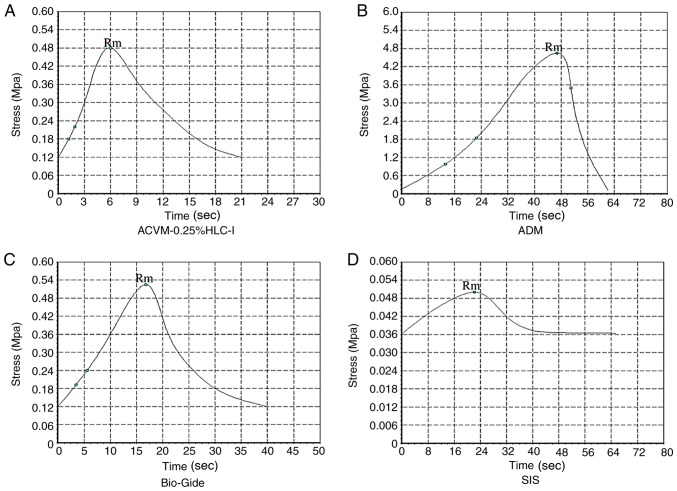
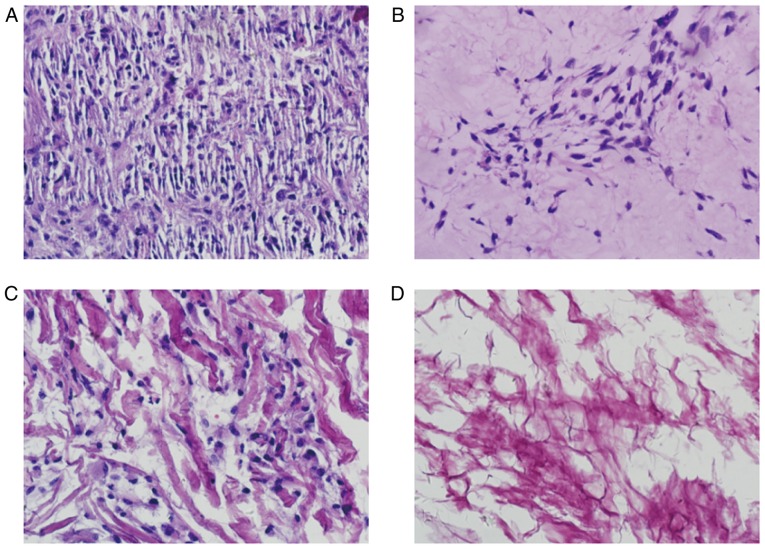
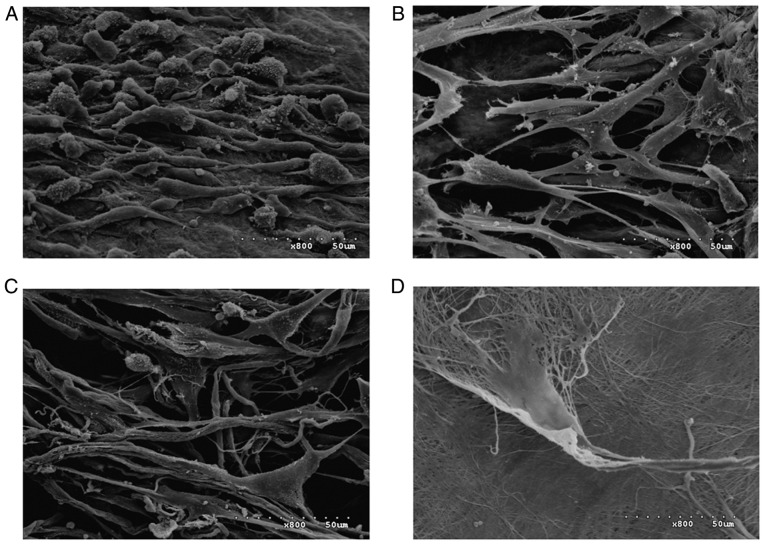
The aim of the present study was to compare the characteristics of acellular dermal matrix (ADM), small intestinal submucosa (SIS) and Bio‑Gide scaffolds with acellular vascular matrix (ACVM)‑0.25% human‑like collagen I (HLC‑I) scaffold in tissue engineering blood vessels. The ACVM‑0.25% HLC‑I scaffold was prepared and compared with ADM, SIS and Bio‑Gide scaffolds via hematoxylin and eosin (H&E) staining, Masson staining and scanning electron microscope (SEM) observations. Primary human gingival fibroblasts (HGFs) were cultured and identified. Then, the experiment was established via the seeding of HGFs on different scaffolds for 1, 4 and 7 days. The compatibility of four different scaffolds with HGFs was evaluated by H&E staining, SEM observation and Cell Counting Kit‑8 assay. Then, a series of experiments were conducted to evaluate water absorption capacities, mechanical abilities, the ultra‑microstructure and the cytotoxicity of the four scaffolds. The ACVM‑0.25% HLC‑I scaffold was revealed to exhibit the best cell proliferation and good cell architecture. ADM and Bio‑Gide scaffolds exhibited good mechanical stability but cell proliferation was reduced when compared with the ACVM‑0.25% HLC‑I scaffold. In addition, SIS scaffolds exhibited the worst cell proliferation. The ACVM‑0.25% HLC‑I scaffold exhibited the best water absorption, followed by the SIS and Bio‑Gide scaffolds, and then the ADM scaffold. In conclusion, the ACVM‑0.25% HLC‑I scaffold has good mechanical properties as a tissue engineering scaffold and the present results suggest that it has better biological characterization when compared with other scaffold types.
本研究旨在比较脱细胞真皮基质(ADM)、小肠黏膜下层(SIS)和 Bio-Gide 支架与脱细胞血管基质(ACVM)-0.25%人源Ⅰ型胶原蛋白(HLC-I)支架在组织工程血管中的特性。制备 ACVM-0.25%HLC-I 支架,并通过苏木精和伊红(H&E)染色、Masson 染色和扫描电子显微镜(SEM)观察与 ADM、SIS 和 Bio-Gide 支架进行比较。培养并鉴定原代人牙龈成纤维细胞(HGFs)。然后,通过将 HGFs 接种到不同支架上培养 1、4 和 7 天来建立实验。通过 H&E 染色、SEM 观察和细胞计数试剂盒-8 检测评估四种不同支架与 HGFs 的相容性。然后,进行了一系列实验来评估四种支架的吸水率、机械性能、超微结构和细胞毒性。ACVM-0.25%HLC-I 支架显示出最佳的细胞增殖和良好的细胞形态。ADM 和 Bio-Gide 支架表现出良好的机械稳定性,但与 ACVM-0.25%HLC-I 支架相比,细胞增殖减少。此外,SIS 支架表现出最差的细胞增殖。ACVM-0.25%HLC-I 支架的吸水率最佳,其次是 SIS 和 Bio-Gide 支架,然后是 ADM 支架。总之,ACVM-0.25%HLC-I 支架作为组织工程支架具有良好的机械性能,与其他支架类型相比,本研究结果表明其具有更好的生物学特性。