Department of Food Science and Human Nutrition, Food Allergy & Immunology Laboratory, Michigan State University, East Lansing, MI 48824, USA.
Cereal Science Laboratory, Department of Food Science and Human Nutrition, Michigan State University, East Lansing, MI 48824, USA.
Molecules. 2019 Mar 22;24(6):1142. doi: 10.3390/molecules24061142.
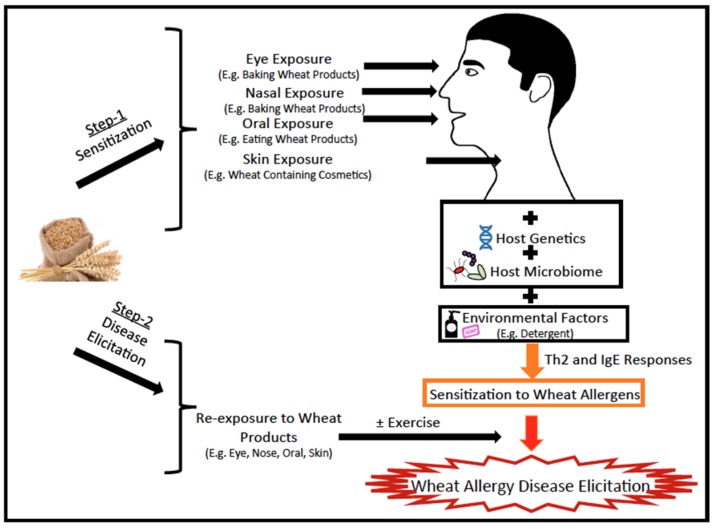
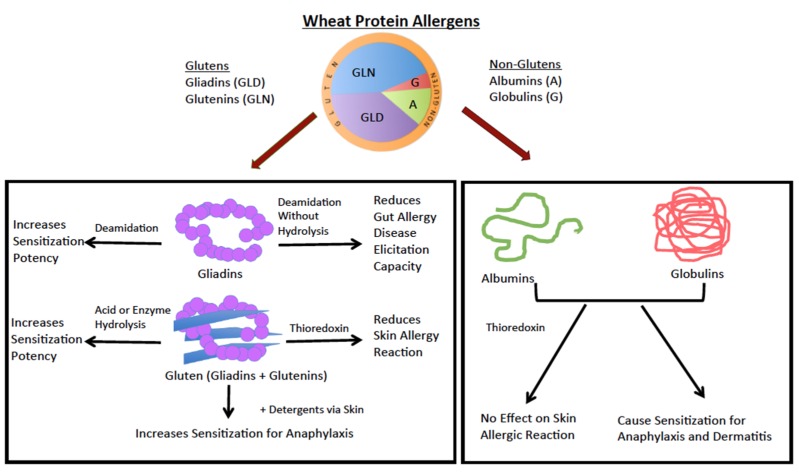
The prevalence of wheat allergy has reached significant levels in many countries. Therefore, wheat is a major global food safety and public health issue. Animal models serve as critical tools to advance the understanding of the mechanisms of wheat allergenicity to develop preventive and control methods. A comprehensive review on the molecular mechanisms of wheat allergenicity using animal models is unavailable at present. There were two major objectives of this study: To identify the lessons that animal models have taught us regarding the molecular mechanisms of wheat allergenicity and to identify the strengths, challenges, and future prospects of animal models in basic and applied wheat allergy research. Using the PubMed and Google Scholar databases, we retrieved and critically analyzed the relevant articles and excluded celiac disease and non-celiac gluten sensitivity. Our analysis shows that animal models can provide insight into the IgE epitope structure of wheat allergens, effects of detergents and other chemicals on wheat allergenicity, and the role of genetics, microbiome, and food processing in wheat allergy. Although animal models have inherent limitations, they are critical to advance knowledge on the molecular mechanisms of wheat allergenicity. They can also serve as highly useful pre-clinical testing tools to develop safer genetically modified wheat, hypoallergenic wheat products, novel pharmaceuticals, and vaccines.
小麦过敏的患病率在许多国家已达到显著水平。因此,小麦是一个主要的全球食品安全和公共卫生问题。动物模型是深入了解小麦致敏性机制、开发预防和控制方法的重要工具。目前,尚无使用动物模型全面综述小麦致敏性分子机制的相关研究。本研究有两个主要目标:一是确定动物模型在小麦致敏性分子机制方面为我们提供的经验教训,二是确定动物模型在基础和应用小麦过敏研究中的优势、挑战和未来前景。我们使用 PubMed 和 Google Scholar 数据库检索并批判性分析了相关文章,并排除了乳糜泻和非乳糜泻麸质敏感性。我们的分析表明,动物模型可以深入了解小麦过敏原的 IgE 表位结构、去污剂和其他化学物质对小麦致敏性的影响,以及遗传、微生物组和食品加工在小麦过敏中的作用。尽管动物模型存在固有局限性,但它们对于深入了解小麦致敏性的分子机制至关重要。它们还可以作为高度有用的临床前测试工具,用于开发更安全的转基因小麦、低致敏性小麦产品、新型药物和疫苗。