Grossi Valentina, Fasano Candida, Celestini Valentina, Lepore Signorile Martina, Sanese Paola, Simone Cristiano
Medical Genetics, National Institute for Gastroenterology, IRCCS 'S. de Bellis', Via Turi, 27, Castellana Grotte, 70013 Bari, Italy.
Division of Medical Genetics, Department of Biomedical Sciences and Human Oncology (DIMO), University of Bari Aldo Moro, Piazza G. Cesare, 11, 70124 Bari, Italy.
Cancers (Basel). 2019 Mar 23;11(3):414. doi: 10.3390/cancers11030414.
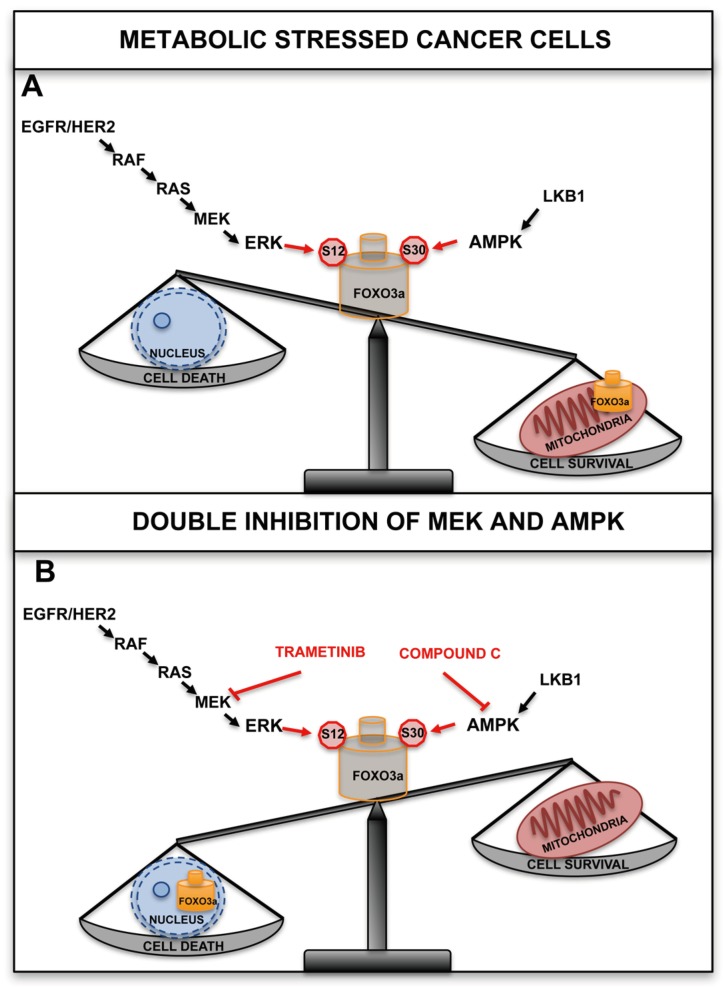
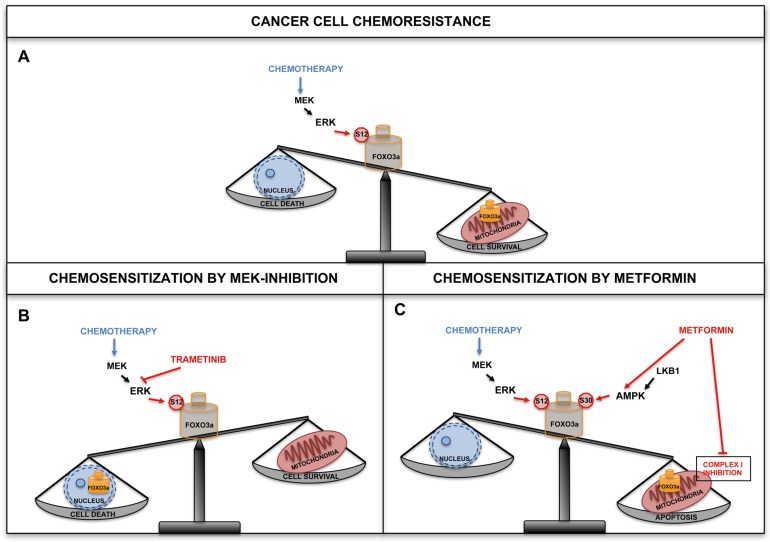
Colorectal cancer (CRC) poses a formidable challenge in terms of molecular heterogeneity, as it involves a variety of cancer-related pathways and molecular changes unique to an individual's tumor. On the other hand, recent advances in DNA sequencing technologies provide an unprecedented capacity to comprehensively identify the genetic alterations resulting in tumorigenesis, raising the hope that new therapeutic approaches based on molecularly targeted drugs may prevent the occurrence of chemoresistance. Regulation of the transcription factor FOXO3a in response to extracellular cues plays a fundamental role in cellular homeostasis, being part of the molecular machinery that drives cells towards survival or death. Indeed, FOXO3a is controlled by a range of external stimuli, which not only influence its transcriptional activity, but also affect its subcellular localization. These regulation mechanisms are mediated by cancer-related signaling pathways that eventually drive changes in FOXO3a post-translational modifications (e.g., phosphorylation). Recent results showed that FOXO3a is imported into the mitochondria in tumor cells and tissues subjected to metabolic stress and cancer therapeutics, where it induces expression of the mitochondrial genome to support mitochondrial metabolism and cell survival. The current review discusses the potential clinical relevance of multidrug therapies that drive cancer cell fate by regulating critical pathways converging on FOXO3a.
结直肠癌(CRC)在分子异质性方面构成了一项艰巨挑战,因为它涉及多种与癌症相关的途径以及个体肿瘤特有的分子变化。另一方面,DNA测序技术的最新进展提供了前所未有的能力,能够全面识别导致肿瘤发生的基因改变,这使得基于分子靶向药物的新治疗方法有望预防化疗耐药的发生。转录因子FOXO3a对细胞外信号的响应调节在细胞稳态中起着至关重要的作用,它是驱动细胞走向生存或死亡的分子机制的一部分。事实上,FOXO3a受一系列外部刺激的控制,这些刺激不仅影响其转录活性,还会影响其亚细胞定位。这些调节机制由与癌症相关的信号通路介导,最终导致FOXO3a翻译后修饰(如磷酸化)的变化。最近的研究结果表明,在遭受代谢应激和癌症治疗的肿瘤细胞和组织中,FOXO3a被导入线粒体,在那里它诱导线粒体基因组的表达以支持线粒体代谢和细胞存活。本综述讨论了通过调节汇聚于FOXO3a的关键途径来驱动癌细胞命运的多药疗法的潜在临床相关性。