Center for Research in Infectious Diseases, School of Chemical and Biotechnology, SASTRA Deemed to be University, Thanjavur, India.
Department of Chemistry, School of Chemical and Biotechnology, SASTRA Deemed to be University, Thanjavur, India.
Sci Rep. 2019 Mar 28;9(1):5305. doi: 10.1038/s41598-019-41489-3.
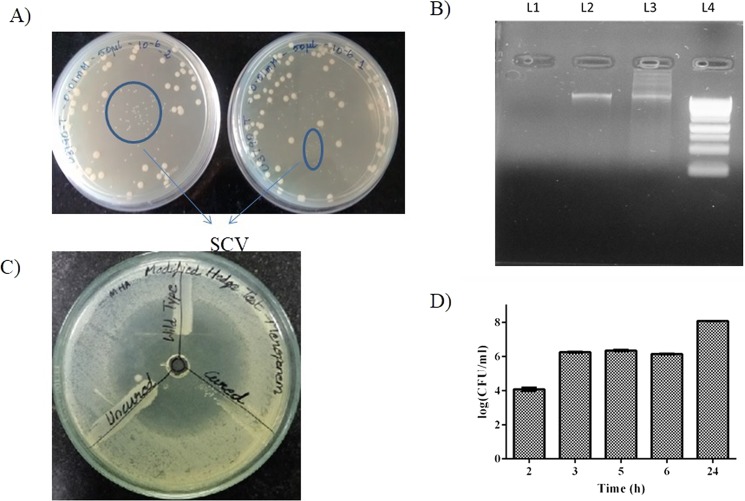
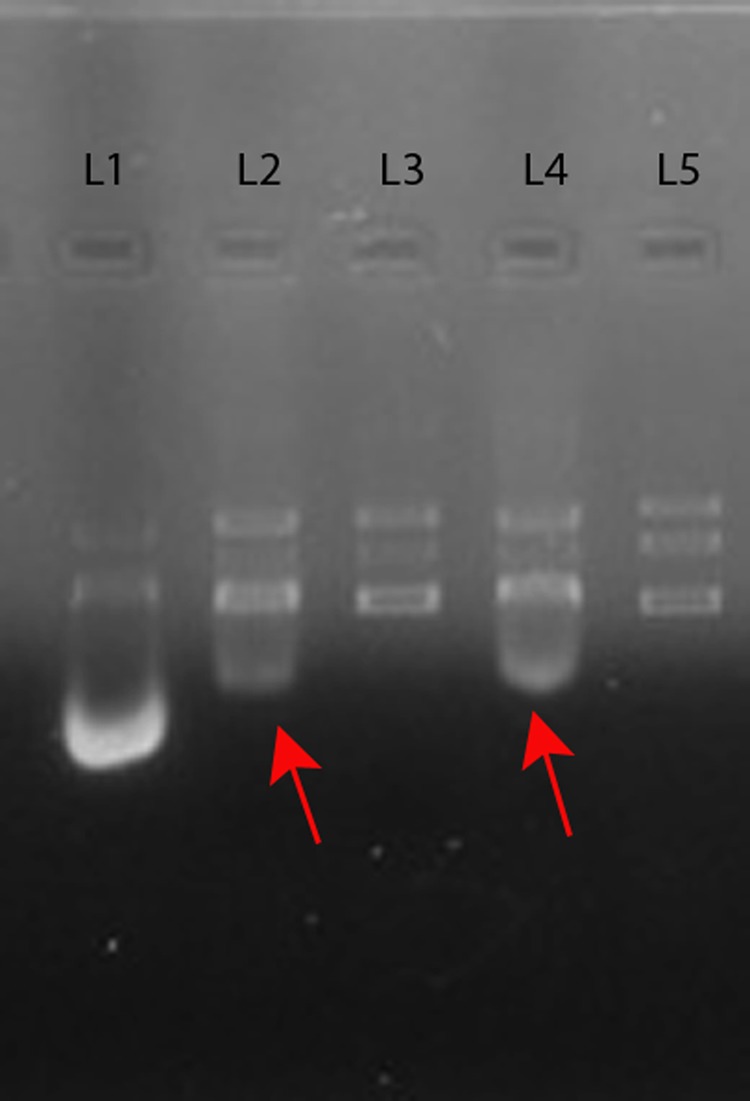
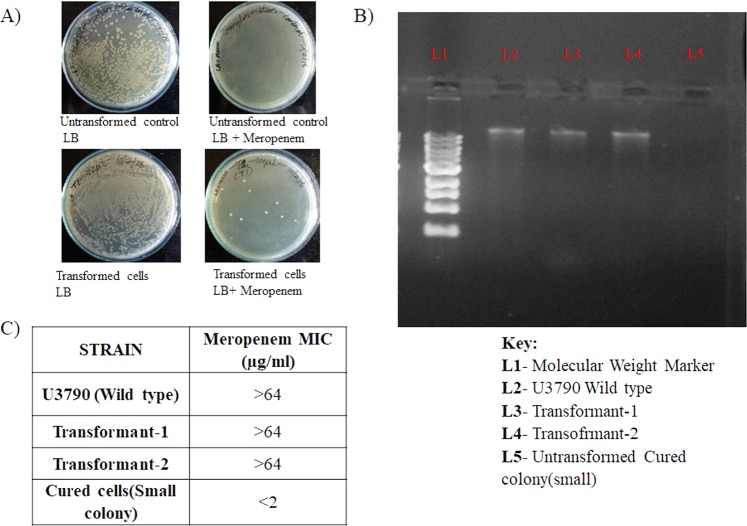
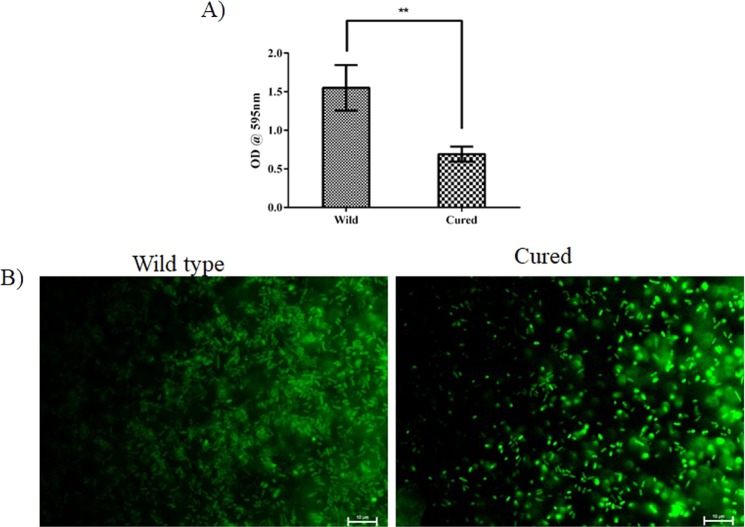
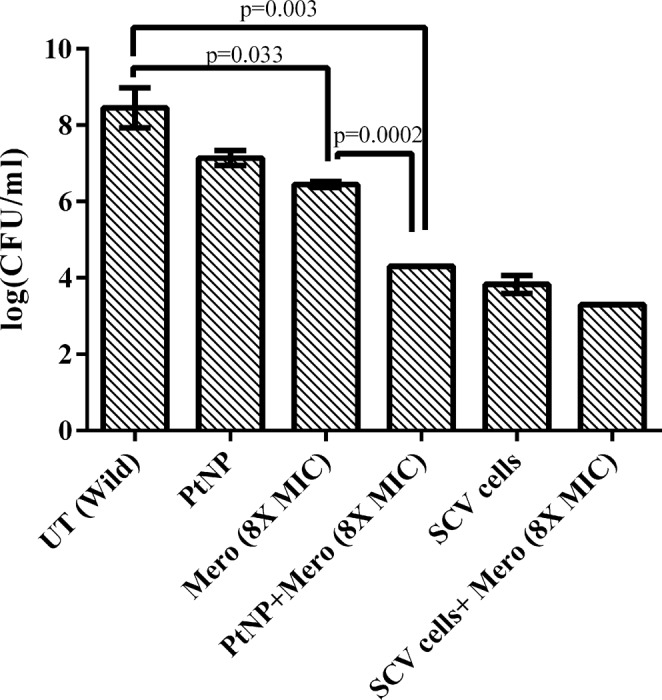
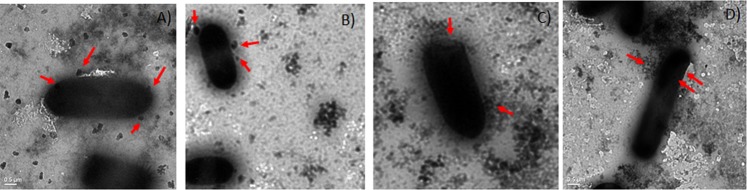
Drug resistance traits are rapidly disseminated across bacteria by horizontal gene transfer, especially through plasmids. Plasmid curing agents that are active both in vitro and in vivo will resensitize Multi Drug Resistant (MDR) bacteria to antimicrobial agents. Pectin capped platinum nanoparticles (PtNPs) at sub MIC (20 µM) concentration was effective, in causing loss of Extended Spectrum Beta Lactamase (ESBL) harboring plasmid as evidenced by, absence of plasmid in agarose gel and by a concomitant (16-64 fold) drop in MIC for cell wall inhibitors ceftriaxone and meropenem, in carbapenem resistant Escherichia coli (CREC). Interestingly, the plasmid cured strain exhibited small colony morphology and displayed slower growth both in vitro and in vivo. Complementation of cured strain with plasmid from the wild type strain restored resistance towards meropenem and ceftriaxone. Relative to wild type, plasmid cured strain displayed 50% reduction in biofilm formation. Plasmid curing also occurred in vivo in infected zebrafish with curing efficiency of 17% for nanoparticle + meropenem treatment. PtNPs + meropenem reduced bioburden of CREC in infected zebrafish by 2.4 log CFU. Mechanistic studies revealed that nanoparticle interacted with cell surface and perturbed inner membrane integrity. PtNPs did not induce ROS, yet it caused plasmid DNA cleavage, as evidenced by gyrase inhibition assay. Our study for the first time reveals that PtNPs as plasmid curing agent can resensitize MDR bacteria to selective antimicrobial agents in vivo.
耐药性特征通过水平基因转移在细菌中迅速传播,特别是通过质粒。在体外和体内都具有活性的质粒消除剂将使多药耐药 (MDR) 细菌重新对抗菌药物敏感。亚 MIC(20 μM)浓度的果胶封端铂纳米颗粒(PtNPs)在琼脂糖凝胶中不存在质粒,并使细胞壁抑制剂头孢曲松和美罗培南的 MIC 同时降低(16-64 倍),从而有效导致携带扩展谱β内酰胺酶(ESBL)的质粒丢失,这在耐碳青霉烯类大肠杆菌 (CREC) 中得到了证明。有趣的是,质粒消除的菌株表现出小菌落形态,并在体外和体内显示出较慢的生长速度。用野生型菌株中的质粒补充被消除的菌株,恢复了对美罗培南和头孢曲松的耐药性。与野生型相比,质粒消除的菌株形成生物膜的能力降低了 50%。质粒消除也在感染的斑马鱼体内发生,纳米颗粒+美罗培姆处理的消除效率为 17%。PtNPs+美罗培姆可使感染的斑马鱼体内 CREC 的生物负荷减少 2.4 对数 CFU。机制研究表明,纳米颗粒与细胞表面相互作用并破坏了内膜的完整性。PtNPs 没有诱导 ROS,但通过回旋酶抑制试验证明它导致了质粒 DNA 的切割。我们的研究首次表明,PtNPs 作为质粒消除剂可使体内 MDR 细菌重新对选择性抗菌药物敏感。