Laboratory of Anesthesia and Critical Care Medicine, Department of Anesthesiology, Translational Neuroscience Center, West China Hospital, Sichuan University, Chengdu, China.
CNS Neurosci Ther. 2019 Jun;25(6):665-673. doi: 10.1111/cns.13123. Epub 2019 Mar 30.
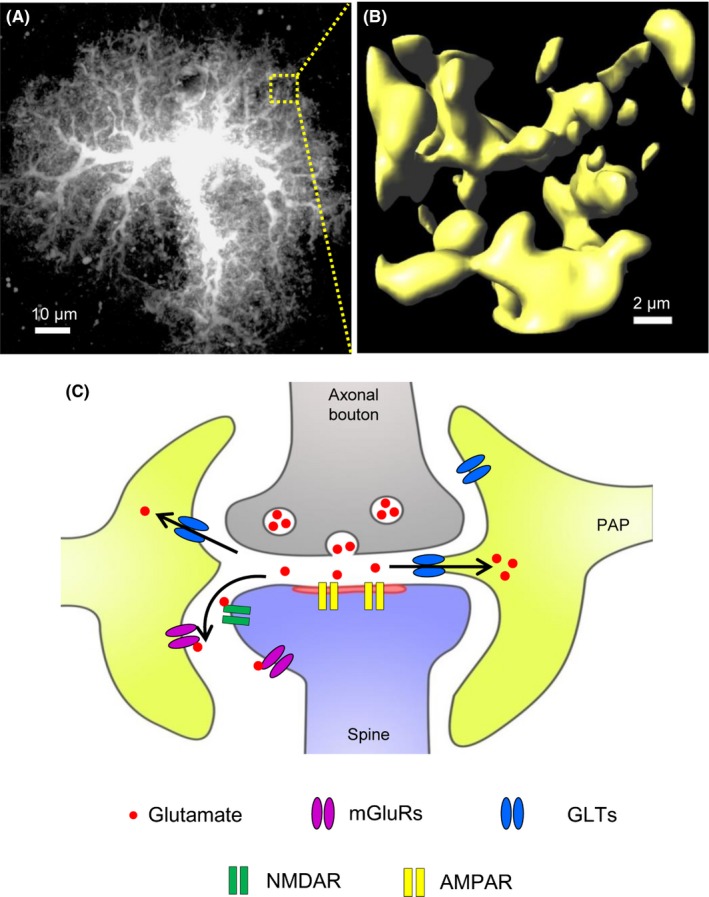
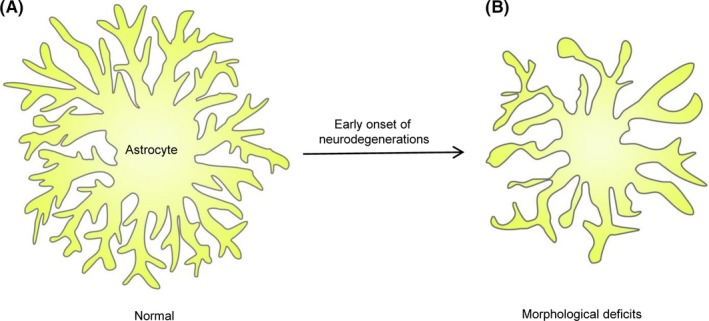
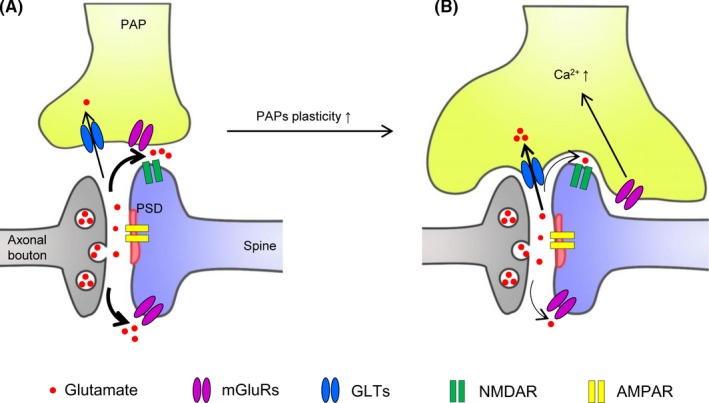
Astrocytes are the most abundant glial cells in the central nervous system (CNS) and participate in synaptic, circuit, and behavioral functions. The well-developed protoplasmic astrocytes contain numerous processes forming well-delineated bushy territories that overlap by as little as 5% at their boundaries. This highly complex morphology, with up to approximately 80% of the cell's membrane constituted by fine processes with dimensions on the tens of nanometer scale and high surface area to volume ratios, comes in contact with synapses, blood vessels, and other glial cells. Recent progress is challenging the conventional view that astrocytes are morphologically homogeneous throughout the brain; instead, they display circuit- and region-specific morphological diversity that may contribute to the heterogeneous astrocyte-neuron spatiotemporal interplay in different brain areas. Further, the fine structure of astrocytes is found to be highly plastic and activity-dependent. We are beginning to understand how astrocyte structural plasticity contributes to brain functions. The change/loss of astrocyte morphology, traditionally known as a hallmark for reactive astrogliosis, is a common pathological feature in many neurological disorders. However, recent data suggest the fine structural deficits preceding reactive astrogliosis may drive disease progression. This review summarizes recent advances in astrocyte morphological diversity, plasticity, and disease-related deficits.
星形胶质细胞是中枢神经系统 (CNS) 中最丰富的神经胶质细胞,参与突触、回路和行为功能。发育良好的原浆星形胶质细胞包含许多突起,形成界限分明的丛状区域,其边界重叠度低至 5%。这种高度复杂的形态结构,细胞的膜结构中有高达约 80%是由尺寸在数十纳米范围内的精细突起组成,具有高表面积与体积比,与突触、血管和其他神经胶质细胞相接触。最近的研究进展挑战了传统观点,即星形胶质细胞在整个大脑中具有形态均匀性;相反,它们表现出与回路和区域相关的形态多样性,这可能有助于不同脑区中星形胶质细胞-神经元时空相互作用的异质性。此外,星形胶质细胞的精细结构被发现具有高度的可塑性和活动依赖性。我们开始了解星形胶质细胞结构可塑性如何促进大脑功能。星形胶质细胞形态的改变/缺失,传统上被称为反应性星形胶质细胞增生的标志,是许多神经疾病的常见病理特征。然而,最近的数据表明,反应性星形胶质细胞增生之前的精细结构缺陷可能会推动疾病的进展。本综述总结了星形胶质细胞形态多样性、可塑性和与疾病相关缺陷的最新进展。