Department of Biotechnology and Animal Science, College of Bioresources, National Ilan University, Yilan 26047, Taiwan.
Department of Pediatrics, Emory University School of Medicine, Atlanta, GA 30322, USA.
Nutrients. 2019 Mar 25;11(3):700. doi: 10.3390/nu11030700.
Inflammation and mitochondrial dysfunction have been linked to trauma, neurodegeneration, and aging. Impairment of CISD2 expression may trigger the aforementioned pathological conditions in neural cells. We previously reported that curcumin attenuates the downregulation of CISD2 in animal models of spinal cord injury and lipopolysaccharide (LPS)-treated neuronal cells. In this study, we investigate (1) the role of and (2) how curcumin regulates CISD2 in the aging process.
The serial expression of CISD2 and the efficacy of curcumin treatment were evaluated in old (104 weeks) mice and long-term cultures of neural cells (35 days in vitro, ). LPS-challenged neural cells (with or without siCISD2 transfection) were used to verify the role of curcumin on CISD2 underlying mitochondrial dysfunction.
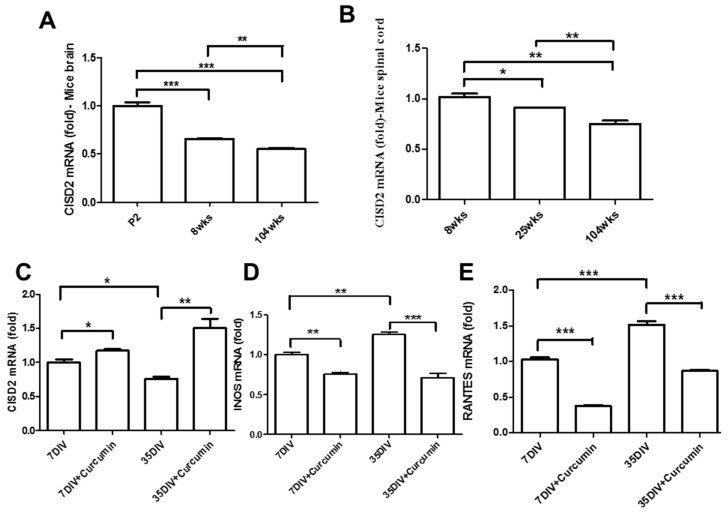
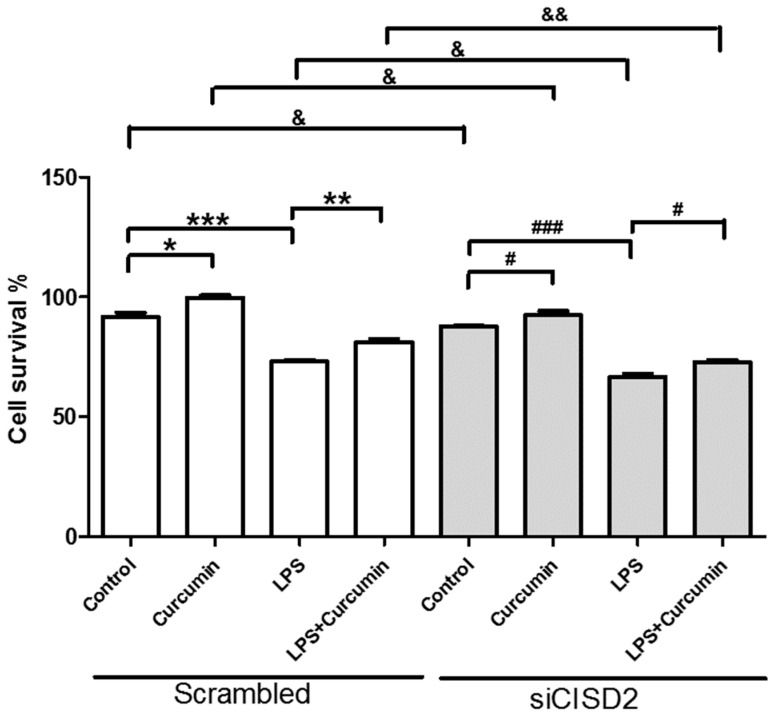
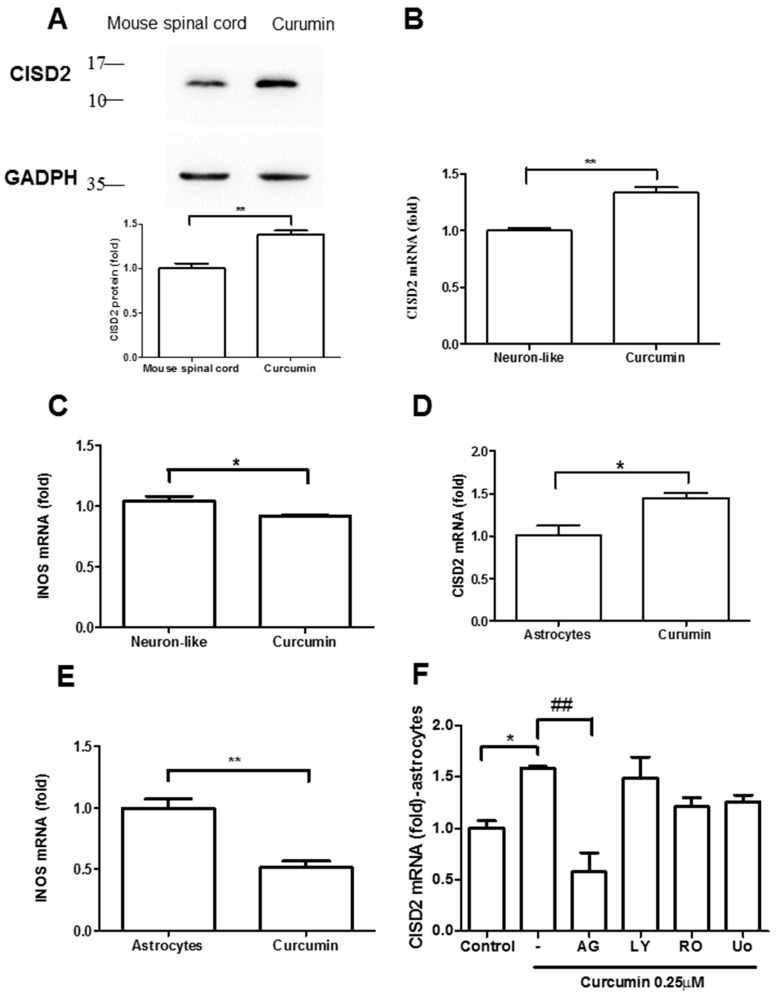
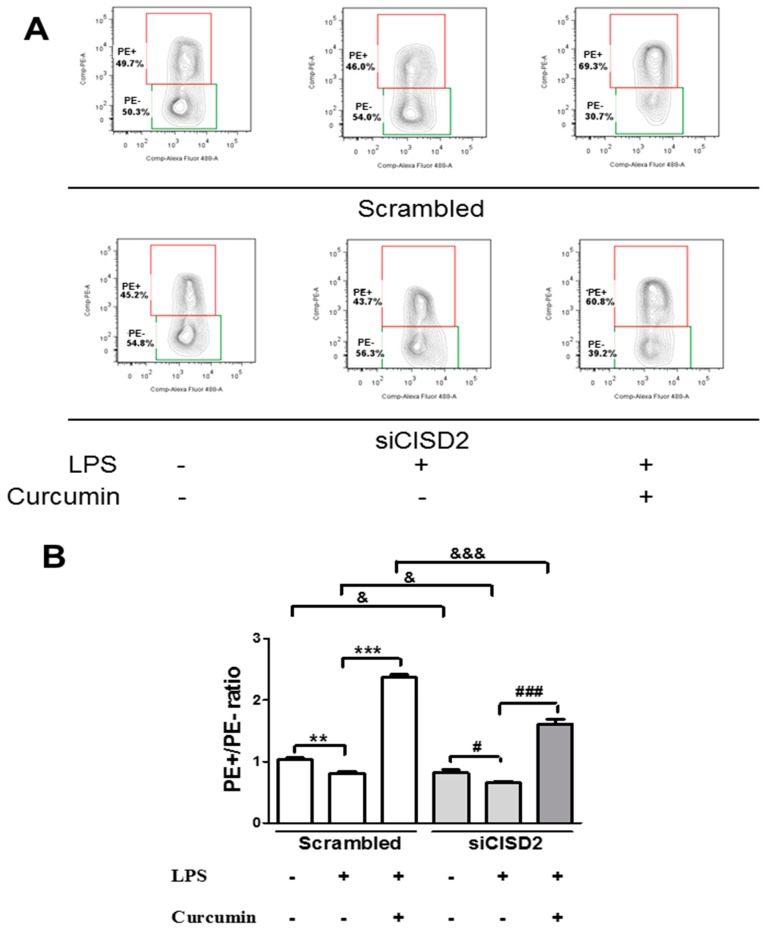
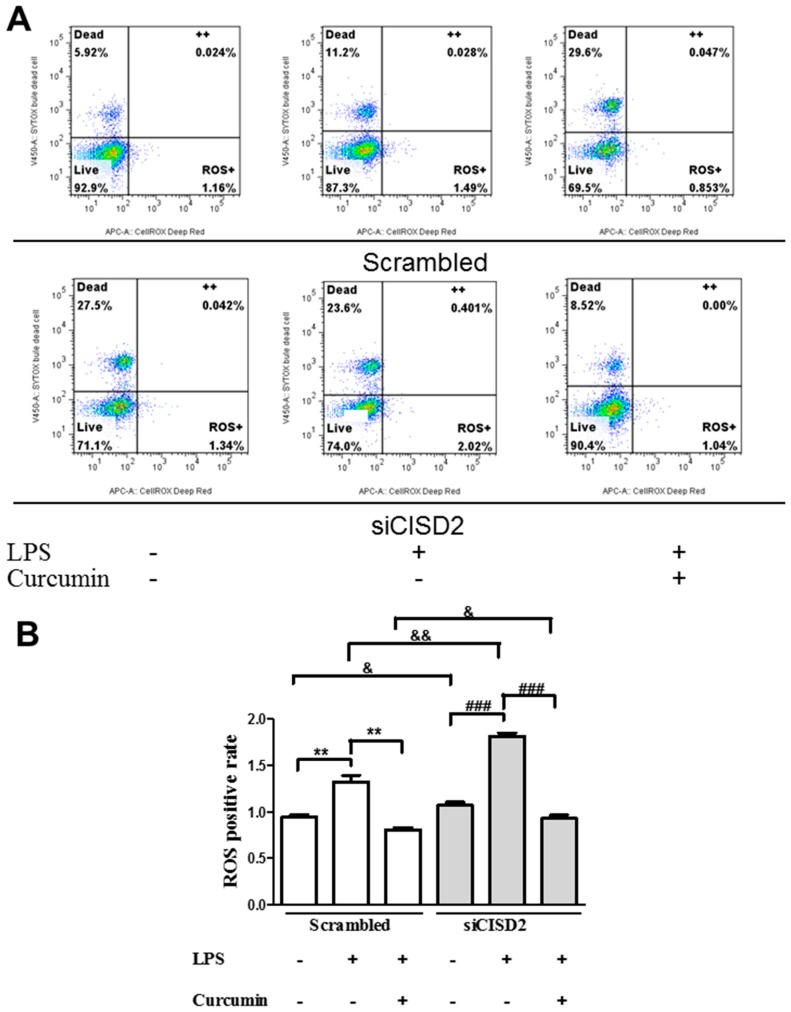
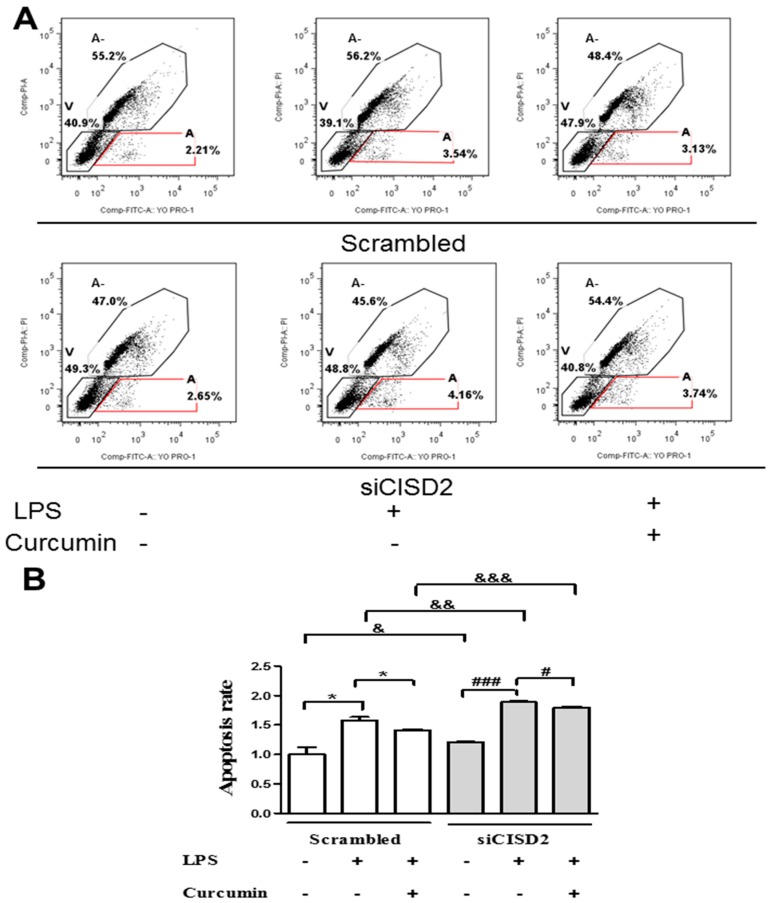
In the brain and spinal cord of mice aged P2, 8, 25, and 104 weeks, we observed a significant decrease in CISD2 expression with age. Curcumin treatment in vivo and in vitro was shown to upregulate CISD2 expression; attenuate inflammatory response in neural cells. Moreover, curcumin treatment elevated CISD2 expression levels and prevented mitochondrial dysfunction in LPS-challenged neural cells. The beneficial effects of curcumin in either non-stressed or LPS-challenged cells that underwent siCISD2 transfection were significantly lower than in respective groups of cells that underwent scrambled siRNA-transfection.
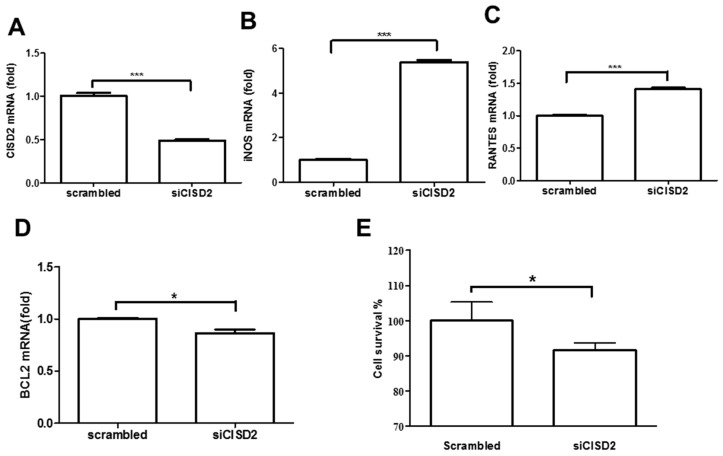
We hypothesize that the protective effects of curcumin treatment in reducing cellular inflammation associated trauma, degenerative, and aging processes can be partially attributed to elevated CISD2 expression. We observed a reduction in the protective effects of curcumin against injury-induced inflammation and mitochondrial dysfunction in cells where CISD2 expression was reduced by siCISD2.
炎症和线粒体功能障碍与创伤、神经退行性变和衰老有关。CISD2 表达的损伤可能会触发神经细胞的上述病理状况。我们之前报道过姜黄素可减轻动物脊髓损伤模型和脂多糖(LPS)处理的神经元细胞中 CISD2 的下调。在这项研究中,我们研究了(1) 的作用,以及(2)姜黄素如何在衰老过程中调节 CISD2。
在老年(104 周)小鼠和长期培养的神经细胞(35 天体外)中评估 CISD2 的连续表达和姜黄素治疗的效果。用 LPS 挑战的神经细胞(转染或不转染 siCISD2)来验证姜黄素对 CISD2 潜在的线粒体功能障碍的作用。
在 P2、8、25 和 104 周龄的小鼠大脑和脊髓中,我们观察到 CISD2 表达随年龄的增长而显著下降。体内和体外姜黄素处理均显示 CISD2 表达上调;减轻神经细胞的炎症反应。此外,姜黄素处理可提高 LPS 刺激的神经细胞中 CISD2 的表达水平并预防线粒体功能障碍。与未转染 siCISD2 的细胞相比,经 siCISD2 转染的非应激或 LPS 刺激细胞中,姜黄素的有益作用明显降低。
我们假设姜黄素治疗减轻与细胞炎症相关的创伤、退行性和衰老过程的保护作用部分归因于 CISD2 表达的升高。我们观察到,在 CISD2 表达因 siCISD2 而降低的细胞中,姜黄素对损伤诱导的炎症和线粒体功能障碍的保护作用降低。