Zooplantlab, Department of Biotechnology and Biosciences, University of Milano-Bicocca, Piazza della Scienza 2, I-20126 Milano, Italy.
FEM2-Ambiente, Piazza della Scienza 2, I-20126 Milano, Italy.
Genes (Basel). 2019 Mar 25;10(3):248. doi: 10.3390/genes10030248.
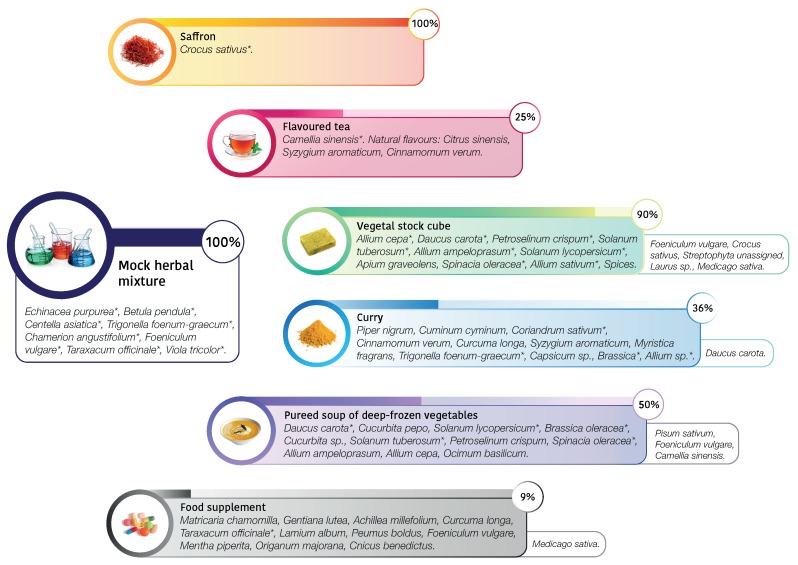
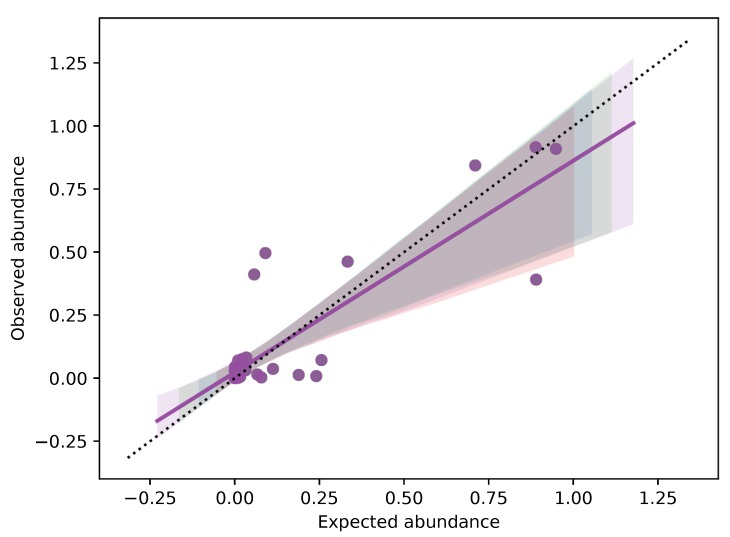
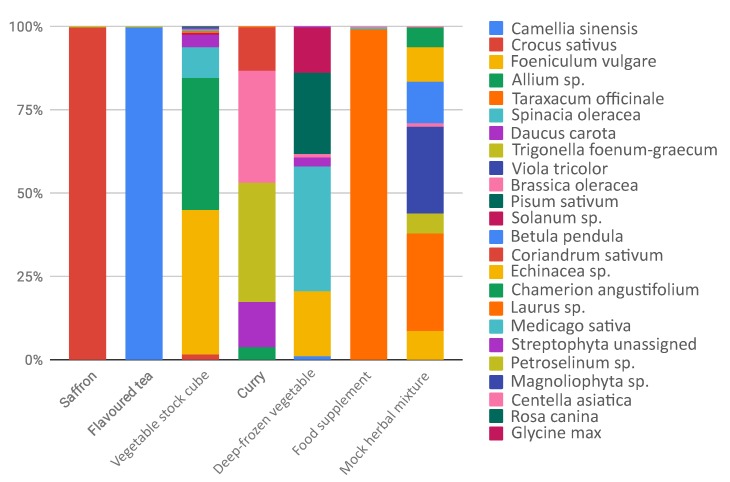
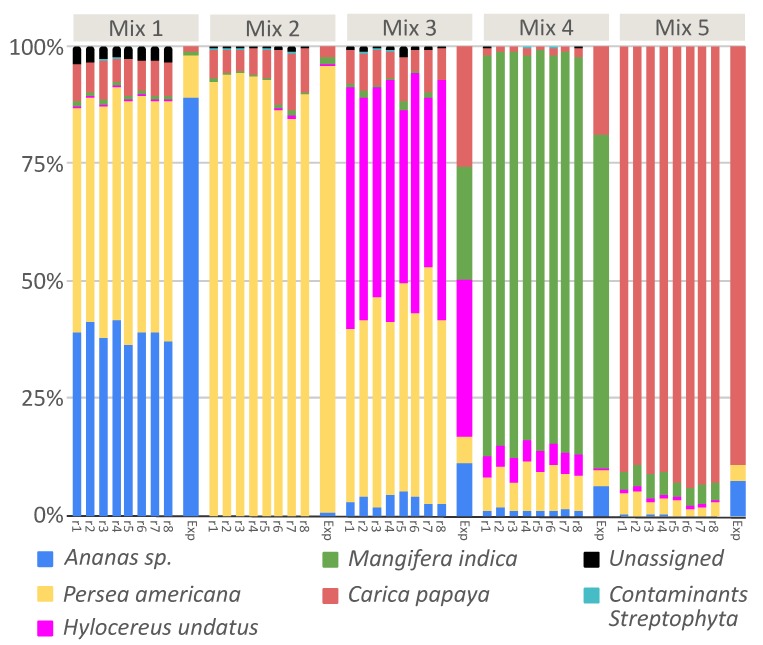
One of the main goals of the quality control evaluation is to identify contaminants in raw material, or contamination after a food is processed and before it is placed on the market. During the treatment processes, contamination, both accidental and economically motivated, can generate incongruence between declared and real composition. In our study, we evaluated if DNA metabarcoding is a suitable tool for unveiling the composition of processed food, when it contains small trace amounts. We tested this method on different types of commercial plant products by using L marker and we applied amplicon-based high-throughput sequencing techniques to identify plant components in different food products. Our results showed that DNA metabarcoding can be an effective approach for food traceability in different type of processed food. Indeed, the vast majority of our samples, we identified the species composition as the labels reported. Although some critical issues still exist, mostly deriving from the starting composition (i.e., variable complexity in taxa composition) of the sample itself and the different processing level (i.e., high or low DNA degradation), our data confirmed the potential of the DNA metabarcoding approach also in quantitative analyses for food composition quality control.
质量控制评估的主要目标之一是识别原材料中的污染物,或在食品加工后、上市前的污染。在处理过程中,无论是偶然的还是出于经济动机的污染,都可能导致申报成分与实际成分之间的不一致。在我们的研究中,我们评估了 DNA 代谢组学是否是一种合适的工具,用于揭示当加工食品中含有少量痕量成分时的组成。我们使用 L 标记测试了该方法在不同类型的商业植物产品上的应用,并应用基于扩增子的高通量测序技术来识别不同食品中的植物成分。我们的结果表明,DNA 代谢组学可以成为不同类型加工食品中食品可追溯性的有效方法。事实上,我们绝大多数的样本都与标签所报告的物种组成相吻合。尽管仍然存在一些关键问题,主要源自样本本身的起始组成(即分类群组成的可变性)和不同的加工水平(即高或低的 DNA 降解),但我们的数据证实了 DNA 代谢组学方法在食品成分质量控制的定量分析中也具有潜力。