Department of Urology, Shanghai Minhang Hospital, Fudan University, Shanghai 200199, People's Republic of China.
Department of Urology, Shanghai Minhang Hospital, Fudan University, Shanghai 200199, People's Republic of China
Biosci Rep. 2019 May 2;39(5). doi: 10.1042/BSR20181465. Print 2019 May 31.
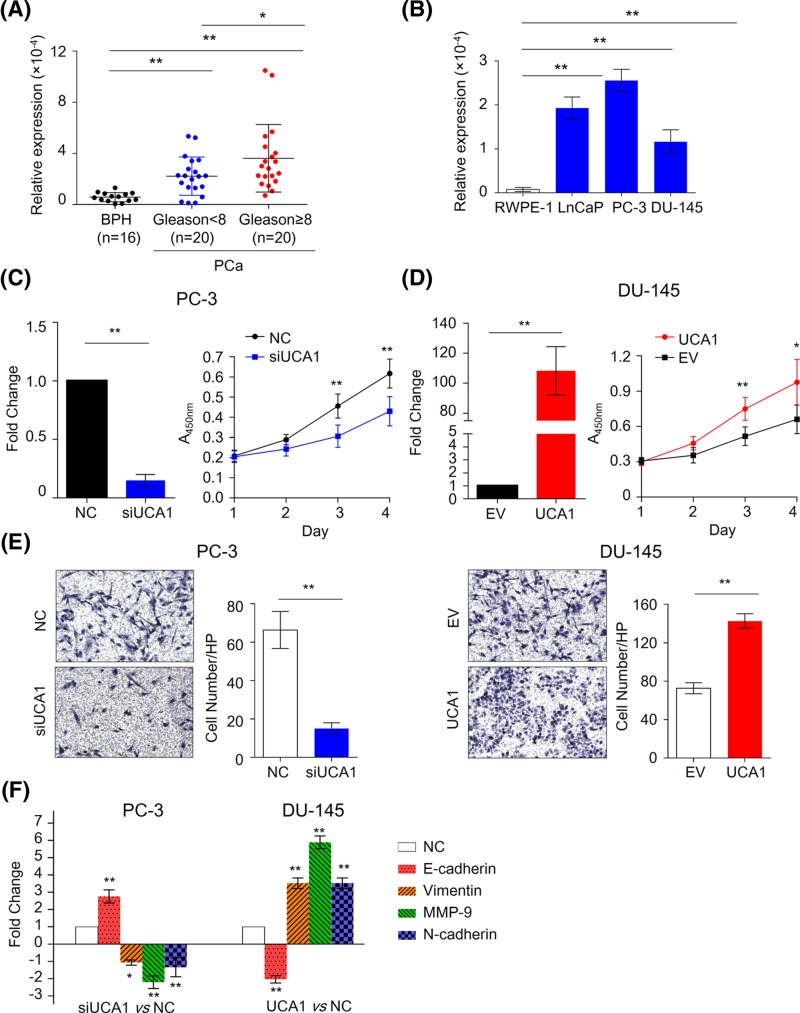
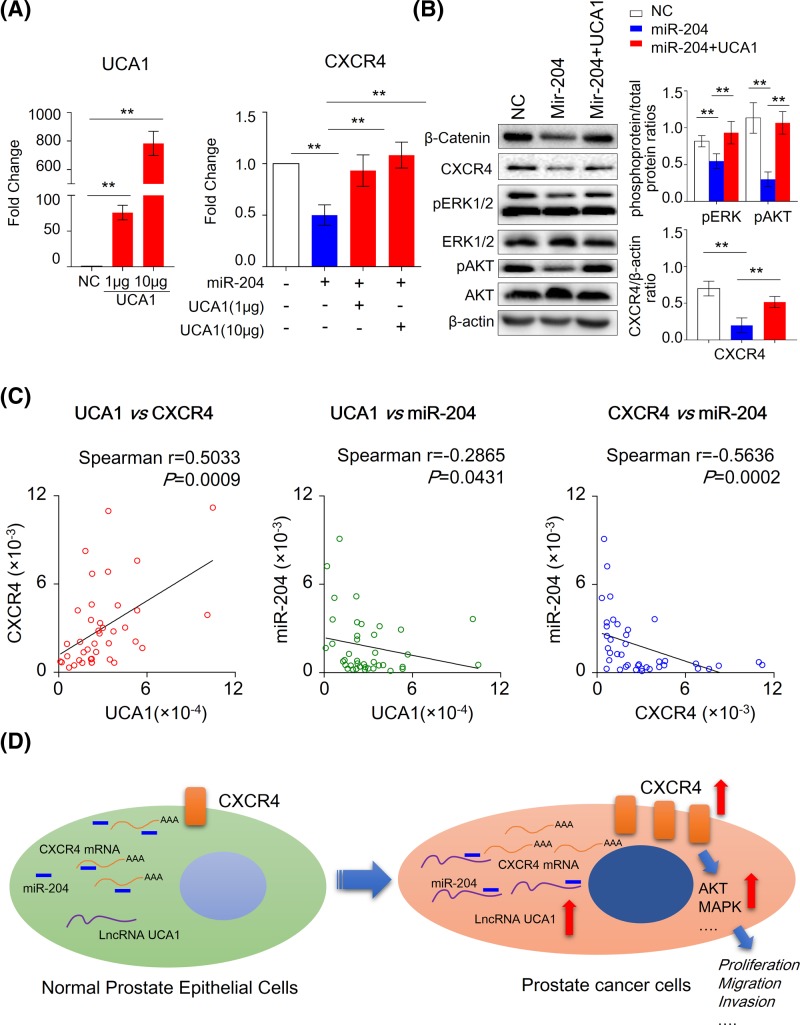
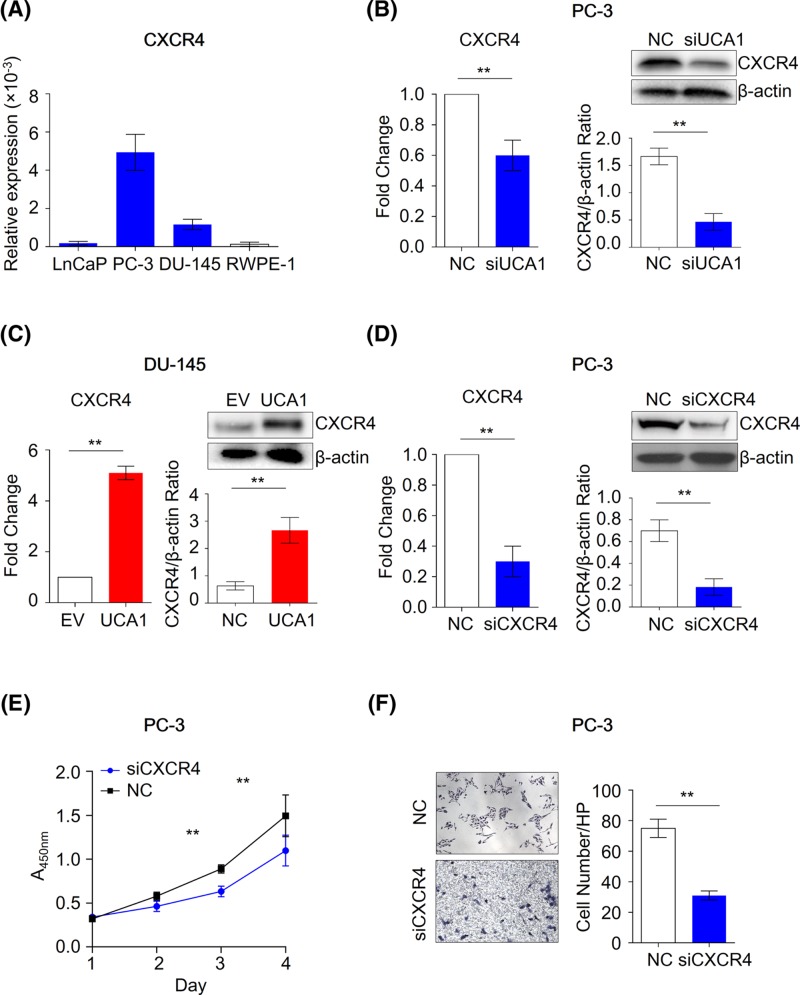
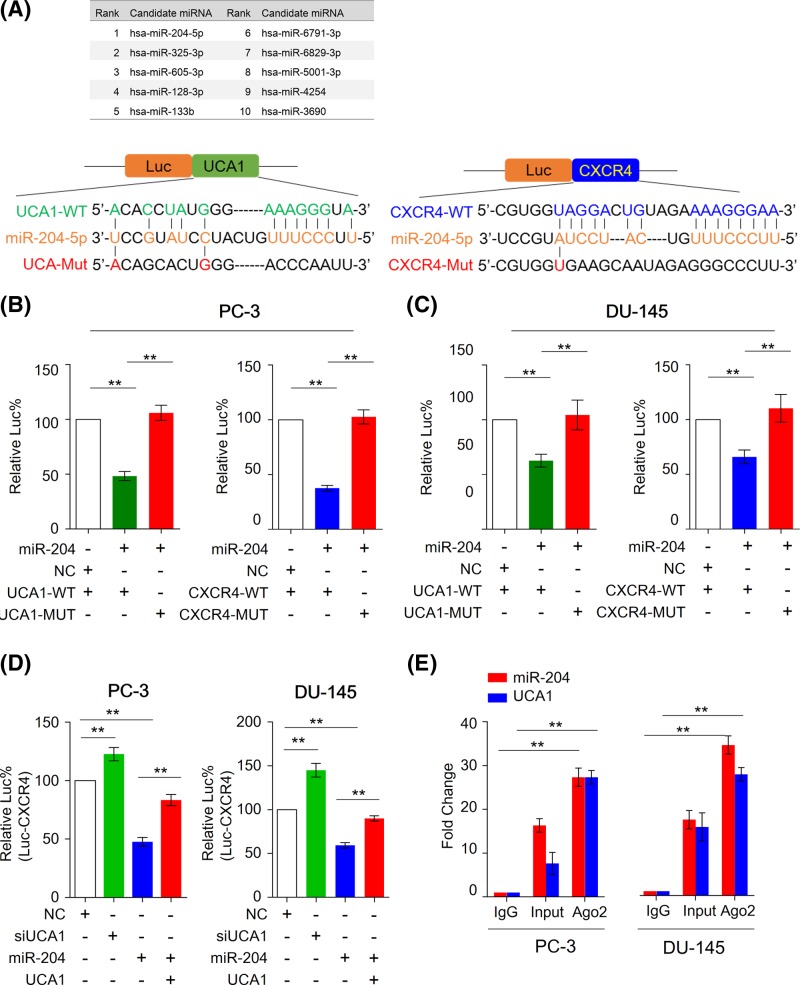
Prostate cancer (PCa) is a devastating malignant disease with a poor prognosis. The aim of current study is to investigate the role of lncRNA-urothelial carcinoma associated 1 (UCA1) in the progression of PCa. We evaluated the expression levels of UCA1 in a total of 16 benign prostatic hyperplasia tissues (BPH) and 40 PCa tissues, as well as PCa cells. The functional regulatory effects of UCA1 were investigated using a series of cell function approaches. Our data showed that UCA1 is frequently overexpressed in PCa tissues compared with BPH tissues (<0.01). Moreover, the higher expression of UCA1 was observed in patients with Gleason score ≥8 (<0.05). In consistent, we found the expression levels of UCA1 was higher in the PCa cell lines PC-3, LnCaP, and DU-145 than in the normal prostate epithelial cell line RWPE-1 (<0.01). Functionally, we found knockdown of UCA1 in PC-3 significantly suppressed cell growth and invasion of PC-3, while overexpression of UCA1 in DU-145 cells promote cell growth and invasion. Mechanistically, UCA1 overexpression permitted activation of CXCR4 oncogenes through inhibition of miR-204 activity, as evidenced by the positive association of these two genes with UCA1 levels and inverse correlation with miR-204 expression in PCa tissues. Luciferase activity assay further confirmed the targetting relationship between UCA1 and miR-204, CXCR4, and miR-204. The up-regulation of UCA1 in PC-3 cells significantly impaired the inhibitory effect of miR-204 on CXCR4 expression. Taken together, our research revealed that UCA1 works as an oncogene by targetting miR-204. The UCA1-miR-204-CXCR4 regulatory network regulated the growth and metastasis of PCa, providing new insight in the management of patients with such malignancy.
前列腺癌(PCa)是一种预后不良的破坏性恶性疾病。本研究旨在探讨长链非编码 RNA-尿路上皮癌相关 1(UCA1)在 PCa 进展中的作用。我们评估了总共 16 份良性前列腺增生组织(BPH)和 40 份 PCa 组织以及 PCa 细胞中 UCA1 的表达水平。通过一系列细胞功能方法研究了 UCA1 的功能调节作用。我们的数据表明,与 BPH 组织相比,UCA1 在 PCa 组织中频繁过表达(<0.01)。此外,在 Gleason 评分≥8 的患者中观察到 UCA1 的表达更高(<0.05)。一致地,我们发现 UCA1 在 PCa 细胞系 PC-3、LnCaP 和 DU-145 中的表达水平高于正常前列腺上皮细胞系 RWPE-1(<0.01)。功能上,我们发现 PC-3 中 UCA1 的敲低显著抑制了 PC-3 的细胞生长和侵袭,而 DU-145 细胞中 UCA1 的过表达促进了细胞生长和侵袭。机制上,UCA1 的过表达通过抑制 miR-204 的活性允许 CXCR4 癌基因的激活,这从这两个基因与 UCA1 水平的正相关和与 PCa 组织中 miR-204 表达的负相关得到证明。荧光素酶活性测定进一步证实了 UCA1 与 miR-204、CXCR4 和 miR-204 之间的靶向关系。UCA1 在 PC-3 细胞中的上调显著损害了 miR-204 对 CXCR4 表达的抑制作用。总之,我们的研究表明,UCA1 通过靶向 miR-204 作为癌基因发挥作用。UCA1-miR-204-CXCR4 调控网络调节了 PCa 的生长和转移,为这种恶性肿瘤患者的管理提供了新的见解。