Steel Daniel, Fazelpour Sina, Gillette Kinley, Crewe Bianca, Burgess Michael
1W. Maurice Young Centre for Applied Ethics, University of British Columbia, 6356 Agricultural Road, Vancouver, BC V62 1Z2 Canada.
2Department of Philosophy, University of British Columbia, 1866 Main Mall, Vancouver, BC V6T 1Z1 Canada.
Eur J Philos Sci. 2018;8(3):761-780. doi: 10.1007/s13194-018-0209-5. Epub 2018 Jun 15.
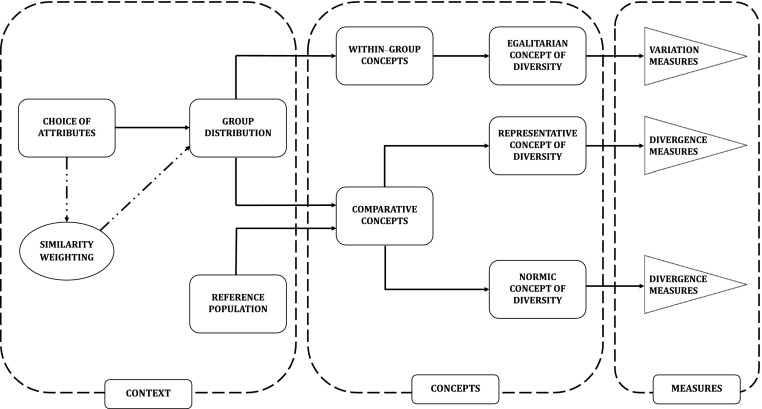
A concept of diversity is an understanding of what makes a group diverse that may be applicable in a variety of contexts. We distinguish three diversity concepts, show that each can be found in discussions of diversity in science, and explain how they tend to be associated with distinct epistemic and ethical rationales. Yet philosophical literature on diversity among scientists has given little attention to distinct concepts of diversity. This is significant because the unappreciated existence of multiple diversity concepts can generate unclarity about the meaning of "diversity," lead to problematic inferences from empirical research, and obscure complex ethical-epistemic questions about how to define diversity in specific cases. We illustrate some ethical-epistemic implications of our proposal by reference to an example of deliberative mini-publics on human tissue biobanking.
多样性概念是对使一个群体具有多样性的因素的理解,这种理解可能适用于各种背景。我们区分了三种多样性概念,表明每种概念都能在科学领域对多样性的讨论中找到,并解释了它们如何倾向于与不同的认知和伦理依据相关联。然而,关于科学家之间多样性的哲学文献很少关注不同的多样性概念。这很重要,因为多种多样性概念未被认识到的存在可能会导致“多样性”含义的不清晰,从实证研究中得出有问题的推论,并掩盖关于如何在特定情况下定义多样性的复杂伦理 - 认知问题。我们通过人类组织生物样本库审议小型公众参与的一个例子来说明我们提议的一些伦理 - 认知含义。